
How Repeat-Purchase Brands Can Convert More First-Time Visitors
For replenishment businesses, losing the first order can mean losing every order that could have followed it.
Related articles
TL;DR
- Retention starts before the first purchase. A brand cannot retain a shopper it never converts.
- For pet supplies, skincare, supplements, food, household goods, and other replenishment products, losing one interested visitor can mean losing many future orders.
- A paid visitor has shown category interest. If they leave and buy elsewhere, the original ad spend may help a competitor acquire a long-term customer.
- Improve first-order clarity and trust, then re-engage eligible high-intent visitors with product-specific help.
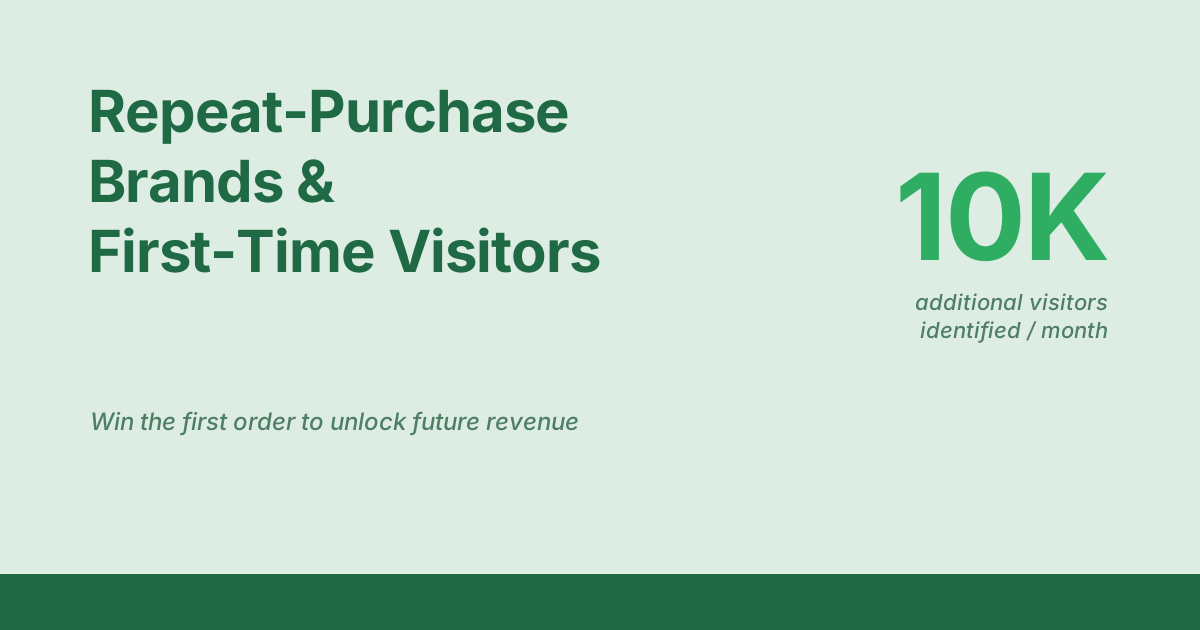
- In one measured month, PetPivot identified 10,000 additional visitors and generated $9,000 in Capture-attributed revenue, according to Attribuly customer case data.
Which industries depend on repeat purchases?
| Industry | Repeat-purchase examples | First-order question |
|---|---|---|
| Pet products | Food, litter, pads, bags, treats, supplements, filters | “Will my pet use it, and is it safe and compatible?” |
| Skincare and beauty | Cleansers, serums, moisturizers, cosmetics, haircare | “Will this work for my skin, shade, routine, or concern?” |
| Supplements and wellness | Vitamins, protein, daily wellness products | “Can I trust the ingredients, claims, and routine?” |
| Food and beverage | Coffee, tea, snacks, meal products, specialty ingredients | “Will I like the taste and is the value worth repeating?” |
| Household supplies | Cleaning concentrates, laundry, paper goods, filters | “Does it perform better or cost less over time?” |
| Baby and family care | Diapers, wipes, formula accessories, personal care | “Is it safe, reliable, available, and convenient?” |
| Oral and personal care | Toothpaste, brush heads, deodorant, shaving, hygiene | “Is it effective and comfortable enough for daily use?” |
| Contact and health consumables | Lenses, test supplies, replacement components | “Is it compatible, legitimate, and easy to reorder?” |
| Product ecosystems | Printer ink, water filters, litter-box bags, device refills | “Will I be locked in, and can I get supplies later?” |
| Subscription boxes | Food, beauty, pet, hobby and household boxes | “Is the first delivery worth an ongoing commitment?” |
The important feature is not simply frequency. It is that a successful first order can lead to a valuable stream of future purchases.
Why is losing one visitor more expensive in a repeat-purchase category?
Imagine a shopper looking for cat litter, a daily supplement, or a cleanser. If they buy once and like the product, they may reorder for months or years.
If they leave your store and buy from another brand, you may lose:
- the first order;
- every replenishment order;
- related products they add later;
- a subscription relationship;
- referrals or household expansion; and
- the behavioral data that would have improved future marketing.
This is why first-order conversion and retention should not sit in separate plans. The quality of acquisition, first purchase, product experience, replenishment, and win-back all contribute to lifetime value.
How can paid traffic end up helping a competitor?
A person who clicked an ad for dog supplements or an automatic litter box has shown at least some interest in the category. If the site leaves an important question unanswered, their need remains.
They may search the product type, read comparisons, open a marketplace, and choose another brand. Your ad helped move them from passive awareness into active research, but a competitor gained the first order and the potential repeat stream.
That does not mean every click deserves aggressive follow-up. It means brands should distinguish casual visits from high-intent behavior and help the most qualified non-buyers continue their decision.
What stops the first purchase?
The shopper cannot tell which product to choose
Large catalogs, overlapping benefits, unclear compatibility, and technical language can create paralysis. Product finders, comparison tables, routines, and “start here” bundles help.
The first order feels risky
Beauty, wellness, pet, food, and personal-care products are experiential. Buyers worry about taste, fit, reaction, quality, safety, pet acceptance, or wasted product.
Samples, starter sizes, clear returns, ingredient detail, realistic reviews, and simple guarantees can lower that risk.
The economics are unclear
Do not show only the subscription discount. Explain quantity, uses per package, delivery cadence, cost per use, shipping threshold, and how easily the customer can change or cancel.
The store pushes subscription too early
Subscription is helpful when the customer already trusts the product and understands consumption. Forcing a commitment before confidence can reduce the first-order conversion you need to create future value.
Checkout introduces friction
Unexpected shipping, forced account creation, slow delivery, missing payment methods, or poor mobile performance can break a routine purchase before the routine begins.
How should repeat-purchase brands improve first-order conversion?
1. Make the first product easy to choose
Show a clear starter product, quiz, routine, compatibility guide, sample, or bundle. Explain what to buy first and why.
2. Explain the repeat experience
Tell customers how long the product typically lasts, how to store or use it, when to reorder, and whether future supplies are reliably available.
3. Reduce risk without training everyone to wait for a discount
Use starter sizes, samples, guarantees, education, free-shipping thresholds, and bundles before defaulting to deeper coupons.
4. Capture intentional signups
Offer back-in-stock alerts, routines, compatibility results, pet profiles, replenishment reminders, or useful product education. The value exchange should match the category.
5. Re-engage qualified non-buyers
Some visitors will compare products, return, browse for an extended period, add to cart, or begin checkout without using a form.
Attribuly Capture is designed to detect high-intent activity and match eligible U.S. sessions through a consent-based identity network. Supported profiles can then enter appropriate email or advertising workflows and be measured against orders and revenue.
Do not treat identification as blanket marketing permission. Apply privacy, consent, suppression, geography, and frequency controls before activation.
6. Connect the first order to retention
Once a purchase happens, stop pre-purchase recovery. Begin onboarding, usage education, replenishment timing, cross-sell, subscription, and win-back based on the actual product and expected consumption cycle.
The retention marketing guide covers that post-purchase stage in more detail. This article stays focused on the step before it: winning the first order.
What should the follow-up say?
| Behavior | Useful message | Avoid |
|---|---|---|
| Viewed several products | Help choosing the right option | A generic brand introduction |
| Returned to one product | Proof, ingredients, compatibility, usage | Pretending the shopper is already a customer |
| Added to cart | Shipping, delivery, guarantee, exact item | Unrelated product recommendations |
| Began checkout | A short reminder and blocker removal | A long promotional newsletter |
| Bought | Setup, usage and replenishment help | More abandoned-cart messages |
Relevance matters more than message volume. A shopper choosing a pet product needs different reassurance from someone comparing skincare ingredients.
Customer example: PetPivot
PetPivot sells automatic litter boxes and related pet supplies, including products that can lead to later consumable or replacement purchases. Winning the equipment order can create an ongoing customer relationship; losing it can push the shopper into another product ecosystem.
In one measured month, PetPivot:
- identified 10,000 additional visitors; and
- generated $9,000 in revenue attributed to Capture.
These figures are Attribuly customer case data for the measured month, not a guarantee or a category benchmark. The first-month revenue also does not represent every possible future order from customers acquired during that period. Lifetime value requires longer observation and careful cohort measurement.
How should you measure the business impact?
Do not judge the program only by the number of visitors identified or the immediate revenue shown in a platform dashboard.
Track:
- qualified and identified visitor rate;
- activation rate by channel;
- first-order conversion rate;
- revenue and gross margin from activated shoppers;
- cost per incremental first customer;
- 30-, 60-, 90-, and 180-day repeat purchase rate;
- subscription adoption and cancellation;
- refund, complaint, and unsubscribe rates; and
- cohort lifetime value compared with an appropriate baseline.
Use holdout groups when feasible. Without them, revenue attribution can show that a message preceded an order but cannot fully prove that the message caused it.
A 60-day operating plan
Days 1–15: Find the first-order leak
- Segment conversion by first-time versus returning visitors.
- Review product selection, shipping, checkout, and mobile experience.
- Identify the questions that appear most often before purchase.
Days 16–30: Improve the first decision
- Create one starter path, comparison, quiz, or bundle.
- Clarify cost per use, delivery, guarantees, and reorder expectations.
- Test a risk reducer other than a large discount.
Days 31–45: Add qualified recovery
- Define high-intent product, cart, and checkout segments.
- Create short product-specific follow-up.
- Add consent, suppression, purchase-exit, and frequency rules.
Days 46–60: Join acquisition and retention reporting
- Measure first-order lift and near-term revenue.
- Create cohorts for future repeat orders.
- Compare profitability, not just top-line revenue.
Common mistakes
- Starting retention only after purchase. First-order conversion determines who can ever be retained.
- Treating all site traffic as equally valuable. Focus on qualified behavior and product fit.
- Pushing subscription before trust. Make the first product decision easy before asking for commitment.
- Using one generic flow across the catalog. Product need, compatibility, and replenishment cycle should shape the message.
- Continuing recovery after purchase. Suppress buyers immediately and move them into onboarding.
- Counting first-month revenue as lifetime value. Cohort LTV requires time and includes repeat orders, margin, refunds, and churn.
Conclusion
For a repeat-purchase brand, a lost visitor is not only a lost transaction. It can be a lost sequence of future orders.
Make the first choice simple, reduce risk, and help qualified shoppers who leave before buying. Then deliver a product and post-purchase experience worth repeating. That is how acquisition and retention become one growth system instead of two separate teams.
Recommended schema
ArticleFAQPageBreadcrumbList
FAQs
What is a repeat-purchase product?
Why focus on first-time visitors instead of existing customers?
Should I offer a subscription on the first order?
How do I know whether a visitor has high intent?
Does an identified visitor automatically become an email subscriber?
When should replenishment messages start?
How long does it take to measure repeat-purchase value?
Sources
About Attribuly
Attribuly helps DTC brands recover abandoned cart revenue. We identify anonymous visitors and existing subscribers your ESP (like Klaviyo) missed, enrich their profiles, and feed the signals back — so your abandonment flows fire and your retargeting audiences grow, and you recover at least 15% more revenue. Shopify featured app, Klaviyo tech partner. Trusted by 20,000+ brands. Guaranteed 4× ROI.