
High-AOV Visitor Identification: An Electronics Case Study
See how a consumer electronics DTC brand lifted abandoned-cart recovery revenue 24% in three weeks, tripled its email list, and doubled retargeting audiences through visitor identification.
Related articles
TL;DR
- That's the gap a consumer-electronics DTC brand set out to close.
- The headline number landed fast — within the first three weeks.
- A fast-fashion brand would see similar mechanics with smaller stakes.
- You don't need the exact same stack to copy the outcome.

The most expensive shopper on your site is the one you never get a chance to email. That's a hard truth in consumer electronics, where a single abandoned cart can carry hundreds — sometimes thousands — of dollars in margin. What if the biggest recovery win wasn't a sharper discount or a redesigned flow, but simply knowing who your visitors are?
One DTC electronics brand I've been tracking ran exactly that test. Within three weeks of activating visitor identification, abandoned-cart recovery revenue climbed 24%, the email list tripled, and retargeting audiences doubled. No new incentives. No flow rewrites. Just the names behind anonymous sessions.
The Setup: Turning Anonymous Sessions into Recoverable Shoppers
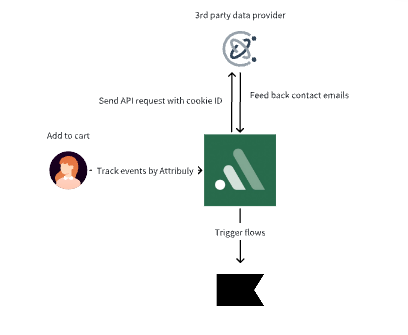
That's the gap a consumer-electronics DTC brand set out to close. The company ran a Shopify store with mature Klaviyo automations and active Meta and Google retargeting. Paid acquisition was doing its job — qualified traffic arrived in healthy volume. The leak was downstream. Most of those visitors stayed anonymous: they browsed, added to cart, started checkout, and vanished without leaving a name.
The fix wasn't a rebuild. It was activating high-AOV visitor identification — matching anonymous sessions to a known, reachable identity at the moments when intent peaks. The brand monitored four signals:
Product page views
Add-to-cart events
Checkout starts
Time on site
Checkout starts were the priority: a shopper who begins checkout has already made most of the decisions that matter. When a session crossed the intent threshold, it was matched through a first-party, consent-based identity network. Matched contacts then flowed into the brand's existing Klaviyo automations — abandoned cart, browse abandonment, welcome, promotions — with zero redesign. The same identified contacts expanded Meta and Google audiences, giving the brand more high-intent shoppers to reach through custom audiences and Google Customer Match.
Think of the brand's flows as a well-oiled engine that simply wasn't getting fuel. Visitor identification didn't tune the engine; it connected the fuel line. Attribuly Capture was the tool this merchant activated, and the underlying mechanics match any solid visitor identification setup: observe intent signals, match identity, sync to the channels that convert.
The Results: +24% Recovery Revenue in Three Weeks
The headline number landed fast — within the first three weeks. Here's the before-and-after, as documented in Attribuly's published case study:
Dimension | Before | After |
|---|---|---|
Shopper identity | Mostly anonymous | High-intent visitors identified |
Klaviyo reach | Limited to known shoppers | Expanded to identified shoppers |
Abandoned-cart recovery revenue | Baseline | +24% in three weeks |
Email list growth | Slow, forms and popups only | 3× growth |
Retargeting audiences | Constrained | 2× expansion |
Projected email revenue | Baseline | 3× projected growth |
Each number traces to a specific lever. Recovery revenue rose because identified abandoners finally entered existing flows — a larger pool of eligible shoppers, at the same conversion rate. The list grew 3× because identification captured emails from people who would never have filled out a form. Retargeting audiences doubled because the same first-party contacts fed Meta and Google, not just Klaviyo. And the 3× email-revenue projection follows directly: more contacts, flowing into automations that were already profitable. In practice, the brand recovered revenue it had already paid to acquire — the most efficient money in the business.
A fair caveat: these are the brand's own documented results, first-party and brand-reported, measured over a three-week window. Your numbers will shift with traffic mix and offer. But the direction of the levers isn't brand-specific. Identity coverage is what multiplies everything downstream.
Why High-AOV Electronics Merchants Benefit Most
A fast-fashion brand would see similar mechanics with smaller stakes. Electronics is where this approach compounds, for three structural reasons.
First, the decision cycle. High-ticket electronics purchases stretch over weeks or months of research. Shoppers leave, compare, return, leave again — that's process, not disinterest. An always-on identification pipeline keeps those returning researchers enrolled in recovery and nurture flows across the whole window, not just a single session.
Second, the psychology. Electronics buyers deliberate over price, financing, warranty, and trust; they rarely buy on impulse. That's why recovery email genuinely moves this category — Klaviyo's abandoned-cart benchmarks show a 3.33% average placed-order rate, with top performers reaching 7.69%. For high-ticket carts, lead with value-adds: free shipping, Shop Pay Installments or Klarna, crystal-clear warranty language. Save discounts for the final message in a 3-to-5-email sequence stretched over 5–10 days. A shopper who needs six days to decide won't convert on a 72-hour sprint.
Third, the compounding. Each recovered high-AOV cart funds more acquisition, which brings more anonymous visitors, which feeds identification — a loop that keeps widening your recoverable pool.
A Replicable Playbook for High-AOV Visitor Identification
You don't need the exact same stack to copy the outcome. Here's the tool-agnostic version of what worked:
Instrument intent signals first. Capture product views, add-to-cart, checkout starts, and time on site — respecting consent state from day one.
Define high-intent rules, not "identify everyone." Prioritize checkout starters and cart adders, then deep product-page viewers. Score by intent, not volume.
Match identity on high-confidence sessions. Use a first-party, consent-based resolution method, and sync matched emails to your email platform.
Let existing flows do the work. Newly identified contacts enter your current abandoned-cart and browse-abandonment automations — no redesign required.
Feed Meta and Google. Push the same identified contacts into custom audiences and Customer Match to widen retargeting reach.
Measure what matters. Track trigger rate, recoverable-abandoner percentage, recovered revenue, list growth, and audience size. If you can, hold out 10–20% of identified contacts to validate incrementality.
Two guardrails before you start. Don't chase every visitor — focus on ICP-fit, high-intent sessions, or you'll fill your list with tire-kickers. And keep the compliance posture clean: first-party, consented identification, a transparent privacy notice, and an opt-out. Done that way, this approach fits comfortably within GDPR and CCPA expectations.
Where to Start
You don't need a big program to test this. First, calculate your trigger rate — Klaviyo flow entries divided by cart additions. If it's under 20%, you have a reach problem, not a copy problem. Then run a three-week pilot on your highest-intent segment: activate a high-AOV visitor identification tool like Attribuly, sync identified contacts to your existing flows, and watch the recoverable-abandoner percentage move.
The shoppers were always there, researching and comparing and adding your products to carts. The only thing missing was their names. That's a fixable problem.
| Dimension | Before | After |
|---|---|---|
| Shopper identity | Mostly anonymous | High-intent visitors identified |
| Klaviyo reach | Limited to known shoppers | Expanded to identified shoppers |
| Abandoned-cart recovery revenue | Baseline | +24% in three weeks |
| Email list growth | Slow, forms and popups only | 3× growth |
| Retargeting audiences | Constrained | 2× expansion |
| Projected email revenue | Baseline | 3× projected growth |
Sources and Related Reading
About Attribuly
Attribuly helps DTC brands recover abandoned cart revenue. We identify anonymous visitors and existing subscribers your ESP (like Klaviyo) missed, enrich their profiles, and feed the signals back — so your abandonment flows fire and your retargeting audiences grow, and you recover at least 15% more revenue. Shopify featured app, Klaviyo tech partner. Trusted by 20,000+ brands. Guaranteed 4× ROI.