
Best Website Visitor Identification Software for Klaviyo (2026)
Compare the 7 best visitor identification tools for Klaviyo stores. See match rates, pricing, and integration depth to recover more revenue from anonymous shoppers.
Related articles
TL;DR
- Here's how the top seven tools stack up.
- Rather than trusting headline match rates — the most gamed number in this category — I scored each tool against six weighted criteria that reflect what Klaviyo store owners actually need:
- Each card below includes positioning, key traits, trade-offs, pricing, and evidence links so you can verify claims before you demo.
- Attribuly Capture is an all-in-one platform that pairs visitor identification with server-side tracking, AI-assisted recovery email, and revenue attribution — built specifically for Shopify + Klaviyo stacks.
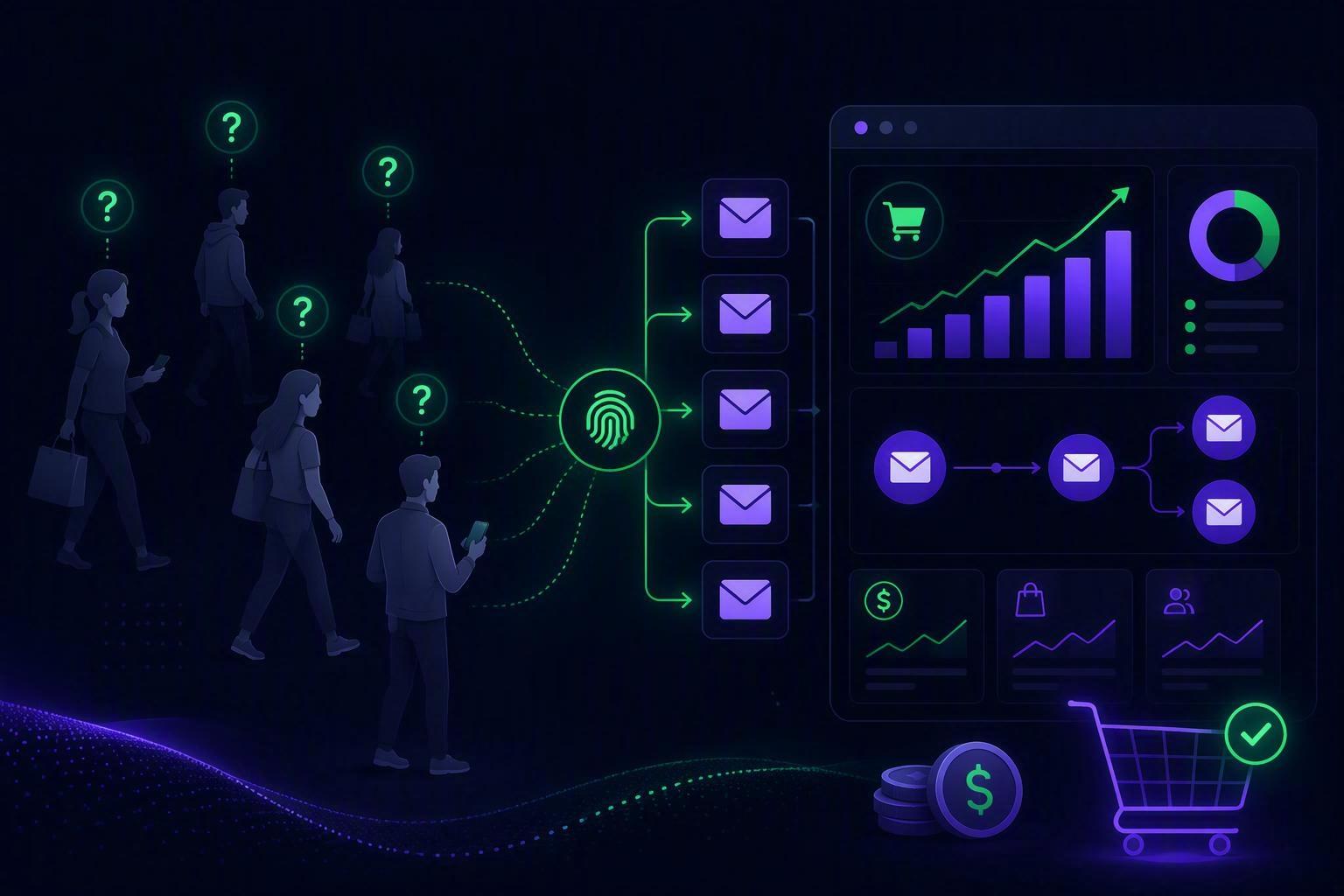
Here's a scenario most Klaviyo store owners recognize: a shopper lands on your site from a TikTok ad, browses three products, adds one to cart, then closes the tab. If they never clicked a Klaviyo email link or submitted a form, they're invisible to your account. Klaviyo's onsite tracking only follows "known browsers," as the company's own onsite tracking documentation explains — and a first-time anonymous visitor who skips those identifying actions never enters your flows or segments.
The anonymous activity backfill Klaviyo launched in 2025 helps a little: it holds anonymous onsite events locally for up to 14 days and attaches them to a profile after that visitor becomes identified through Klaviyo's own paths. What it can't do is resolve a brand-new browser into a contact on its own.
Website visitor identification software exists to close exactly that gap. These tools match anonymous sessions to email addresses using consented identity graphs and device signals, then push enriched profiles — complete with product views, add-to-cart, and checkout events — straight into Klaviyo. Once a profile exists, your existing browse-abandonment and abandoned-cart flows trigger automatically. The revenue upside is meaningful: Attribuly's benchmark research across 20,000+ Shopify stores found Klaviyo natively identifies only about 14% of cart abandoners, while identification tools typically lift recoverable abandoners to the 25–35% range.
I compared the leading options on six criteria — Klaviyo integration depth, identification coverage and match-rate quality, post-identification activation, ecommerce behavioral data coverage, pricing transparency, and privacy compliance. Below you'll find the ranked list, a comparison table, and a buyer's guide to help you match a tool to your store. The honest headline first: match rates vary sharply by traffic mix, so the right pick depends on your store size and what you actually want to do after identification. Ready to see which one fits your stack?
The 7 Best Visitor ID Tools for Klaviyo at a Glance
Here's how the top seven tools stack up. Match rates below are vendor-published claims unless noted, and they depend heavily on the share of US traffic your store receives.
Tool | Best for | ID level | Match rate (US traffic) | Starting price (Aug 2026) | Klaviyo integration | Core strength |
|---|---|---|---|---|---|---|
Attribuly Capture | Shopify + Klaviyo revenue recovery | Person (email + behavior) | 25–55% US (vendor); 25–35% typical DTC | Free (500 emails); paid from ~$0.12/email | Deep native sync + server-side events | Identification + tracking + AI email + attribution in one stack |
Opensend | Multi-channel activation | Person (email, cross-device) | 25–35% overall; 73% US shoppers (vendor network) | $500/mo (2,000+ identities) after $1 trial | Native (Klaviyo App Marketplace) | Multi-channel activation across email, SMS, ads, postal |
Retention.com | Straightforward Klaviyo list growth | Person (email) | ~35% headline; ~20% effective per some reviewers | ~$300–$500/mo, annual contract | Native ecommerce integration | Simple grow/reclaim product suite |
Customers.ai | Identity + ad retargeting | Person (email, profile match) | 15–25% (third-party tables); higher vendor claims | ~$600/mo (3,000 resolutions) | Native; matches full Klaviyo database | X-Ray identity engine + AI remarketing |
Leadpipe | Person-level match accuracy | Person + company | 30–40%+ (vendor, deterministic) | $147/mo (500 IDs); free 500-ID tier | Native Klaviyo integration | Deterministic person-level data depth |
Tie | Returning-shopper recognition & enrichment | Person (household/demographic) | Up to 70% total / 90%+ returning (vendor) | ~$499/mo (credit-based), annual contract | Tier-1 Klaviyo partner, native Shopify app | 300+ attribute enrichment + scoring |
Wunderkind | Enterprise-scale identity + performance | Person (cross-device identity graph) | 3–6x more traffic than cookie tools (vendor) | Custom (est. $6K+/mo enterprise) | Native Klaviyo App Marketplace app | Enterprise identity network + AI decisioning |
Pricing note: All prices above are starting points as of August 2026 and subject to change. Most vendors quote custom enterprise tiers, and per-identity costs typically drop at higher volumes.
How We Chose the Best Website Visitor Identification Software for Klaviyo
Rather than trusting headline match rates — the most gamed number in this category — I scored each tool against six weighted criteria that reflect what Klaviyo store owners actually need:
Klaviyo integration depth (25%) — Does the tool natively sync identified profiles and behavioral events into Klaviyo, trigger flows, and create segments without custom code?
Identification coverage & match rate quality (20%) — Published benchmarks for US traffic, person-level matches with verified emails, and how the tool treats high-intent shoppers (product views, cart adds, checkout starts).
Post-identification activation (20%) — What happens after a match: automatic profile creation, flow enrollment, ad audience sync to Meta/Google/TikTok, server-side event delivery, and recovery workflows.
Ecommerce behavioral data coverage (15%) — Capture and sync of products viewed, products added to cart, checkout progress, and purchase events into Klaviyo.
Pricing transparency & value (10%) — Published starting prices, per-identity cost models, free allowances or trials, and predictable scaling.
Privacy compliance & data quality (10%) — Documented consent handling, suppression-list management, data provenance, and CCPA/GDPR alignment.
Evidence came from Klaviyo's official help documentation and CDP pages, each tool's product and pricing pages, 2026 third-party comparisons (including Leadpipe's B2C tool roundup), and auditable first-party case studies where the methodology or time window was noted. The data window is 2026; pricing reflects August 2026 and will change.
The Best Website Visitor Identification Software for Klaviyo Stores, Reviewed
Each card below includes positioning, key traits, trade-offs, pricing, and evidence links so you can verify claims before you demo.
1. Attribuly Capture — Best all-in-one for Shopify + Klaviyo recovery
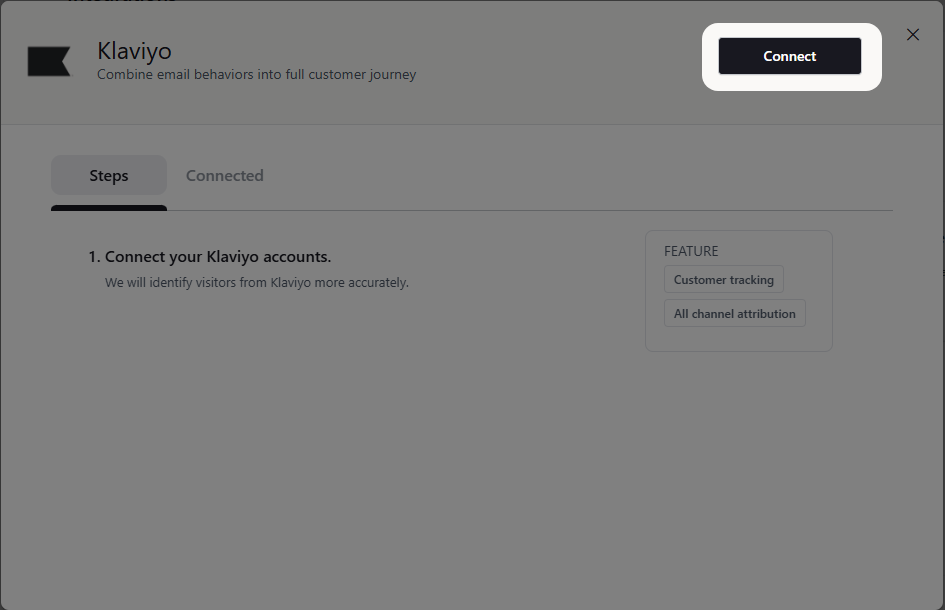
Attribuly Capture is an all-in-one platform that pairs visitor identification with server-side tracking, AI-assisted recovery email, and revenue attribution — built specifically for Shopify + Klaviyo stacks. It pushes identified shopper profiles with behavioral context (products viewed, add-to-cart, checkout start) directly into Klaviyo, so existing flows trigger without manual list building or custom code. Its server-side tracking captures shopper events browser pixels miss and delivers them to Klaviyo as "Attribuly SS" metrics, which matters as cookie loss erodes browser-based tracking.
Pros: free 500-email allowance with no credit card; deep native Klaviyo sync; server-side event reliability; per-email pricing scales with identified volume. Cons: match rates drop for international-heavy traffic; best results assume server-side tracking is enabled; pricing pages have varied across product lines, so verify current tiers in-product.
Best for: DTC Shopify stores that want identification plus a complete recovery workflow — flows, email, and attribution — in one place rather than stitched together. Not for: teams that need multi-channel activation beyond email (SMS, postal mail, programmatic ads) or B2B company-level identification.
Pricing: free to start (500 emails, no credit card), paid tiers from roughly $0.12 per identified email; GMV-based plans around $500+/month for larger stores (as of August 2026, subject to change).
Evidence: official product page plus a documented case study showing 8+ ROI and 20,000+ enriched emails for a consumer healthcare DTC brand.
2. Opensend — Best for multi-channel activation
Opensend is a real-time visitor identification and activation platform that resolves anonymous shoppers and then activates them across email (Klaviyo), SMS, social and programmatic ads, and even direct mail. Its four-product suite — Connect (identification), Reconnect (cross-device unification), Revive (bounce replacement), and Personas (AI audience cohorts) — makes it the broadest post-identification activation layer in this list. The company claims a 180-million-US-shopper identity graph with 25–35% identification of US traffic and up to 73% for US shoppers inside its own network.
Pros: strongest multi-channel activation outside email; documented ROI case studies; transparent tier pricing with annual discounts. Cons: no server-side tracking; $500/month entry point is steep for smaller stores; relies on Klaviyo or your ESP for sending.
Best for: mid-market DTC brands that want identified shoppers flowing into email, SMS, and paid social simultaneously. Not for: stores testing visitor ID on a budget or teams that need server-side event recovery.
Pricing: $1 trial for 14 days; Tier 1 from $500/month for roughly 2,000 identities, with annual billing discounts (as of August 2026, subject to change).
Evidence: Opensend Connect product page detailing the identity resolution and activation workflow.
3. Retention.com — Best for straightforward Klaviyo list growth
Retention.com is an ecommerce-focused identity-resolution platform that identifies high-intent visitors and syncs matched contacts into Klaviyo to grow lists and reclaim abandoned revenue. Its simple Grow (list growth) and Reclaim (abandoned-cart recovery) products are purpose-built around Shopify and Klaviyo workflows rather than general CRMs. The headline ~35% match rate gets repeated everywhere, though independent reviewers consistently report 16–25% in practice, so budget for the lower end.
Pros: focused, easy-to-understand product suite; strong fit for Klaviyo-first stacks; US-only coverage keeps compliance conversations simple. Cons: annual contract with no free trial; effective match rates often sit below the headline; few activation features beyond email list growth.
Best for: established Klaviyo stores that want predictable list growth without adding complexity. Not for: stores needing server-side tracking, ad audience sync, or multi-channel activation.
Pricing: no free trial; annual contracts from roughly $300–$500/month, with bundles up to ~$2,500/month (as of August 2026, subject to change).
Evidence: this independent Prospeo review breaks down real match-rate ranges and contract terms.
Not sure whether you need a single-purpose identity tool or a full recovery stack? The buyer's guide further down matches the right pick to your store size, traffic mix, and priority.
4. Customers.ai — Best for identity + ad retargeting workflows
Customers.ai pairs its X-Ray Identity Engine with AI-driven marketing automation: it matches anonymous visitors against your entire Klaviyo database — including suppression lists and unsubscribes — and retargets them through email, Meta, Google, and TikTok. That suppression-list matching is a genuine differentiator because it protects sender reputation while you scale. The vendor markets Gold/Platinum/Titanium signal-fidelity tiers with claims of higher True Match Rate than typical tools, though third-party comparison tables list lower rates (15–25%) and its pricing model has two published structures.
Pros: strong identity + ad retargeting combination; matches against suppression lists; 7-day free trial (up to 500 resolutions). Cons: pricing complexity with two published models; third-party match-rate tables sit below vendor claims; no server-side tracking per comparison materials.
Best for: stores that want identified shoppers pushed into paid social retargeting as well as email. Not for: teams that want single-model pricing transparency or server-side event recovery.
Pricing: 7-day free trial; Starter around $600/month for 3,000 resolutions (as of August 2026, subject to change).
Evidence: Customers.ai pricing page showing the resolution-based tiers.
5. Leadpipe — Best for person-level match accuracy
Leadpipe takes a deterministic approach: it matches visitors against its own identity graph rather than resold probabilistic data, returning name, email, phone, LinkedIn, and company information. The vendor reports 30–40%+ match rates with an 8.7/10 independent accuracy score, and it identifies both people and companies from a single pixel — flexible for stores with mixed B2B/B2C audiences. With 62+ data fields and real-time API, webhook, and Slack delivery, it's the deepest data pipeline in this group.
Pros: strong data depth and accuracy; free 500-ID tier with no credit card; flexible for mixed audiences. Cons: less positioned around Klaviyo flow activation than ecommerce-specialized tools; match rates still depend on US traffic share.
Best for: stores that prioritize identity accuracy and data depth over turnkey recovery workflows. Not for: pure-play DTC stores that want abandonment flows set up for them.
Pricing: free tier (500 IDs, no credit card); Starter around $147/month for 500 identified leads (as of August 2026, subject to change).
Evidence: Leadpipe's identification product page detailing data fields and delivery options.
6. Tie — Best for returning-shopper recognition & enrichment depth
Tie (formerly Revenue Roll / MeetTie) is a B2C shopper-intelligence platform that identifies and enriches anonymous visitors with 300+ attributes per profile, including 250+ demographic insights and predictive shopper scoring. The vendor claims identification of up to 70% of total site traffic and 90%+ of returning shoppers via consent-based, cookie-resilient matching. As a tier-1 Klaviyo Marketplace partner with a native Shopify app, it pushes enriched profiles directly into existing Klaviyo flows.
Pros: exceptional enrichment depth and returning-shopper recognition; native Shopify + Klaviyo integration; predictive scoring built in. Cons: mandatory annual contracts; usage/credit-based pricing is opaque; some third-party tables show lower person-level rates (10–30%).
Best for: mid-to-high-volume stores that want maximum profile enrichment and shopper scoring. Not for: stores that need flexible monthly pricing or simple flat tiers.
Pricing: credit-based contracts from roughly $499/month (as of August 2026, subject to change; figures vary by listing).
Evidence: Tie's Klaviyo visitor identification guide covering integration and flow setup.
7. Wunderkind — Best for enterprise-scale identity + performance marketing
Wunderkind (formerly BounceX) runs a proprietary identity network spanning 9B+ devices and 1B+ consumer profiles, recognizing anonymous visitors across devices and activating them in email, SMS, onsite messaging, and media. A native Klaviyo App Marketplace integration pushes identity insights into Klaviyo profiles, segments, and flows. It's a managed-service model with AI-driven send decisioning and built-in revenue reporting — powerful, but priced and staffed for enterprise teams.
Pros: unmatched scale and cross-device recognition; managed service with performance-based pricing; strong enterprise revenue reporting. Cons: enterprise pricing and implementation timelines out of reach for most SMB stores; no transparent list pricing; multi-week implementations and contract commitments typical.
Best for: 8-figure and enterprise brands with dedicated growth teams. Not for: small or mid-market Shopify stores.
Pricing: custom quotes, often performance-based; third-party estimates range from ~$6,000/month and up for enterprise deployments (as of August 2026, subject to change).
Evidence: Wunderkind's Klaviyo identity guide explaining how identity insights flow into profiles and segments.
Next Steps
Choosing the best website visitor identification software for Klaviyo comes down to how much of your anonymous traffic you want to recover and what you want to do with it after the match. The tools above approach that gap differently: some just add emails to your list, while others pair identification with server-side tracking, recovery flows, and attribution in the same stack. If you run a Shopify + Klaviyo store and want to see how identified shoppers flow into your existing automations, Attribuly Capture's free 500-email allowance is a low-risk starting point — and its Klaviyo integration is built for exactly this setup, no credit card required.
| Tool | Best for | ID level | Match rate (US traffic) | Starting price (Aug 2026) | Klaviyo integration | Core strength |
|---|---|---|---|---|---|---|
| Attribuly Capture | Shopify + Klaviyo revenue recovery | Person (email + behavior) | 25–55% US (vendor); 25–35% typical DTC | Free (500 emails); paid from ~$0.12/email | Deep native sync + server-side events | Identification + tracking + AI email + attribution in one stack |
| Opensend | Multi-channel activation | Person (email, cross-device) | 25–35% overall; 73% US shoppers (vendor network) | $500/mo (2,000+ identities) after $1 trial | Native (Klaviyo App Marketplace) | Multi-channel activation across email, SMS, ads, postal |
| Retention.com | Straightforward Klaviyo list growth | Person (email) | ~35% headline; ~20% effective per some reviewers | ~$300–$500/mo, annual contract | Native ecommerce integration | Simple grow/reclaim product suite |
| Customers.ai | Identity + ad retargeting | Person (email, profile match) | 15–25% (third-party tables); higher vendor claims | ~$600/mo (3,000 resolutions) | Native; matches full Klaviyo database | X-Ray identity engine + AI remarketing |
| Leadpipe | Person-level match accuracy | Person + company | 30–40%+ (vendor, deterministic) | $147/mo (500 IDs); free 500-ID tier | Native Klaviyo integration | Deterministic person-level data depth |
| Tie | Returning-shopper recognition & enrichment | Person (household/demographic) | Up to 70% total / 90%+ returning (vendor) | ~$499/mo (credit-based), annual contract | Tier-1 Klaviyo partner, native Shopify app | 300+ attribute enrichment + scoring |
| Wunderkind | Enterprise-scale identity + performance | Person (cross-device identity graph) | 3–6x more traffic than cookie tools (vendor) | Custom (est. $6K+/mo enterprise) | Native Klaviyo App Marketplace app | Enterprise identity network + AI decisioning |
Sources and Related Reading
About Attribuly
Attribuly helps DTC brands recover abandoned cart revenue. We identify anonymous visitors and existing subscribers your ESP (like Klaviyo) missed, enrich their profiles, and feed the signals back — so your abandonment flows fire and your retargeting audiences grow, and you recover at least 15% more revenue. Shopify featured app, Klaviyo tech partner. Trusted by 20,000+ brands. Guaranteed 4× ROI.