
如何智能 Cleaning 品牌它的邮件列表从 8K 到 18K 在…中 3 月用访客识别
品牌 sells 高级版 robot vacuums 和在 $399–$599. 他们的广告点击是高客单价,他们的决策 cycles 是 long, 和 98% 的访客离开匿名的 — 用不方式到进入单一 Klaviyo 恢复流程. 捕获 changed economics.。本文聚焦 案例研究与case study、smart home(重点关注:智能、home),围绕执行方法、常见误区与可衡量结果给出建议。
相关文章
要点
- 品牌是直连消费者智能 cleaning 品牌 selling robot vacuums 和在 Shopify 上, priced $399–$599.
- 高的广告成本结合了用购买决策 cycles (14–30 天) meant 那个 losing 匿名的访客是直接 losing 广告花费 — 购物者离开之前输入任何 Klaviyo 恢复流程.
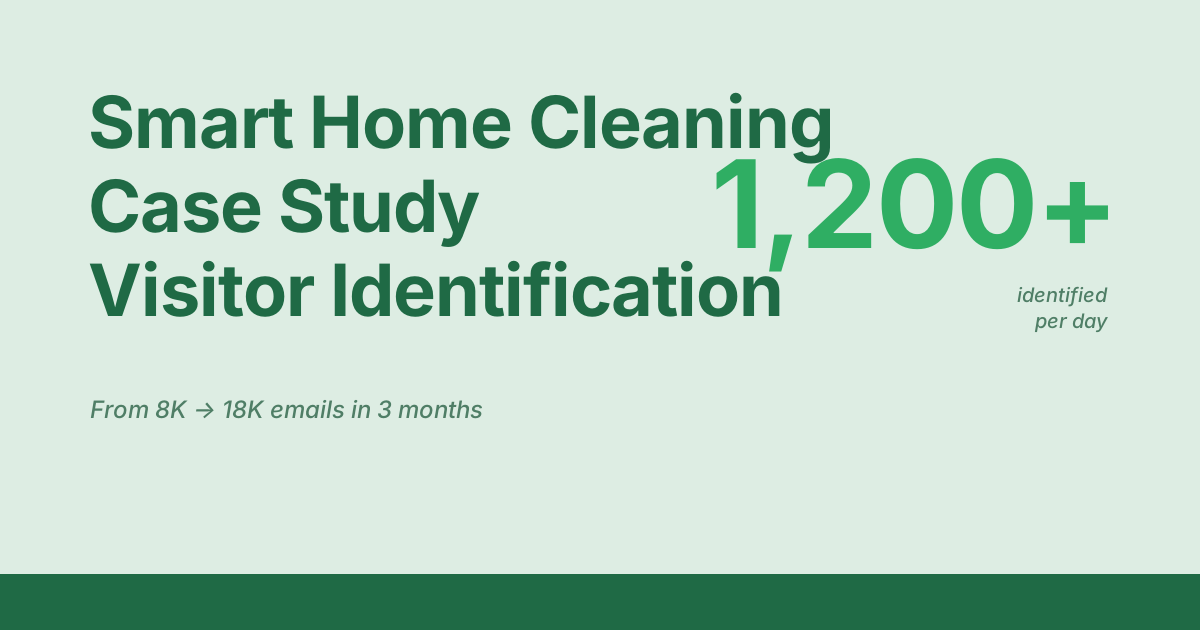
- 之后激活 Attribuly 捕获,品牌识别过的超过 1,200 匿名的购物者每天,提升他们的 Klaviyo 邮件列表从 8,000 到 18,000 联系人三月.
- Klaviyo 邮件流程 powered 通过捕获识别过的联系人 achieved 42:1 投资回报率. 重定向转化成本 Meta 降低通过大约 38%.
- 品牌也利用过的 Attribuly'服务器端追踪到发送 richer 事件数据到广告平台,其中 helped 提升重定向质量和提供了 better visibility 到其中广告渠道是 performing.
Brand background
Brand N is a globally recognized smart home cleaning technology company. Their product lineup includes robot vacuums, robot mops, wet-dry vacuums, and self-cleaning systems with AI-powered navigation, obstacle avoidance, and self-maintenance features.
Products range from $399 to $599 for their core robot vacuum and mop models — significantly higher than average DTC products. The brand sells across Amazon and its own Shopify DTC store, with a strong presence in the US market.
Category characteristics that make visitor identification critical:
- High AOV ($399–$599): Each lost visitor represents significant potential revenue.
- Long decision cycle (14–30 days): Shoppers research extensively, comparing specifications, reading reviews, and visiting the store multiple times before purchasing.
- High cart-to-purchase drop-off (>70%): Many shoppers add to cart while researching but do not purchase immediately.
- Heavy video advertising: Brand N invests in YouTube and Facebook/Instagram Reels to demonstrate product features.
The problem: expensive traffic, invisible visitors
Before activating Capture, Brand N faced a compounding problem.
High-intent abandoners had no recovery path
Over 70% of shoppers who added a product to cart did not complete the purchase. For a $499 robot vacuum, this is expected — it is a considered purchase. But without an email address, these high-intent abandoners could not enter Klaviyo's recovery flows.
The email list was small (approximately 8,000 contacts), growing slowly through popups and checkout capture. Most of the shoppers Brand N was paying to attract never became reachable through email.
A shopper who spent 10 minutes comparing the Freo and Flow models, added one to cart, and left — that shopper received no abandoned cart email, no browse abandonment follow-up, nothing. They were gone.
Every anonymous visitor was a wasted ad dollar
Brand N invested heavily in Google Ads and Meta campaigns to drive traffic to their Shopify store. Each click cost real money. But when a visitor arrived, browsed product pages, compared models, maybe even added to cart — and then left anonymous — that click generated zero long-term value.
The ad budget was producing pageviews, not recoverable contacts. For a product that costs $399–$599, where shoppers typically take 2–4 weeks to decide, the inability to re-engage those visitors during their decision period was the single largest revenue leak.
Video ads were generating interest but hard to measure
Brand N ran video campaigns on YouTube and Meta Reels to demonstrate cleaning performance, AI navigation, and self-maintenance features. These videos were effective at generating awareness — but standard tracking only measured last-click conversions, making it hard to see the full contribution of video content. This was a secondary concern, but it compounded the budget allocation challenge.
The solution: Capture + Klaviyo enrollment + server-side tracking
Step 1: Identify anonymous high-intent visitors with Capture
Capture monitored visitor signals — product page views, specification comparisons, time spent on comparison pages, add-to-cart events, and checkout starts.
When a visitor demonstrated high purchase intent, Capture matched the session to an email address through Attribuly's first-party identity network.
Step 2: Automatically enroll identified contacts into Klaviyo flows
Identified emails were pushed to Klaviyo in real time, enrolling shoppers into:
- Abandoned cart flows — for shoppers who added a robot vacuum to cart but did not purchase
- Browse abandonment flows — for shoppers who viewed product pages without adding to cart
- Product education drip campaigns — for shoppers comparing multiple models
This was the core value. Brand N already had these Klaviyo flows built. They were well-designed and effective. The problem was that only a tiny fraction of high-intent shoppers entered them. Capture fixed the input problem.
Step 3: Expand retargeting audiences with identified contacts
The same identified contacts were synced to Meta and Google Ads, expanding retargeting audiences with verified, high-intent shoppers. These audiences also powered lookalike targeting — helping ad platforms find new shoppers similar to the ones who had already shown interest.
Step 4: Improve ad platform data quality through server-side tracking
Alongside Capture, Attribuly's server-side tracking sent enriched customer events — including product views, add-to-cart, and purchase events — to Meta and Google.
This gave the ad platforms more complete data about who was converting, which improved their optimization algorithms. When Meta and Google received richer signals, their targeting became more precise, bringing in higher-quality traffic and improving retargeting performance.
Results
Klaviyo email list and identification
| Metric | Before Capture | After 3 months |
|---|---|---|
| Klaviyo email list size | ~8,000 | ~18,000 |
| Daily new identified contacts | Minimal (popup-only) | 1,200+ per day |
| Primary source of new contacts | Website popups | Capture (anonymous identification) |
| Klaviyo flow enrollment | Limited to popup subscribers | All identified contacts enter flows automatically |
Brand N's Klaviyo email list more than doubled in three months — not through better popups, but by identifying anonymous visitors who were already on the site with purchase intent and enrolling them into existing flows.
Email recovery performance
| Metric | Result |
|---|---|
| Klaviyo email ROI (Capture-identified contacts) | ~42:1 |
| Email contribution to revenue | Significant increase from near-zero base |
Capture-identified contacts entering Klaviyo's abandoned cart and browse abandonment flows generated a strong return. For a $499 product, even a small percentage of recovered purchases produced meaningful revenue relative to the identification cost.
Retargeting improvement
| Metric | Change |
|---|---|
| Meta retargeting CPA | Decreased ~38% |
| Retargeting audience size | Expanded significantly through Capture-identified contacts |
By feeding more high-intent contacts into Meta's retargeting audiences and sending richer event data through server-side tracking, Brand N's retargeting campaigns reached better audiences at lower cost.
Ad budget reallocation
With server-side tracking providing more complete event data to ad platforms, Brand N gained better visibility into how different ad channels contributed to conversions. They discovered that video content (YouTube, Reels) was contributing more than last-click reporting showed, and increased video ad budget allocation from approximately 12% to 28% of total spend. Overall ROI improved approximately 2× as a result.
What made this work
1. Capture filled existing Klaviyo flows with the audience they needed
Brand N already had well-designed abandoned cart, browse abandonment, and welcome flows in Klaviyo. Capture did not require new flows — it simply filled the existing ones with more contacts. The 42:1 email ROI came from existing infrastructure receiving more volume.
2. High AOV made every identified contact valuable
At $399–$599 per product, each recovered purchase contributed meaningful revenue. Identifying 1,200 shoppers per day — even if only a small percentage eventually purchased — generated a strong return on the Capture investment.
3. Long decision cycles made Klaviyo email nurture essential
Robot vacuums are not impulse purchases. Shoppers compare features, read reviews, and consider alternatives over 2–4 weeks. Capture enabled Brand N to stay in contact with these shoppers throughout their decision process via Klaviyo — sending product comparisons, cleaning performance data, customer reviews, and limited-time offers at appropriate intervals.
4. Server-side tracking improved the quality of ad platform data
With server-side tracking sending more complete event data to Meta and Google, Brand N's retargeting became more efficient and their budget allocation improved. This was a secondary benefit behind the primary impact of Capture + Klaviyo, but it contributed to the overall 2× ROI improvement.
Key takeaways for similar brands
This case is most relevant for Shopify brands that:
- Sell products at $200+ AOV where each recovered order makes a meaningful impact
- Have long purchase decision cycles (2+ weeks) where Klaviyo email nurture can influence the decision
- Have well-built Klaviyo flows that are limited by the number of contacts entering them
- See high cart abandonment rates (70%+) typical of considered purchases
- Have small but growing email lists that limit the reach of existing Klaviyo flows
Next step
If your Shopify store sells high-AOV products and your Klaviyo email list is growing slowly while most visitors leave anonymous, Capture can help you identify those shoppers and enroll them into your existing recovery flows.
→ Start free trial → Learn more about Capture → Schedule a call → Complete guide: Shopify Visitor Identification: Complete Guide
常见问题
如何做捕获识别访客没有他们填写表单?
做 42:1 邮件投资回报率包含所有的邮件营收或仅仅捕获联系人?
如何快速做了品牌看到结果?
做捕获要求改变到现有的 Klaviyo 流程?
捕获能工作用于品牌用降低流量吗?
如何做了服务器端追踪之上识别?
关于 Attribuly
Attribuly 帮助 DTC 品牌挽回弃购收入。我们识别被你的 ESP(如 Klaviyo)遗漏的匿名访客和已有订阅者,补全他们的画像,并将这些信号回传,让你的弃购流程正常触发、再营销受众持续增长,并帮助你至少多挽回 15% 的收入。 Shopify Featured App,Klaviyo 技术合作伙伴。已获 20,000+ 品牌信任。保证 4× ROI。