
如何 Electric 品牌缩短用户购买决定从 48 到 29 天用访客识别
品牌 sells 高级版 electric bicycles 在 $1,299–$1,999. 他们的购物者访问多个倍超过周之前购买的. 捕获那些匿名的访问和 enrolling 他们到 Klaviyo 恢复流程 changed 如何快速的 — 和如何往往 — 那些购物者已转化.。本文聚焦 案例研究与case study、electric bike,围绕执行方法、常见误区与可衡量结果给出建议。
相关文章
要点
- 品牌是直连消费者 electric bicycle 品牌 selling 高级版 e-bikes 在 Shopify 上在 $1,299–$1,999 — 之间最高直连消费者 space.
- 购物者通常访问过店铺多个倍横跨不同的渠道超过 30–60 天之前购买. 最多的这些访问是匿名,意味着不恢复邮件能够是已发送.
- 之后激活 Attribuly 捕获,品牌识别过的大约 2,800 高意图匿名的购物者每月,用 65% coming 从产品页面 viewers 和购物车弃购用户. 那些联系人是自动 enrolled 到 Klaviyo 已弃购的购物车和浏览放弃行为流程.
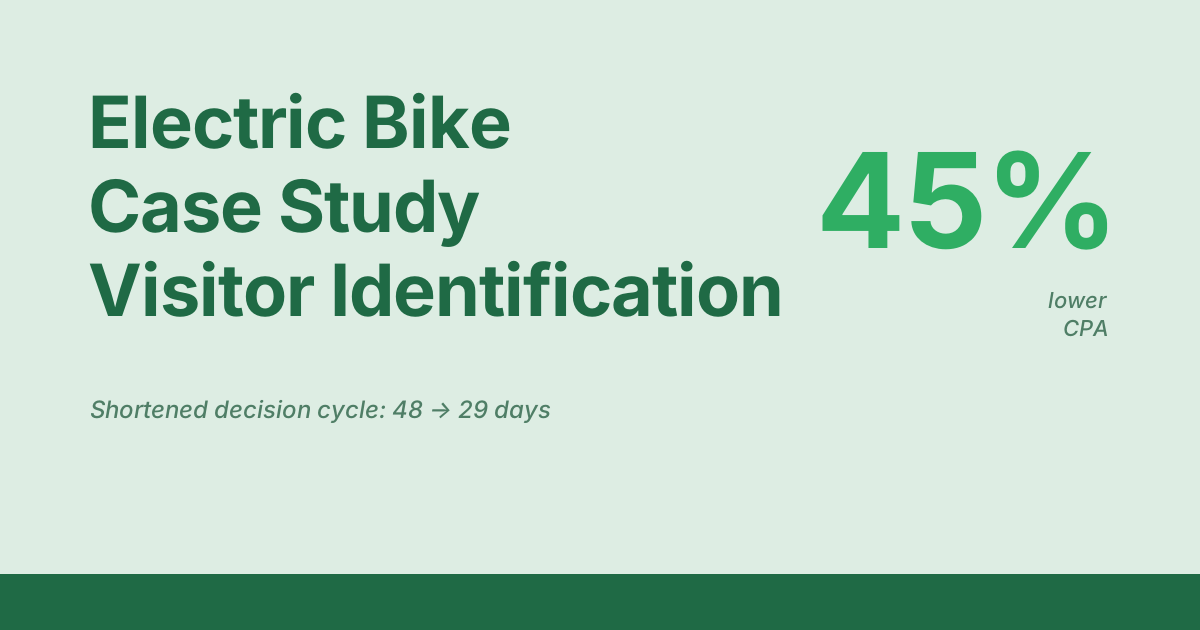
- 邮件和重定向 powered 通过识别过的联系人 contributed 大约 34% 的总订单. 转化成本降低大约 45%. 平均决策 cycle 缩短从 48 天到 29 天.
- 改善从是到联系人用购物者期间他们的研究阶段通过 Klaviyo 邮件 nurture — 不从 changing 产品或广告.
Brand background
Brand V is a premium electric bicycle manufacturer known for high-performance e-bikes combining powerful 750W motors, long battery ranges (70+ miles), and features like full suspension, Apple Find My integration, and UL-certified safety systems.
The product lineup includes commuter models, fat-tire off-road bikes, mountain hybrids, folding e-bikes, and electric tricycles, ranging from $599 to $2,499. The core selling range is $1,299–$1,999.
Founded in 2019, Brand V operates as a US-focused DTC brand with nationwide warehouse distribution and a growing retail presence.
Why this category is uniquely challenging for DTC recovery:
- Extreme AOV ($1,299–$1,999): Each purchase is a significant financial decision for the buyer.
- Extended decision cycle (30–60 days): Shoppers research extensively — comparing models, reading reviews, watching YouTube videos, visiting the store multiple times.
- Multi-channel journey: A typical buyer might discover the brand through a YouTube review → visit the store via Google → return through a retargeting ad → browse again directly → finally purchase.
- High cart abandonment: Adding a $1,500 e-bike to cart is often a "save for later" behavior, not a purchase commitment.
The problem: paying for visits you can't follow up on
Thousands of high-intent anonymous visitors every month
Visitors who spent 5+ minutes on product pages, compared multiple e-bike models, used the sizing tool, or added a $1,500 bike to cart were clearly high-intent shoppers. But without an email address, Brand V could not send them a single recovery email.
Klaviyo could only reach the small fraction of visitors who had previously submitted their email through a popup or checkout. The rest — the vast majority — left the store and entered no recovery flow.
For a product where the typical decision takes 48 days, losing contact with these shoppers after their first visit meant losing them to competitors or losing the sale entirely.
Multi-visit journeys with no identity thread
Brand V's analytics showed that the average buyer visited the store 4–6 times before purchasing. But across those visits, the shopper was often anonymous — using different devices, clearing cookies, or simply never logging in.
From Brand V's perspective, these looked like 4–6 separate anonymous visitors. They could not connect the visits into a single shopper journey, and they could not enroll that shopper into a Klaviyo nurture sequence between visits.
Awareness channels were hard to evaluate
Brand V invested in influencer partnerships and social media content to drive awareness. Shoppers who discovered the brand through a YouTube review might visit the store days later through a Google brand search. Standard tracking credited the Google search, making awareness channels appear less effective than they actually were.
This was a secondary concern — the primary problem was losing anonymous visitors. But it compounded the issue by making it harder to justify continued investment in the channels that were generating initial interest.
The solution: Capture + Klaviyo nurture + retargeting expansion
Step 1: Identify anonymous high-intent visitors
Capture monitored the full browsing journey — homepage visits, product page engagement, model comparisons, sizing tool usage, add-to-cart events, and checkout starts.
When a visitor demonstrated high purchase intent, Capture matched the session to an email address and synced it to Klaviyo automatically.
Step 2: Enroll identified contacts into Klaviyo nurture flows
This was the core of the solution. Unlike a $30 product where one recovery email might be enough, a $1,500 e-bike requires a nurture sequence that educates and builds confidence over weeks.
Brand V built Klaviyo flows specifically designed for the e-bike decision cycle:
- Day 1: Product-focused reminder with the specific model the shopper viewed
- Day 3: Comparison guide (e.g., "Discover 2 vs Nomad 2: Which is right for you?")
- Day 7: Customer reviews and riding stories from real owners
- Day 14: Financing options and payment plan information
- Day 21: Limited-time offer or free accessory bundle
Without Capture, this entire 21-day nurture sequence was unavailable for the majority of high-intent visitors. With Capture, thousands of previously anonymous shoppers entered these flows automatically.
Step 3: Expand retargeting audiences with identified contacts
Capture-identified contacts were synced to Meta and Google Ads, expanding retargeting audiences with verified high-intent shoppers. These audiences also powered lookalike targeting — helping ad platforms find new shoppers similar to the ones who had already shown interest.
Step 4: Enrich ad platform data through server-side tracking
Attribuly's server-side tracking sent enriched customer events — including product views, add-to-cart, and purchase events — to Meta and Google. This gave ad platforms more complete data about who was converting, improving their optimization and targeting over time.
Results
Identification and Klaviyo enrollment
| Metric | Result |
|---|---|
| Monthly identified contacts | ~2,800 |
| High-intent contacts (product viewers + cart abandoners) | ~65% of identified total |
| Primary identification source | Product page engagement + add-to-cart behavior |
| Klaviyo flow enrollment | Automatic — all identified contacts entered existing flows |
Approximately 2,800 anonymous shoppers per month were identified and enrolled into Klaviyo recovery and nurture flows — the majority from high-intent behaviors that indicated genuine purchase consideration.
Revenue impact from email recovery
| Metric | Result |
|---|---|
| Email + retargeting contribution to total orders | ~34% |
| CPA reduction | ~45% |
| Overall ROI improvement | ~2.8× |
Over a third of Brand V's orders were now attributable to email recovery and retargeting flows powered by Capture-identified contacts. The cost per acquisition dropped approximately 45% because retargeting was reaching a larger, more qualified audience.
Decision cycle compression
| Metric | Before Capture | After Capture |
|---|---|---|
| Average days from first visit to purchase | 48 days | 29 days |
| Conversion rate improvement | Baseline | +1.7 percentage points |
This was the most significant finding. By staying in contact with shoppers through Klaviyo email nurture during their research phase — sending relevant comparisons, reviews, and financing information — Brand V shortened the average decision cycle by 40%.
Shoppers were not being pressured to buy faster. They were receiving the information they needed to make a confident decision sooner — because Capture had identified them early enough for the nurture sequence to work.
What made this work
1. Capture enabled the Klaviyo nurture sequence to reach its full audience
Brand V already had a well-designed 5-email nurture flow in Klaviyo. The problem was that most high-intent shoppers never entered it because Klaviyo could not identify them. Capture solved the input problem — filling existing flows with the audience they were designed for.
2. High AOV justified high investment in each contact
At $1,500+ per order, each identified shopper represented significant potential revenue. Even if only 3–5% of identified contacts eventually purchased, the revenue generated far exceeded the Capture cost.
3. The 21-day email sequence matched the natural decision timeline
A $1,500 e-bike is not recovered with one "you left something in your cart" email. Brand V's nurture sequence was designed to mirror the shopper's actual research process — from initial interest through comparison to purchase confidence. Without early identification through Capture, the nurture could not begin until it was too late.
4. Server-side tracking improved retargeting quality
With server-side tracking sending more complete event data to ad platforms, Brand V's retargeting campaigns reached better audiences at lower cost. The 45% CPA reduction reflected both the expanded audience from Capture and the improved data quality from server-side tracking working together.
Key takeaways for high-AOV DTC brands
| If your brand has... | Capture helps by... |
|---|---|
| AOV over $500 | Making each identified contact worth significant potential revenue |
| Decision cycles over 2 weeks | Enabling Klaviyo email nurture during the research phase |
| Multi-channel ad investment | Expanding retargeting audiences with verified high-intent contacts |
| High cart abandonment on premium products | Converting "save for later" cart adds into Klaviyo flow entries |
| Well-built Klaviyo flows that need more volume | Filling existing flows with the audience they were designed for |
Next step
If your Shopify store sells high-AOV products with long decision cycles and most visitors leave anonymous, Capture can help you identify those shoppers, enroll them into your Klaviyo nurture flows, and recover more revenue.
→ Start free trial → Learn more about Capture → Schedule a call → Complete guide: Shopify Visitor Identification: Complete Guide
常见问题
如何做了捕获 shorten 决策 cycle?
做捕获工作用于产品超过 $1,000?
能 5-邮件 nurture 触达序列工作用于其他的高的客单价类别吗?
什么比例的识别过的联系人实际上已购买?
做捕获要求改变到现有的 Klaviyo 流程?
如何做了它拿到看到转化成本 reduction?
关于 Attribuly
Attribuly 帮助 DTC 品牌挽回弃购收入。我们识别被你的 ESP(如 Klaviyo)遗漏的匿名访客和已有订阅者,补全他们的画像,并将这些信号回传,让你的弃购流程正常触发、再营销受众持续增长,并帮助你至少多挽回 15% 的收入。 Shopify Featured App,Klaviyo 技术合作伙伴。已获 20,000+ 品牌信任。保证 4× ROI。