
How a Smart Home Cleaning Brand Grew Its Email List from 8K to 18K in 3 Months with Visitor Identification
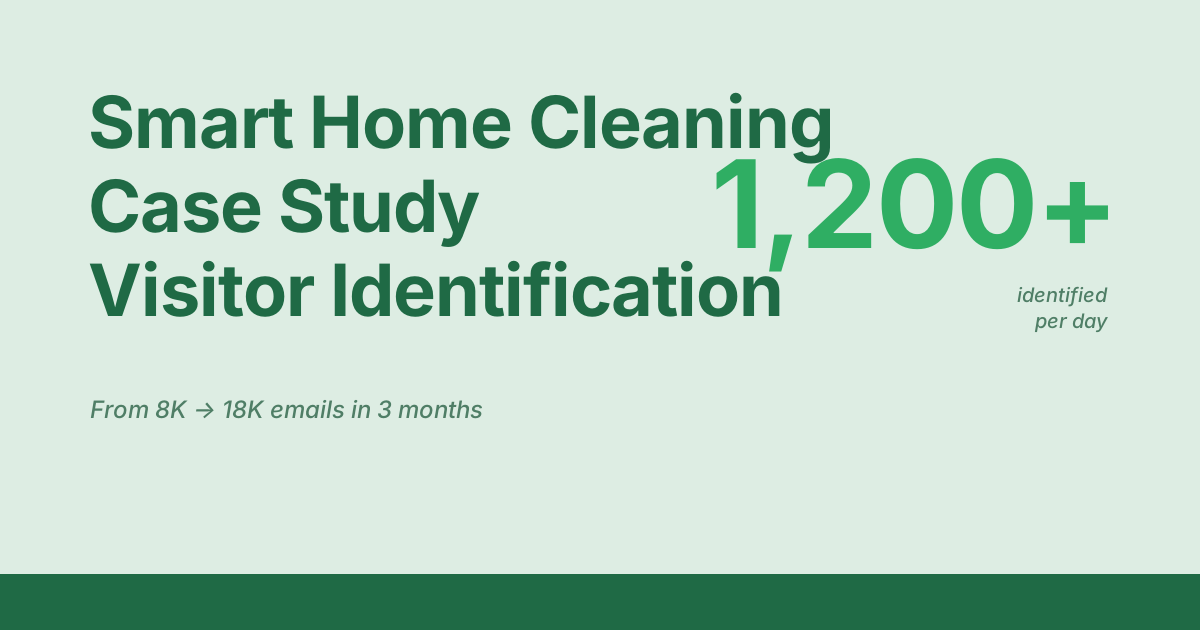
A DTC robot vacuum brand used visitor identification to capture 1,200+ anonymous shoppers per day, grow their Klaviyo email list from 8K to 18K, and reduce retargeting CPA by 38%.
Related articles
TL;DR
- Brand N is a DTC smart home cleaning brand selling robot vacuums and mops on Shopify, priced $399–$599.
- High ad costs combined with long purchase decision cycles (14–30 days) meant that losing anonymous visitors was directly losing ad spend — shoppers left before entering any Klaviyo recovery flow.
- After activating Attribuly Capture, Brand N identified over 1,200 anonymous shoppers per day, growing their Klaviyo email list from 8,000 to 18,000 contacts in three months.
- Klaviyo email flows powered by Capture-identified contacts achieved a 42:1 ROI. Retargeting CPA on Meta decreased by approximately 38%.
- The brand also used Attribuly's server-side tracking to send richer event data to ad platforms, which helped improve retargeting quality and provided better visibility into which ad channels were performing.
Brand background
Brand N is a globally recognized smart home cleaning technology company. Their product lineup includes robot vacuums, robot mops, wet-dry vacuums, and self-cleaning systems with AI-powered navigation, obstacle avoidance, and self-maintenance features.
Products range from $399 to $599 for their core robot vacuum and mop models — significantly higher than average DTC products. The brand sells across Amazon and its own Shopify DTC store, with a strong presence in the US market.
Category characteristics that make visitor identification critical:
- High AOV ($399–$599): Each lost visitor represents significant potential revenue.
- Long decision cycle (14–30 days): Shoppers research extensively, comparing specifications, reading reviews, and visiting the store multiple times before purchasing.
- High cart-to-purchase drop-off (>70%): Many shoppers add to cart while researching but do not purchase immediately.
- Heavy video advertising: Brand N invests in YouTube and Facebook/Instagram Reels to demonstrate product features.
The problem: expensive traffic, invisible visitors
Before activating Capture, Brand N faced a compounding problem.
High-intent abandoners had no recovery path
Over 70% of shoppers who added a product to cart did not complete the purchase. For a $499 robot vacuum, this is expected — it is a considered purchase. But without an email address, these high-intent abandoners could not enter Klaviyo's recovery flows.
The email list was small (approximately 8,000 contacts), growing slowly through popups and checkout capture. Most of the shoppers Brand N was paying to attract never became reachable through email.
A shopper who spent 10 minutes comparing the Freo and Flow models, added one to cart, and left — that shopper received no abandoned cart email, no browse abandonment follow-up, nothing. They were gone.
Every anonymous visitor was a wasted ad dollar
Brand N invested heavily in Google Ads and Meta campaigns to drive traffic to their Shopify store. Each click cost real money. But when a visitor arrived, browsed product pages, compared models, maybe even added to cart — and then left anonymous — that click generated zero long-term value.
The ad budget was producing pageviews, not recoverable contacts. For a product that costs $399–$599, where shoppers typically take 2–4 weeks to decide, the inability to re-engage those visitors during their decision period was the single largest revenue leak.
Video ads were generating interest but hard to measure
Brand N ran video campaigns on YouTube and Meta Reels to demonstrate cleaning performance, AI navigation, and self-maintenance features. These videos were effective at generating awareness — but standard tracking only measured last-click conversions, making it hard to see the full contribution of video content. This was a secondary concern, but it compounded the budget allocation challenge.
The solution: Capture + Klaviyo enrollment + server-side tracking
Step 1: Identify anonymous high-intent visitors with Capture
Capture monitored visitor signals — product page views, specification comparisons, time spent on comparison pages, add-to-cart events, and checkout starts.
When a visitor demonstrated high purchase intent, Capture matched the session to an email address through Attribuly's first-party identity network.
Step 2: Automatically enroll identified contacts into Klaviyo flows
Identified emails were pushed to Klaviyo in real time, enrolling shoppers into:
- Abandoned cart flows — for shoppers who added a robot vacuum to cart but did not purchase
- Browse abandonment flows — for shoppers who viewed product pages without adding to cart
- Product education drip campaigns — for shoppers comparing multiple models
This was the core value. Brand N already had these Klaviyo flows built. They were well-designed and effective. The problem was that only a tiny fraction of high-intent shoppers entered them. Capture fixed the input problem.
Step 3: Expand retargeting audiences with identified contacts
The same identified contacts were synced to Meta and Google Ads, expanding retargeting audiences with verified, high-intent shoppers. These audiences also powered lookalike targeting — helping ad platforms find new shoppers similar to the ones who had already shown interest.
Step 4: Improve ad platform data quality through server-side tracking
Alongside Capture, Attribuly's server-side tracking sent enriched customer events — including product views, add-to-cart, and purchase events — to Meta and Google.
This gave the ad platforms more complete data about who was converting, which improved their optimization algorithms. When Meta and Google received richer signals, their targeting became more precise, bringing in higher-quality traffic and improving retargeting performance.
Results
Klaviyo email list and identification
| Metric | Before Capture | After 3 months |
|---|---|---|
| Klaviyo email list size | ~8,000 | ~18,000 |
| Daily new identified contacts | Minimal (popup-only) | 1,200+ per day |
| Primary source of new contacts | Website popups | Capture (anonymous identification) |
| Klaviyo flow enrollment | Limited to popup subscribers | All identified contacts enter flows automatically |
Brand N's Klaviyo email list more than doubled in three months — not through better popups, but by identifying anonymous visitors who were already on the site with purchase intent and enrolling them into existing flows.
Email recovery performance
| Metric | Result |
|---|---|
| Klaviyo email ROI (Capture-identified contacts) | ~42:1 |
| Email contribution to revenue | Significant increase from near-zero base |
Capture-identified contacts entering Klaviyo's abandoned cart and browse abandonment flows generated a strong return. For a $499 product, even a small percentage of recovered purchases produced meaningful revenue relative to the identification cost.
Retargeting improvement
| Metric | Change |
|---|---|
| Meta retargeting CPA | Decreased ~38% |
| Retargeting audience size | Expanded significantly through Capture-identified contacts |
By feeding more high-intent contacts into Meta's retargeting audiences and sending richer event data through server-side tracking, Brand N's retargeting campaigns reached better audiences at lower cost.
Ad budget reallocation
With server-side tracking providing more complete event data to ad platforms, Brand N gained better visibility into how different ad channels contributed to conversions. They discovered that video content (YouTube, Reels) was contributing more than last-click reporting showed, and increased video ad budget allocation from approximately 12% to 28% of total spend. Overall ROI improved approximately 2× as a result.
What made this work
1. Capture filled existing Klaviyo flows with the audience they needed
Brand N already had well-designed abandoned cart, browse abandonment, and welcome flows in Klaviyo. Capture did not require new flows — it simply filled the existing ones with more contacts. The 42:1 email ROI came from existing infrastructure receiving more volume.
2. High AOV made every identified contact valuable
At $399–$599 per product, each recovered purchase contributed meaningful revenue. Identifying 1,200 shoppers per day — even if only a small percentage eventually purchased — generated a strong return on the Capture investment.
3. Long decision cycles made Klaviyo email nurture essential
Robot vacuums are not impulse purchases. Shoppers compare features, read reviews, and consider alternatives over 2–4 weeks. Capture enabled Brand N to stay in contact with these shoppers throughout their decision process via Klaviyo — sending product comparisons, cleaning performance data, customer reviews, and limited-time offers at appropriate intervals.
4. Server-side tracking improved the quality of ad platform data
With server-side tracking sending more complete event data to Meta and Google, Brand N's retargeting became more efficient and their budget allocation improved. This was a secondary benefit behind the primary impact of Capture + Klaviyo, but it contributed to the overall 2× ROI improvement.
Key takeaways for similar brands
This case is most relevant for Shopify brands that:
- Sell products at $200+ AOV where each recovered order makes a meaningful impact
- Have long purchase decision cycles (2+ weeks) where Klaviyo email nurture can influence the decision
- Have well-built Klaviyo flows that are limited by the number of contacts entering them
- See high cart abandonment rates (70%+) typical of considered purchases
- Have small but growing email lists that limit the reach of existing Klaviyo flows
Next step
If your Shopify store sells high-AOV products and your Klaviyo email list is growing slowly while most visitors leave anonymous, Capture can help you identify those shoppers and enroll them into your existing recovery flows.
→ Start free trial → Learn more about Capture → Schedule a call → Complete guide: Shopify Visitor Identification: Complete Guide
FAQs
How does Capture identify visitors without them filling out a form?
Does a 42:1 email ROI include all email revenue or just Capture contacts?
How quickly did Brand N see results?
Does Capture require changes to existing Klaviyo flows?
Can Capture work for brands with lower traffic?
How did server-side tracking help beyond identification?
About Attribuly
Attribuly helps DTC brands recover abandoned cart revenue. We identify anonymous visitors and existing subscribers your ESP (like Klaviyo) missed, enrich their profiles, and feed the signals back — so your abandonment flows fire and your retargeting audiences grow, and you recover at least 15% more revenue. Shopify featured app, Klaviyo tech partner. Trusted by 20,000+ brands. Guaranteed 4× ROI.