
How an Electric Bike Brand Shortened User Purchase Decisions from 48 to 29 Days with Visitor Identification
A DTC e-bike brand ($1,299–$1,999) used visitor identification to capture 2,800+ anonymous shoppers monthly, enroll them into Klaviyo flows, reduce CPA by 45%, and shorten purchase decisions by 40%.
Related articles
TL;DR
- Brand V is a DTC electric bicycle brand selling premium e-bikes on Shopify at $1,299–$1,999 — among the highest AOVs in the DTC space.
- Shoppers typically visited the store multiple times across different channels over 30–60 days before purchasing. Most of these visits were anonymous, meaning no recovery emails could be sent.
- After activating Attribuly Capture, Brand V identified approximately 2,800 high-intent anonymous shoppers per month, with 65% coming from product page viewers and cart abandoners. Those contacts were automatically enrolled into Klaviyo abandoned cart and browse abandonment flows.
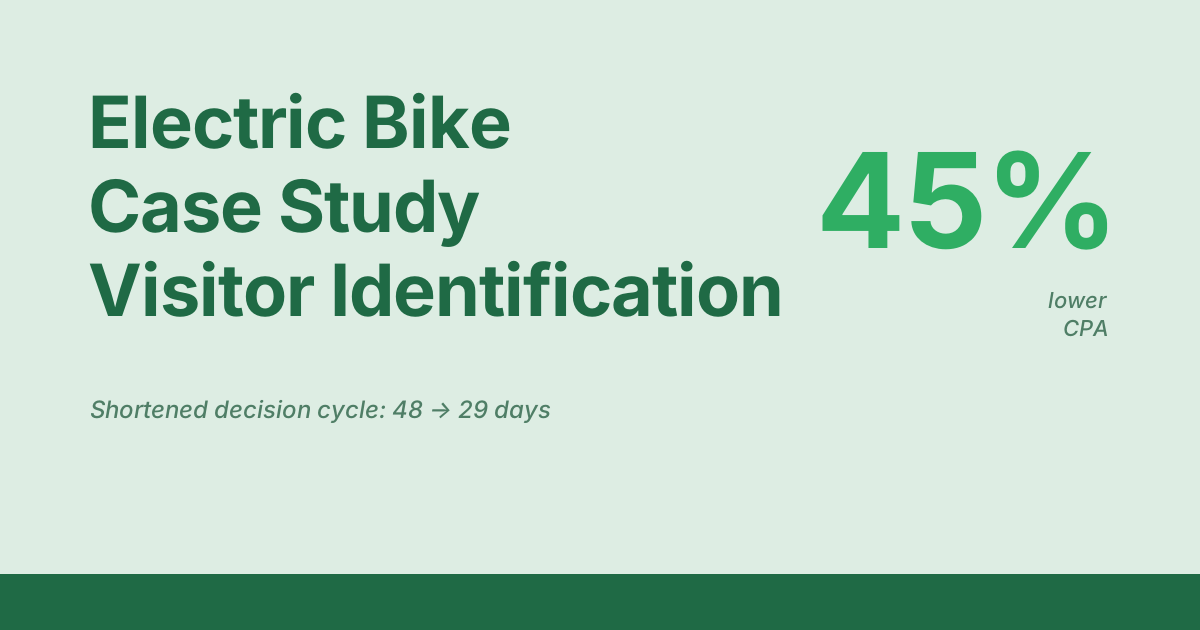
- Email and retargeting powered by identified contacts contributed approximately 34% of total orders. CPA decreased roughly 45%. Average decision cycle shortened from 48 days to 29 days.
- The improvement came from being able to stay in contact with shoppers during their research phase through Klaviyo email nurture — not from changing the product or the ads.
Brand background
Brand V is a premium electric bicycle manufacturer known for high-performance e-bikes combining powerful 750W motors, long battery ranges (70+ miles), and features like full suspension, Apple Find My integration, and UL-certified safety systems.
The product lineup includes commuter models, fat-tire off-road bikes, mountain hybrids, folding e-bikes, and electric tricycles, ranging from $599 to $2,499. The core selling range is $1,299–$1,999.
Founded in 2019, Brand V operates as a US-focused DTC brand with nationwide warehouse distribution and a growing retail presence.
Why this category is uniquely challenging for DTC recovery:
- Extreme AOV ($1,299–$1,999): Each purchase is a significant financial decision for the buyer.
- Extended decision cycle (30–60 days): Shoppers research extensively — comparing models, reading reviews, watching YouTube videos, visiting the store multiple times.
- Multi-channel journey: A typical buyer might discover the brand through a YouTube review → visit the store via Google → return through a retargeting ad → browse again directly → finally purchase.
- High cart abandonment: Adding a $1,500 e-bike to cart is often a "save for later" behavior, not a purchase commitment.
The problem: paying for visits you can't follow up on
Thousands of high-intent anonymous visitors every month
Visitors who spent 5+ minutes on product pages, compared multiple e-bike models, used the sizing tool, or added a $1,500 bike to cart were clearly high-intent shoppers. But without an email address, Brand V could not send them a single recovery email.
Klaviyo could only reach the small fraction of visitors who had previously submitted their email through a popup or checkout. The rest — the vast majority — left the store and entered no recovery flow.
For a product where the typical decision takes 48 days, losing contact with these shoppers after their first visit meant losing them to competitors or losing the sale entirely.
Multi-visit journeys with no identity thread
Brand V's analytics showed that the average buyer visited the store 4–6 times before purchasing. But across those visits, the shopper was often anonymous — using different devices, clearing cookies, or simply never logging in.
From Brand V's perspective, these looked like 4–6 separate anonymous visitors. They could not connect the visits into a single shopper journey, and they could not enroll that shopper into a Klaviyo nurture sequence between visits.
Awareness channels were hard to evaluate
Brand V invested in influencer partnerships and social media content to drive awareness. Shoppers who discovered the brand through a YouTube review might visit the store days later through a Google brand search. Standard tracking credited the Google search, making awareness channels appear less effective than they actually were.
This was a secondary concern — the primary problem was losing anonymous visitors. But it compounded the issue by making it harder to justify continued investment in the channels that were generating initial interest.
The solution: Capture + Klaviyo nurture + retargeting expansion
Step 1: Identify anonymous high-intent visitors
Capture monitored the full browsing journey — homepage visits, product page engagement, model comparisons, sizing tool usage, add-to-cart events, and checkout starts.
When a visitor demonstrated high purchase intent, Capture matched the session to an email address and synced it to Klaviyo automatically.
Step 2: Enroll identified contacts into Klaviyo nurture flows
This was the core of the solution. Unlike a $30 product where one recovery email might be enough, a $1,500 e-bike requires a nurture sequence that educates and builds confidence over weeks.
Brand V built Klaviyo flows specifically designed for the e-bike decision cycle:
- Day 1: Product-focused reminder with the specific model the shopper viewed
- Day 3: Comparison guide (e.g., "Discover 2 vs Nomad 2: Which is right for you?")
- Day 7: Customer reviews and riding stories from real owners
- Day 14: Financing options and payment plan information
- Day 21: Limited-time offer or free accessory bundle
Without Capture, this entire 21-day nurture sequence was unavailable for the majority of high-intent visitors. With Capture, thousands of previously anonymous shoppers entered these flows automatically.
Step 3: Expand retargeting audiences with identified contacts
Capture-identified contacts were synced to Meta and Google Ads, expanding retargeting audiences with verified high-intent shoppers. These audiences also powered lookalike targeting — helping ad platforms find new shoppers similar to the ones who had already shown interest.
Step 4: Enrich ad platform data through server-side tracking
Attribuly's server-side tracking sent enriched customer events — including product views, add-to-cart, and purchase events — to Meta and Google. This gave ad platforms more complete data about who was converting, improving their optimization and targeting over time.
Results
Identification and Klaviyo enrollment
| Metric | Result |
|---|---|
| Monthly identified contacts | ~2,800 |
| High-intent contacts (product viewers + cart abandoners) | ~65% of identified total |
| Primary identification source | Product page engagement + add-to-cart behavior |
| Klaviyo flow enrollment | Automatic — all identified contacts entered existing flows |
Approximately 2,800 anonymous shoppers per month were identified and enrolled into Klaviyo recovery and nurture flows — the majority from high-intent behaviors that indicated genuine purchase consideration.
Revenue impact from email recovery
| Metric | Result |
|---|---|
| Email + retargeting contribution to total orders | ~34% |
| CPA reduction | ~45% |
| Overall ROI improvement | ~2.8× |
Over a third of Brand V's orders were now attributable to email recovery and retargeting flows powered by Capture-identified contacts. The cost per acquisition dropped approximately 45% because retargeting was reaching a larger, more qualified audience.
Decision cycle compression
| Metric | Before Capture | After Capture |
|---|---|---|
| Average days from first visit to purchase | 48 days | 29 days |
| Conversion rate improvement | Baseline | +1.7 percentage points |
This was the most significant finding. By staying in contact with shoppers through Klaviyo email nurture during their research phase — sending relevant comparisons, reviews, and financing information — Brand V shortened the average decision cycle by 40%.
Shoppers were not being pressured to buy faster. They were receiving the information they needed to make a confident decision sooner — because Capture had identified them early enough for the nurture sequence to work.
What made this work
1. Capture enabled the Klaviyo nurture sequence to reach its full audience
Brand V already had a well-designed 5-email nurture flow in Klaviyo. The problem was that most high-intent shoppers never entered it because Klaviyo could not identify them. Capture solved the input problem — filling existing flows with the audience they were designed for.
2. High AOV justified high investment in each contact
At $1,500+ per order, each identified shopper represented significant potential revenue. Even if only 3–5% of identified contacts eventually purchased, the revenue generated far exceeded the Capture cost.
3. The 21-day email sequence matched the natural decision timeline
A $1,500 e-bike is not recovered with one "you left something in your cart" email. Brand V's nurture sequence was designed to mirror the shopper's actual research process — from initial interest through comparison to purchase confidence. Without early identification through Capture, the nurture could not begin until it was too late.
4. Server-side tracking improved retargeting quality
With server-side tracking sending more complete event data to ad platforms, Brand V's retargeting campaigns reached better audiences at lower cost. The 45% CPA reduction reflected both the expanded audience from Capture and the improved data quality from server-side tracking working together.
Key takeaways for high-AOV DTC brands
| If your brand has... | Capture helps by... |
|---|---|
| AOV over $500 | Making each identified contact worth significant potential revenue |
| Decision cycles over 2 weeks | Enabling Klaviyo email nurture during the research phase |
| Multi-channel ad investment | Expanding retargeting audiences with verified high-intent contacts |
| High cart abandonment on premium products | Converting "save for later" cart adds into Klaviyo flow entries |
| Well-built Klaviyo flows that need more volume | Filling existing flows with the audience they were designed for |
Next step
If your Shopify store sells high-AOV products with long decision cycles and most visitors leave anonymous, Capture can help you identify those shoppers, enroll them into your Klaviyo nurture flows, and recover more revenue.
→ Start free trial → Learn more about Capture → Schedule a call → Complete guide: Shopify Visitor Identification: Complete Guide
FAQs
How did Capture shorten the decision cycle?
Does Capture work for products over $1,000?
Can the 5-email nurture sequence work for other high-AOV categories?
What percentage of identified contacts actually purchased?
Does Capture require changes to existing Klaviyo flows?
How long did it take to see the CPA reduction?
About Attribuly
Attribuly helps DTC brands recover abandoned cart revenue. We identify anonymous visitors and existing subscribers your ESP (like Klaviyo) missed, enrich their profiles, and feed the signals back — so your abandonment flows fire and your retargeting audiences grow, and you recover at least 15% more revenue. Shopify featured app, Klaviyo tech partner. Trusted by 20,000+ brands. Guaranteed 4× ROI.