
How to Compare Channel and Campaign Performance With Multi-Touch Attribution
Multi-touch attribution helps you compare channels and campaigns fairly across the full customer journey. Learn how to break down performance, stress-test attribution models, and avoid last-click budget mistakes.
Related articles
TL;DR
- Multi-touch attribution helps you compare channels and campaigns across the full customer journey, not only the final click.
- Most mistakes come from mixing definitions: conversion goal, attribution model, and time window.
- Start with a single breakdown (channel) and add a second (campaign) only when it changes the decision you can make.
- Before reallocating spend, stress-test your conclusion under multiple attribution models.
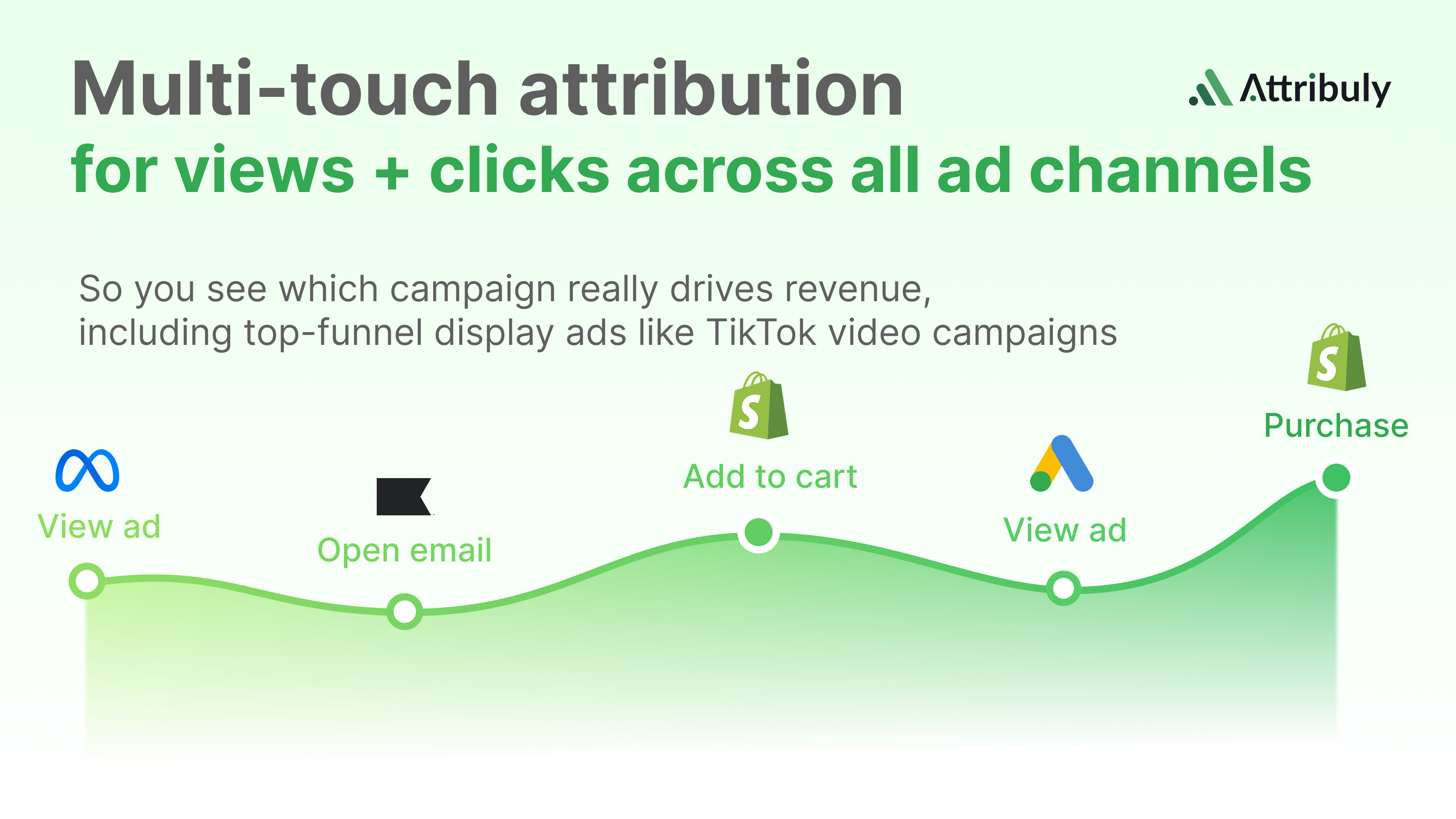
If you have ever moved budget based on last click results and then watched performance collapse, you have already learned the core lesson of marketing measurement: a customer journey is not a single moment.
Multi-touch attribution is not about finding a perfect truth. It is about making safer decisions. It helps you compare channels and campaigns based on how they contribute across touchpoints, not just how often they happen to be the final interaction.
This post explains a practical way to read a channel and campaign attribution report. It uses general concepts first, then shows how Attribuly implements them in its Attribution All reporting.
Why channel attribution gets misread so often
Most attribution mistakes come from mixing definitions:
- Channels are compared using different time windows.
- Campaigns are judged with different conversion goals.
- Reports switch attribution models between weeks without noticing.
- Upper-funnel touchpoints are expected to perform like closers.
If you want channel attribution you can trust, you need a consistent frame.
The decision framework for reading an attribution report
Before you look at ROAS or conversion value, answer three questions.
What is the conversion goal?
If you mix purchase and lead goals, you will optimize the wrong thing. A clean attribution report starts by defining the conversion goal and then keeping it consistent.
What is the attribution model?
An attribution model is a rule for assigning credit across touchpoints. Your model choice can change your conclusion without changing the underlying customer behavior.
Use one model for trend monitoring. Change models when you want to stress-test a budget decision.
What breakdown do you actually need?
Channel attribution answers whether a channel is contributing. Campaign attribution answers which campaigns inside a channel are doing the work.
A common pattern is to break down by two dimensions:
- Channel first, then campaign
- Campaign first, then channel
This keeps your analysis close to the decision you have to make.
How to compare time periods without fooling yourself
Most teams want week-over-week or month-over-month answers, but comparisons go wrong when they only compare totals.
When you compare periods, look for:
- Changes in mix: which channels or campaigns are taking more share
- Changes in efficiency: ROAS, CPA, conversion rate, and conversion value per session
- Changes in contribution: whether upper-funnel touchpoints are being crowded out
If possible, compare the same breakdown under the same attribution model, then interpret deltas rather than absolute numbers.
Filtering matters more than most people think
Attribution reports get noisy fast. If you cannot filter precisely, you end up making decisions from blended traffic that does not match the hypothesis you are testing.
Useful filters usually include:
- Channel selection
- Include and exclude rules for source, medium, and campaign
- Search to focus on a subset of campaigns
The goal is not to hide bad news. The goal is to isolate a decision context.
Where Attribuly fits in
Attribuly’s Attribution All reporting is designed for teams that want to compare channels and campaigns under a consistent attribution model.
It supports:
- Comparing two date ranges with current, comparison, and change views
- Breaking down results by up to two dimensions, such as channel and campaign
- Filtering with include and exclude rules across common traffic fields
- Searching within large campaign lists to isolate the slice you want to evaluate
- Customizing visible columns and exporting results when needed
If your goal is to answer channel attribution and campaign attribution questions for ecommerce ROI, this workflow keeps the analysis close to the decision.
FAQs
Is last click always wrong?
How many dimensions should I break down by?
Which attribution model should I use?
About Attribuly
Attribuly helps DTC brands recover abandoned cart revenue. We identify anonymous visitors and existing subscribers your ESP (like Klaviyo) missed, enrich their profiles, and feed the signals back — so your abandonment flows fire and your retargeting audiences grow, and you recover at least 15% more revenue. Shopify featured app, Klaviyo tech partner. Trusted by 20,000+ brands. Guaranteed 4× ROI.