High-AOV Visitor Identification: An Electronics Case Study
See how a consumer electronics DTC brand lifted abandoned-cart recovery revenue 24% in three weeks, tripled its email list, and doubled retargeting audiences through visitor identification.
相关文章
要点
- That's the gap a consumer-electronics DTC brand set out to close.
- The headline number landed fast — within the first three weeks.
- A fast-fashion brand would see similar mechanics with smaller stakes.
- You don't need the exact same stack to copy the outcome.

The most expensive shopper on your site is the one you never get a chance to email. That's a hard truth in consumer electronics, where a single abandoned cart can carry hundreds — sometimes thousands — of dollars in margin. What if the biggest recovery win wasn't a sharper discount or a redesigned flow, but simply knowing who your visitors are?
One DTC electronics brand I've been tracking ran exactly that test. Within three weeks of activating visitor identification, abandoned-cart recovery revenue climbed 24%, the email list tripled, and retargeting audiences doubled. No new incentives. No flow rewrites. Just the names behind anonymous sessions.
The Setup: Turning Anonymous Sessions into Recoverable Shoppers
That's the gap a consumer-electronics DTC brand set out to close. The company ran a Shopify store with mature Klaviyo automations and active Meta and Google retargeting. Paid acquisition was doing its job — qualified traffic arrived in healthy volume. The leak was downstream. Most of those visitors stayed anonymous: they browsed, added to cart, started checkout, and vanished without leaving a name.
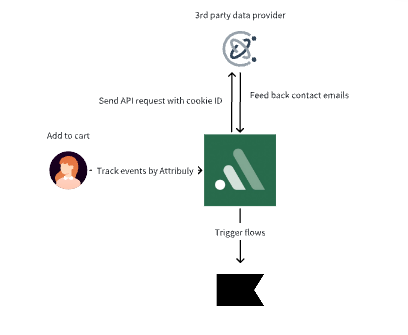
The fix wasn't a rebuild. It was activating high-AOV visitor identification — matching anonymous sessions to a known, reachable identity at the moments when intent peaks. The brand monitored four signals:
Product page views
Add-to-cart events
Checkout starts
Time on site
Checkout starts were the priority: a shopper who begins checkout has already made most of the decisions that matter. When a session crossed the intent threshold, it was matched through a first-party, consent-based identity network. Matched contacts then flowed into the brand's existing Klaviyo automations — abandoned cart, browse abandonment, welcome, promotions — with zero redesign. The same identified contacts expanded Meta and Google audiences, giving the brand more high-intent shoppers to reach through custom audiences and Google Customer Match.
Think of the brand's flows as a well-oiled engine that simply wasn't getting fuel. Visitor identification didn't tune the engine; it connected the fuel line. Attribuly Capture was the tool this merchant activated, and the underlying mechanics match any solid visitor identification setup: observe intent signals, match identity, sync to the channels that convert.

The Results: +24% Recovery Revenue in Three Weeks
The headline number landed fast — within the first three weeks. Here's the before-and-after, as documented in Attribuly's published case study:
Dimension | Before | After |
|---|---|---|
Shopper identity | Mostly anonymous | High-intent visitors identified |
Klaviyo reach | Limited to known shoppers | Expanded to identified shoppers |
Abandoned-cart recovery revenue | Baseline | +24% in three weeks |
Email list growth | Slow, forms and popups only | 3× growth |
Retargeting audiences | Constrained | 2× expansion |
Projected email revenue | Baseline | 3× projected growth |
Each number traces to a specific lever. Recovery revenue rose because identified abandoners finally entered existing flows — a larger pool of eligible shoppers, at the same conversion rate. The list grew 3× because identification captured emails from people who would never have filled out a form. Retargeting audiences doubled because the same first-party contacts fed Meta and Google, not just Klaviyo. And the 3× email-revenue projection follows directly: more contacts, flowing into automations that were already profitable. In practice, the brand recovered revenue it had already paid to acquire — the most efficient money in the business.
A fair caveat: these are the brand's own documented results, first-party and brand-reported, measured over a three-week window. Your numbers will shift with traffic mix and offer. But the direction of the levers isn't brand-specific. Identity coverage is what multiplies everything downstream.
Why High-AOV Electronics Merchants Benefit Most
A fast-fashion brand would see similar mechanics with smaller stakes. Electronics is where this approach compounds, for three structural reasons.
First, the decision cycle. High-ticket electronics purchases stretch over weeks or months of research. Shoppers leave, compare, return, leave again — that's process, not disinterest. An always-on identification pipeline keeps those returning researchers enrolled in recovery and nurture flows across the whole window, not just a single session.
Second, the psychology. Electronics buyers deliberate over price, financing, warranty, and trust; they rarely buy on impulse. That's why recovery email genuinely moves this category — Klaviyo's abandoned-cart benchmarks show a 3.33% average placed-order rate, with top performers reaching 7.69%. For high-ticket carts, lead with value-adds: free shipping, Shop Pay Installments or Klarna, crystal-clear warranty language. Save discounts for the final message in a 3-to-5-email sequence stretched over 5–10 days. A shopper who needs six days to decide won't convert on a 72-hour sprint.
Third, the compounding. Each recovered high-AOV cart funds more acquisition, which brings more anonymous visitors, which feeds identification — a loop that keeps widening your recoverable pool.
A Replicable Playbook for High-AOV Visitor Identification
You don't need the exact same stack to copy the outcome. Here's the tool-agnostic version of what worked:
Instrument intent signals first. Capture product views, add-to-cart, checkout starts, and time on site — respecting consent state from day one.
Define high-intent rules, not "identify everyone." Prioritize checkout starters and cart adders, then deep product-page viewers. Score by intent, not volume.
Match identity on high-confidence sessions. Use a first-party, consent-based resolution method, and sync matched emails to your email platform.
Let existing flows do the work. Newly identified contacts enter your current abandoned-cart and browse-abandonment automations — no redesign required.
Feed Meta and Google. Push the same identified contacts into custom audiences and Customer Match to widen retargeting reach.
Measure what matters. Track trigger rate, recoverable-abandoner percentage, recovered revenue, list growth, and audience size. If you can, hold out 10–20% of identified contacts to validate incrementality.
Two guardrails before you start. Don't chase every visitor — focus on ICP-fit, high-intent sessions, or you'll fill your list with tire-kickers. And keep the compliance posture clean: first-party, consented identification, a transparent privacy notice, and an opt-out. Done that way, this approach fits comfortably within GDPR and CCPA expectations.
Where to Start
You don't need a big program to test this. First, calculate your trigger rate — Klaviyo flow entries divided by cart additions. If it's under 20%, you have a reach problem, not a copy problem. Then run a three-week pilot on your highest-intent segment: activate a high-AOV visitor identification tool like Attribuly, sync identified contacts to your existing flows, and watch the recoverable-abandoner percentage move.
The shoppers were always there, researching and comparing and adding your products to carts. The only thing missing was their names. That's a fixable problem.
| Dimension | Before | After |
|---|---|---|
| Shopper identity | Mostly anonymous | High-intent visitors identified |
| Klaviyo reach | Limited to known shoppers | Expanded to identified shoppers |
| Abandoned-cart recovery revenue | Baseline | +24% in three weeks |
| Email list growth | Slow, forms and popups only | 3× growth |
| Retargeting audiences | Constrained | 2× expansion |
| Projected email revenue | Baseline | 3× projected growth |
来源与扩展阅读
关于 Attribuly
Attribuly 帮助 DTC 品牌挽回弃购收入。我们识别被你的 ESP(如 Klaviyo)遗漏的匿名访客和已有订阅者,补全他们的画像,并将这些信号回传,让你的弃购流程正常触发、再营销受众持续增长,并帮助你至少多挽回 15% 的收入。 Shopify Featured App,Klaviyo 技术合作伙伴。已获 20,000+ 品牌信任。保证 4× ROI。