
Best Attribution Software for Shopify Brands (2026): Deep‑Dive Ranked Review
Compare 10 best attribution software for Shopify brands—server-side CAPI, TikTok Events API, Klaviyo sync, and starting prices. Read our 2026 ranked review to pick the right tool.
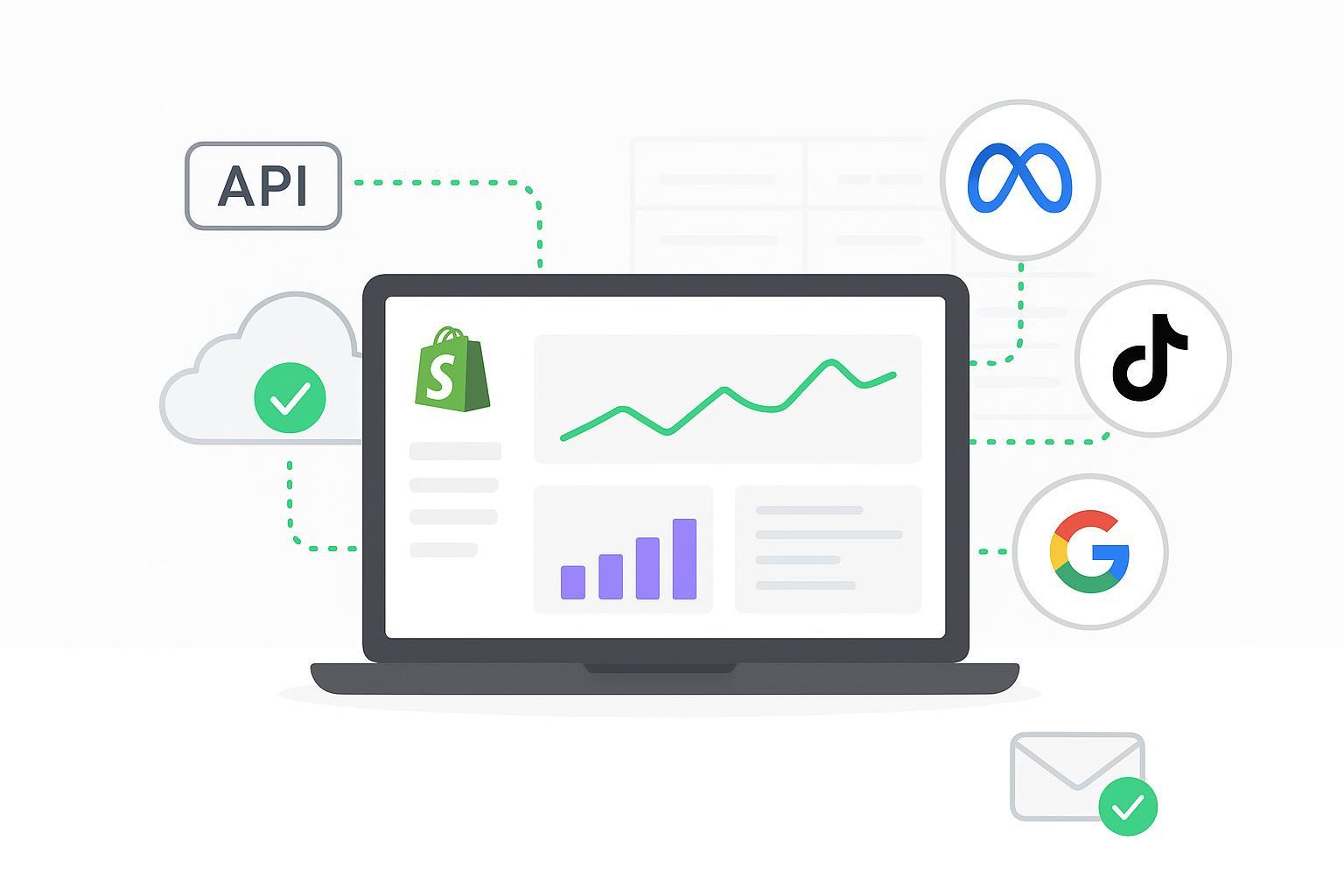
Picking the right attribution platform can be the difference between scaling profitable campaigns and playing whack‑a‑mole with mismatched orders and ad platform dashboards. This 2026 ranked roundup is written for Shopify and Shopify Plus teams that need trustworthy data across pixels and server‑side signals—and practical guidance on which tools fit which budgets and stacks.
We evaluated tools using a transparent methodology that emphasizes attribution accuracy (pixel + server‑side), Shopify‑native depth, integrations with Meta/TikTok/Google and Klaviyo, decision‑useful reporting (ROAS/LTV), implementation speed, value for money, and privacy stewardship. If you’re short on time, skim the Key takeaways and the comparison table, then jump to the Decision guide.
Soft CTA: Want a quick refresher on internal vs external attribution and why pixels alone miss purchases? Read the Shopify fundamentals explainer: the Internal vs External Attribution guide (2026) on Attribuly’s blog.
Key takeaways
The primary buyer need in 2026 is server‑side attribution that pairs cleanly with browser pixels (deduplicated via event_id/transaction_id) to reduce under‑reporting and improve optimization signals.
For most Shopify brands, the “best” tool depends on ad spend tier, stack preferences (GA4‑centric vs ad‑platform centric), and whether Klaviyo and audience sync are must‑haves.
Always verify accuracy over a 14–30 day window with a standard test protocol: map shared IDs, monitor EMQ (Meta) and dedupe logs, and reconcile against Shopify orders before committing.
The tools in this list vary widely in price—from sub‑$100 to four figures monthly. All pricing here is verified June 2026 and subject to change.
Methodology / How we chose
We scored each platform against seven weighted criteria (sum to 100). Evidence prioritized official product/support docs and recent, reputable third‑party sources. We validated server‑side claims by looking for explicit docs on Meta Conversions API, TikTok Events API, and Google Enhanced Conversions, plus any deduplication guidance.
Attribution accuracy & coverage (pixel + server‑side): 24
Shopify‑native depth & data fidelity: 18
Ad platform & lifecycle integrations: 14
Decision‑useful reporting (ROAS, LTV, incrementality): 16
Ease of implementation & governance: 12
Value for money at Shopify spend tiers: 10
Privacy compliance & data stewardship: 6
Scoring transparency: Where official documentation was unclear (e.g., TikTok Events API or Google Enhanced Conversions), we noted the gap and weighted accordingly. Pricing was verified as of June 2026 and marked “subject to change.”
Comparison table: best attribution software for Shopify (2026)
Tool | Best for | Attribution models | Server‑side tracking | Meta/TikTok/Google | Klaviyo/email | Starting price (USD) | Limitations |
|---|---|---|---|---|---|---|---|
Triple Whale | Fast setup + dashboards with signal enrichment | First/Last, vendor MTA | Yes (Sonar Optimize) | Meta CAPI, TikTok Events API; Google EC unclear | Klaviyo integration | $0 Free; Foundation $219+; Automate $749+ | GMV‑scaled cost; Google EC docs unclear |
Northbeam | Higher‑spend probabilistic modeling | Proprietary models | Orders API + pixel | CAPI/Events API/EC not clearly documented | Klaviyo tracking guidance | ~Starter ~$1,000+ | High price; limited public API specifics |
Cometly | Paid‑social‑heavy stacks needing server‑side forwarding | Rule/MTA (vendor) | Yes (server‑side forwarding) | Meta CAPI, TikTok Events API, Google Ads | Not evidenced here | ~Core ~$750+ | Pricing inconsistency; Plus edge cases unclear |
Hyros | Complex, high‑ticket funnels incl. calls | Proprietary MTA | Yes | CAPI likely; TikTok/EC not confirmed | Not evidenced here | Sales‑led (hundreds→4‑figures) | Sparse Shopify‑specific docs |
Shopify‑first server‑side + audience sync | First/Last/Linear + decision‑ready | Yes (Meta, TikTok, Google EC) | Meta CAPI, TikTok Events API, Google EC | Klaviyo sync supported | Quote‑based (subject to change) | Needs consolidated public pricing page | |
Elevar | Robust server‑side piping + GTM governance | Model‑agnostic piping | Yes (Shopify S2S) | Meta CAPI explicit; others less clear | Not evidenced here | ~$150 std; ~$300 Plus | Channel specifics partly implicit |
Polar Analytics | Analytics + multi‑model with CAPI enhancer | 10+ models incl. data‑driven | Yes (CAPI Enhancer) | Meta CAPI; TikTok beta; Google Ads events | Not evidenced here | ~$300+ Analyze; ~$450+ Enrich | TikTok beta; EC phrasing not explicit |
Wicked Reports | LTV/long‑window for DTC/subscriptions | LTV/long‑window focus | First‑party + server‑side | Meta Advanced Signal; Google Ads | Not evidenced here | $499+ | TikTok Events API not clear |
ThoughtMetric | Budget‑friendly SMB attribution | 5 models | Yes (server‑side) | Meta CAPI; Google EC; TikTok unclear | Not evidenced here | $99+ (50k pageviews) | Pageview caps; TikTok doc unclear |
Littledata | GA4‑centric tracking with EC + CAPI | GA4‑aligned | Client + server | Meta CAPI; Google EC | Not evidenced here | ~$99+ (by orders) | TikTok Events API not explicit |
Pricing verified June 2026; subject to change.
The best attribution software for Shopify in 2026 (ranked list)
1) Triple Whale — Best for fast Shopify rollout with server‑side signal enrichment
Key capabilities
Sonar Optimize enriches first‑party data and forwards to Meta CAPI and TikTok Events API.
Shopify‑friendly setup with dashboards that unify ad performance views.
Pros
Quick time‑to‑value for DTC teams.
Free tier for light usage; upgrade path to automation.
Clear EMQ‑style guidance via knowledge base articles.
Cons
Google Enhanced Conversions for Shopify not clearly documented in public pages referenced here.
Costs can scale with GMV.
Best for / Not for
Best for: Shopify DTC teams ramping paid social who want fast setup.
Not for: Teams needing explicit Google EC documentation and deep governance.
Integrations: Meta, TikTok; Google Ads support varies by setup.
Attribution models: First/Last; vendor MTA options.
Server‑side details: Sonar Optimize forwards enriched events.
Starting price: Free ($0); Foundation from $219/mo; Automate from $749/mo (verified June 2026; subject to change).
Evidence: See the Triple Whale pricing page and Sonar Optimize documentation for Meta and TikTok.
2) Northbeam — Best for higher‑spend, probabilistic modeling and MMM‑style analysis
Key capabilities
Uses Shopify Orders API and a custom pixel via Customer Events.
Advanced modeling and cohort analysis for media mix decisions.
Pros
Strong for aggregate decisioning at higher spends.
Ingests orders server‑side for purchase source of truth.
Backfill endpoints and data pipeline docs.
Cons
Public documentation does not clearly confirm native Meta CAPI, TikTok Events API, or Google Enhanced Conversions specifics in this research set.
Pricing transparency is limited and skewed upmarket.
Best for / Not for
Best for: Brands spending $250k+/month wanting probabilistic insights.
Not for: SMBs seeking clear server‑side docs and lower fixed pricing.
Integrations: Shopify APIs; ad platform specifics partly opaque publicly.
Attribution models: Proprietary.
Server‑side details: Orders API ingestion + pixel capture.
Starting price: Commonly cited from ~$1,000+/mo (June 2026; subject to change).
Evidence: Review Northbeam’s Shopify installation guide and data sources documentation.
3) Cometly — Best for paid‑social‑heavy stacks that prioritize server‑side forwarding
Key capabilities
Server‑side capture in Shopify with forwarding to Meta/TikTok/Google.
Emphasis on stable CAPI delivery for optimization.
Pros
Clear messaging around server‑side event forwarding.
Practical setup guides for Meta and TikTok.
Useful for teams centralizing around paid social channels.
Cons
Pricing appears sales‑led and inconsistent across sources.
Limited detail on Shopify Plus checkout edge cases.
Best for / Not for
Best for: Teams spending heavily on Meta/TikTok who want dependable CAPI feeds.
Not for: Buyers needing transparent, self‑serve pricing and extensive Shopify‑Plus specifics.
Integrations: Meta CAPI, TikTok Events API, Google Ads server events.
Attribution models: Vendor rules/MTA.
Server‑side details: Server‑side forwarding pipeline.
Starting price: Often cited Core ~$750/mo; Enterprise ~$1,495/mo (June 2026; subject to change).
Evidence: See Cometly’s Shopify integration page and Meta overview.
Soft CTA (mid‑list): Comparing shortlist items? Build a quick verification plan using the 14–30 day checklist below, then test two tools in parallel for one full purchase cycle.
4) Hyros — Best for complex, high‑ticket funnels with calls + web journeys
Key capabilities
Tracks calls and web conversions for multi‑channel attribution.
Server‑side event support alongside pixels.
Pros
Known among high‑spend performance advertisers with complex funnels.
Tailored onboarding via sales‑led process.
Cons
Limited public Shopify‑specific documentation for TikTok Events API and Google Enhanced Conversions in the sources used here.
Pricing and plan details aren’t fully transparent.
Best for / Not for
Best for: High‑ticket and lead+commerce hybrids.
Not for: SMB Shopify stores needing explicit Shopify‑native docs.
Integrations: Meta likely; Google/TikTok specifics unclear from public docs.
Attribution models: Proprietary multi‑touch.
Server‑side details: General server‑side support.
Starting price: Sales‑led, typically low‑hundreds to four figures monthly (June 2026; subject to change).
Evidence: Reference the Hyros homepage and a 2026 independent pricing snapshot.
5) Attribuly — Best Shopify‑first server‑side attribution with audience sync
Key capabilities
Shopify‑native server‑side pipelines for Meta Conversions API, TikTok Events API, and Google Enhanced Conversions, with deduplication guidance.
Decision‑ready reporting with ROAS and LTV views side by side.
Built‑in audience sync and de‑anonymization to power Klaviyo and retargeting.
Pros
Particularly strong in server‑side attribution for Shopify and clean signal feedback to Meta/TikTok.
Consolidates attribution with audience syncing to reduce tool sprawl.
Complements GA4 by reducing tracking gaps from pixel‑only setups.
Cons
Public, consolidated attribution pricing page is not available; likely quote‑based.
Case‑study datasets for LTV‑informed budget shifts should be reviewed during trial.
Best for / Not for
Best for: Shopify and Shopify Plus teams spending <$250k/month that want fast setup, server‑side enhancements, and lifecycle/audience sync.
Not for: Buyers needing published, line‑item pricing before evaluation.
Integrations: Meta, TikTok, Google Ads, and Klaviyo via built‑in syncs; see the Integrations directory.
Attribution models: First‑click, last‑click, linear; decision‑ready attribution views.
Server‑side details: Server‑side signals and retargeting pipelines documented.
Starting price: Quote‑based; verify with sales (subject to change).
Evidence: Review Attribuly’s Retargeting product page and the Integrations directory.
6) Elevar — Best for robust server‑side piping and GTM governance
Key capabilities
Managed server‑side tracking for Shopify and GTM‑centric governance.
Public resources for Meta CAPI implementation.
Pros
Strong operational approach to data hygiene and governance.
Good fit for teams standardizing tracking infrastructure.
Cons
TikTok Events API and Google Enhanced Conversions specifics not clearly documented in the sources here.
May require GTM expertise or services.
Best for / Not for
Best for: Stores prioritizing reliable data piping and governance.
Not for: Teams needing explicit, out‑of‑the‑box TikTok/Google EC guidance.
Integrations: Meta CAPI; others vary by implementation.
Attribution models: Piping‑first, model‑agnostic.
Server‑side details: Shopify server‑side pipelines.
Starting price: Often cited at ~$150/mo (standard) and ~$300/mo (Plus) (June 2026; subject to change).
Evidence: See Elevar’s server‑side tracking page and Meta CAPI for Shopify guide.
7) Polar Analytics — Best for analytics + attribution with a CAPI enhancer
Key capabilities
CAPI Enhancer to improve server‑side signals to ad platforms.
Multi‑model attribution and Shopify‑friendly setup.
Pros
Practical CAPI Enhancer documentation.
Broad multi‑model comparisons.
Cons
TikTok Events API noted as closed beta.
Google Enhanced Conversions phrasing not explicit (supports Google Ads server events).
Best for / Not for
Best for: Teams wanting analytics + attribution in one tool.
Not for: Buyers who need immediate, full TikTok Events API support.
Integrations: Meta CAPI; TikTok (beta); Google Ads events.
Attribution models: 10+ including data‑driven.
Server‑side details: Polar Pixel + server‑side enhancer.
Starting price: Commonly cited from ~$300+/mo (Analyze) and ~$450+/mo (Enrich) (June 2026; subject to change).
Evidence: Consult Polar’s CAPI Enhancer documentation.
8) Wicked Reports — Best for LTV and long‑window attribution in DTC/subscriptions
Key capabilities
First‑party, server‑side conversions with long attribution windows and LTV emphasis.
Google Ads conversions and Meta Advanced Signal integrations.
Pros
Strong LTV framing for lifecycle‑heavy stores.
New/repeat/product‑level signals to Meta.
Cons
TikTok Events API support unclear from public docs referenced.
Setup can require broad snippet deployment.
Best for / Not for
Best for: Subscription and retention‑heavy DTC brands.
Not for: Teams focused on TikTok‑first growth.
Integrations: Meta Advanced Signal; Google Ads (gclid handling documented).
Attribution models: Long‑window/LTV‑focused.
Server‑side details: First‑party + server‑side events.
Starting price: Measure $499/mo; Scale $699/mo; Maximize $999/mo; Enterprise $4,999/mo (June 2026; subject to change).
Evidence: See Wicked Reports’ first‑party data conversions overview.
9) ThoughtMetric — Best budget‑friendly option for SMB Shopify stores
Key capabilities
Five attribution models with server‑side tagging and CAPI support.
Transparent entry pricing tied to pageviews.
Pros
Accessible for smaller teams.
Clear plan thresholds at lower volumes.
Cons
TikTok Events API claim not explicitly documented in sources here.
Pageview caps can constrain growth.
Best for / Not for
Best for: SMBs starting structured attribution on a budget.
Not for: High‑growth brands exceeding pageview caps quickly.
Integrations: Meta CAPI; Google Enhanced Conversions.
Attribution models: Five vendor models.
Server‑side details: Server‑side event capture.
Starting price: From $99/mo for 50k pageviews (June 2026; subject to change).
Evidence: See ThoughtMetric’s features and pricing overview.
10) Littledata — Best for GA4‑centric stacks standardizing EC + CAPI
Key capabilities
Client + server pipelines aligned to GA4.
Official guidance for Meta CAPI and Google Enhanced Conversions from Shopify.
Pros
Strong fit for GA4‑first operators.
Recharge/subscription alignment benefits lifecycle analysis.
Cons
TikTok Events API support not explicit in public help pages referenced.
May require complementary ad‑platform reporting for budget decisions.
Best for / Not for
Best for: Teams treating GA4 as primary analytics.
Not for: TikTok‑heavy stacks wanting explicit Events API docs.
Integrations: Meta CAPI; Google Enhanced Conversions.
Attribution models: GA4‑aligned.
Server‑side details: Client + server augmentation.
Starting price: Commonly reported from ~$99/mo (scales by orders) (June 2026; subject to change).
Evidence: Review Littledata’s Meta CAPI FAQ.
Decision guide: which tool fits which scenario
<$50k/month ad spend, Shopify‑first, need quick wins: Start with Triple Whale or ThoughtMetric. If Klaviyo/audience sync is important, shortlist Attribuly.
$50k–$250k/month, growing paid social + lifecycle: Consider Attribuly Retargeting for server‑side signals and audience sync; compare to Triple Whale or Polar for analytics depth.
$250k/month or complex, multi‑channel funnels: Evaluate Northbeam for probabilistic models/MMM‑style insights; consider Hyros for call‑plus‑web journeys.
GA4‑centric data team standardizing EC + CAPI: Littledata as the backbone, potentially paired with a decision‑ready attribution layer.
Governance and piping priority (GTM‑heavy teams): Elevar to standardize event delivery and reduce client‑side bloat.
Migration checklist for switching attribution tools
Inventory data flows: pixel(s), server‑side endpoints (CAPI/Events API/EC), webhook apps, checkout integrations (Plus vs standard).
Establish shared identifiers: confirm event_id parity for pixel + server‑side and transaction_id/order_id mapping for Google Ads Enhanced Conversions.
Freeze test window: 14–30 days; avoid major site changes that skew results.
Dual‑run safely: keep legacy and new tools in parallel but deduplicated; watch for double‑counting.
Verify in‑platform: monitor Meta EMQ and dedupe logs; check TikTok Events Manager; confirm Google Enhanced Conversions status.
Export and reconcile: compare platform‑reported purchases vs Shopify over the window; document variance and explainable gaps.
Plan audience continuity: ensure custom audiences and Klaviyo syncs continue without downtime. If using de‑anonymization, document consent and safeguards.
Server‑Side Verification Kit: how to test accuracy in 14–30 days
Test design
Objective: confirm that server‑side events deduplicate correctly with pixels and improve purchase signal quality without inflating orders.
Window: 14–30 days to capture enough volume across channels.
Step‑by‑step
Align IDs: ensure pixel and server‑side events share event_name and event_id (Meta/TikTok) and pass order_id/transaction_id for Google EC.
Monitor quality: check Meta Event Match Quality (EMQ) and deduplication status; review TikTok Events API logs for first‑received event logic; in Google Ads, confirm Enhanced Conversions status for purchases.
Reconcile: chart daily Shopify order counts vs each platform’s deduped purchases; annotate discrepancies (refunds, post‑purchase edits, attribution windows).
Decide: prioritize tools that achieve stable dedupe, higher EMQ, and consistent reconciliation with Shopify.
Tips
Keep a change log (ad set tweaks, site releases) during the window.
If your lifecycle strategy matters, include Klaviyo sync checks and segment refresh intervals in the protocol.
FAQ
What is the best attribution software for Shopify in 2026?
There’s no one‑size‑fits‑all answer. For fast rollout at <$50k/month, Triple Whale or ThoughtMetric often fits. For Shopify‑first server‑side attribution with audience sync, Attribuly is particularly strong. For probabilistic modeling at very high spend, Northbeam is frequently shortlisted.
How do server‑side tracking and pixels work together?
Run both and deduplicate using a shared identifier. Meta/TikTok use event_id with first‑received logic; Google Ads uses order/transaction_id with Enhanced Conversions. The goal is cleaner purchase signals without duplicates.
How do I reconcile Meta/TikTok vs Shopify orders?
Use a fixed 14–30 day window, align time zones, and compare deduped purchases against Shopify orders. For workflow details, see the Shopify attribution mismatches walkthrough (2026) on the Attribuly blog.
What’s the difference between first‑click, last‑click, and data‑driven models?
First‑click credits discovery; last‑click emphasizes conversion‑proximate touchpoints; data‑driven (or vendor multi‑touch) uses modeled contribution across steps. Test which correlates best with contribution margin.
Is GA4 enough for Shopify attribution?
GA4 provides valuable analytics, but pixel‑plus‑server‑side enhancements reduce tracking gaps and feed better signals back to ad platforms. For when to pair them, see the Attribuly vs GA4 comparison.
Do I need Klaviyo integration in my attribution tool?
If lifecycle and recovery flows drive a meaningful share of revenue, yes—it helps create more coherent segments and measure LTV‑impacting touches.
How long should I test an attribution tool?
At least one full purchase cycle—typically 14–30 days—to collect enough events, verify dedupe, and reconcile against Shopify.
Next steps
If you’re evaluating the best attribution software for Shopify right now, shortlist two tools that fit your spend tier and stack, then run the 14–30 day Server‑Side Verification Kit above. Want a head start on server‑side signals and audience sync? Explore Attribuly’s Retargeting to see how server‑side events and Klaviyo‑ready audiences work together (subject to change).