
Server-side tracking for Shopify: Build vs Buy (2026)
Shopify server-side tracking — Build vs Buy comparison (2026). Compare 12–24 month TCO, timelines, compliance, portability and vendor pros/cons (Attribuly, Littledata, Segment).
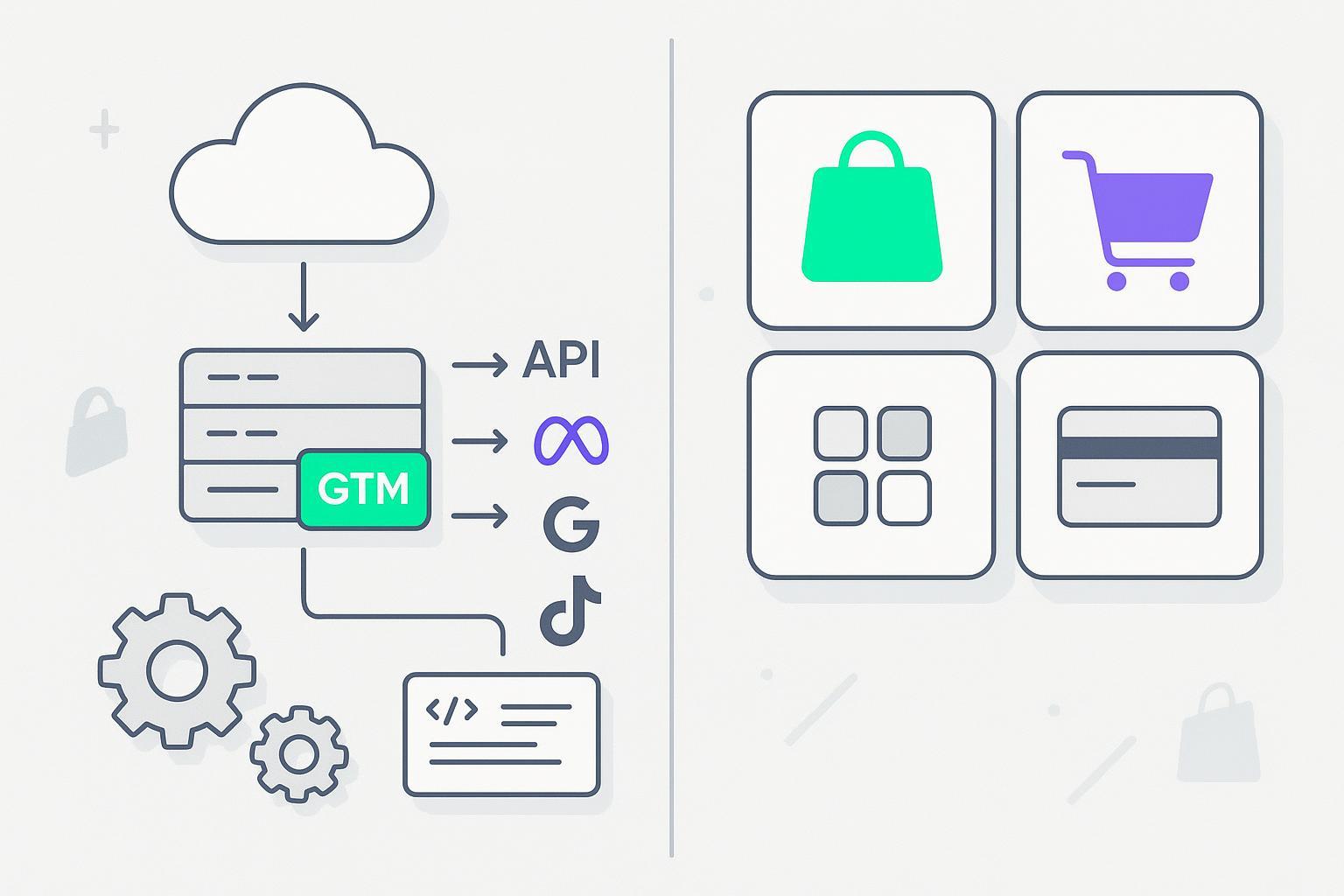
Apps-first Shopify teams are racing to recover lost signals and fix attribution gaps post privacy changes. The big question: should you build a server-side stack (sGTM on GCP/AWS) or buy a Shopify-focused solution? In this comparison, the hero decision driver is Total Cost of Ownership over 12–24 months, with speed-to-value, SLAs, compliance, and portability framed as levers that raise or lower that TCO.
Key takeaways
TCO is the linchpin: hosting, app fees, engineering time, compliance ops, and rework after platform changes make up the real 12–24 month cost.
For minimal-engineering teams, Buy often wins on the next-90-days metric; Build wins when you need maximum control and warehouse-first portability.
Consent alignment and event deduplication impact both compliance risk and signal quality; neglect them and your TCO goes up through rework and unstable data.
Portability matters: solutions that support GA4 BigQuery export or direct warehouse routing reduce future migration costs.
Disclosure: Attribuly is our product. We’ve included it with a neutral, evidence-based capsule and transparent limitations.
Shopify server-side tracking build vs buy: 12–24 month TCO at a glance
Below is a compact view tailored to apps-first Shopify brands (no dedicated data engineers). All ranges modeled and dated Jan 2026; confirm with vendors for exact quotes.
Solution | Best for | 12–24m TCO (modeled) | Time-to-first-signal | Maintenance (hrs/mo) | Portability/export | Compliance & consent | SLA/Support notes |
|---|---|---|---|---|---|---|---|
Build (custom sGTM on GCP/AWS) | Maximum control, warehouse-first | ~$15k–$80k+ | Weeks–months | 5–10 | Strong if you own schemas/warehouse | Full control; you wire Consent Mode v2 | Your ops; vendor SLAs N/A |
Attribuly | Shopify-first teams; server-side signals + attribution | Contact sales; typically lower setup vs Build | Days–weeks | 2–4 | GA4 export; confirm direct warehouse | Aligns with Shopify privacy + Consent Mode v2 | SLAs/pricing not public; ask sales |
Littledata | Fast install for GA4 + Meta CAPI + EC | ~$950/year+ tiers | Minutes | 1–3 | GA4 BigQuery export | App-managed consent guidance | SLAs not public; pricing tiers visible |
Segment | Data teams planning CDP/warehouse | Usage-based; often $1k–$10k+/mo | Weeks–months | 5–10+ | Best-in-class destinations/warehouse | Strong governance; plan-dependent | Sales-assisted pricing and SLAs |
RudderStack | Warehouse-native CDP teams | Sales-assisted; varies by volume | Weeks–<90 days | 5–10+ | Warehouse-native portability | Governance and identity stitching | Sales-assisted pricing and SLAs |
Shopify-native (Meta app + Google EC via apps) | Lowest-cost stopgap | Free for Meta app; EC via apps/GTM | Minutes | 1–2 | Limited raw exports | Consent depends on your setup | App-store support; limited SLAs |
What drives TCO (and how to estimate it)
TCO isn’t just subscription price or cloud hosting. Here’s what tends to move the needle for Shopify teams.
Hosting and infrastructure: sGTM on Google Cloud Run depends on request volume, CPU/memory, and scaling. Modeled mid-market ranges often fall around $10–$200/month when tuned, or managed hosting providers (e.g., Stape) start near ~$17–$20/month tiers. See Google Cloud Run configuration guidance in Google’s docs and Stape’s sGTM hosting notes for price mechanics.
Engineering and agency time: Consent wiring, event schemas, dedup keys, and QA typically require 40–100+ initial hours when building, plus 5–10 hours/month for upkeep. Apps reduce those hours substantially, but you still need validation and periodic checks.
Compliance operations: GDPR/CCPA posture means hashing identifiers for Google Enhanced Conversions, gating advanced matching on consent, and documenting data flows. Google’s Consent Mode v2 governs when Google tags can send data; configure defaults denied and purpose-based updates via your CMP before tag load.
Rework and migration: Shopify platform changes (checkout extensibility, headless/Hydrogen, subscriptions) can force schema updates and webhook adjustments. Buy solutions absorb some of that change; Build solutions put it on your team or agency.
Signal quality and dedup: Meta Conversions API and TikTok Events API depend on event_id matching and advanced matching to reduce duplicates and improve coverage. Poor dedup increases troubleshooting time and reduces ad platform trust—both hit TCO.
Vendor-by-vendor capsules
Attribuly
Disclosure: Attribuly is our product.
What it is and how it works: A Shopify-focused server-side tracking and attribution platform supporting Meta CAPI, Google Enhanced Conversions, TikTok integrations, first-party data collection, multi-touch attribution, consent alignment with Shopify privacy mechanisms, and event_id dedup validation workflows. It also offers ROAS/LTV reporting and audience syncing.
Pros: Shopify-centric integrations; server-side CAPI/EC readiness; bundled attribution and audience syncing; practical validation guides like a 30-day plan.
Cons: Public pricing and SLA details aren’t fully disclosed; confirm direct warehouse export specifics beyond GA4.
Who it’s for: Apps-first Shopify teams seeking server-side signals and attribution in weeks, without hiring data engineers.
Pricing as of Jan 2026: Contact sales for tiers and SLAs.
Evidence and resources: See the first-party data checklist, the 30-day validation plan, and the Attribuly vs Segment+GA4 comparison.
Build: custom sGTM on GCP/AWS
What it is and how it works: A server-side GTM container hosted on your cloud (often Google Cloud Run) receives events from storefront or APIs, enriches, and forwards to Meta, Google, and TikTok. You design consent gating, deduplication, retries, and data schemas.
Pros: Maximum control, flexible routing, strong portability with warehouse-first design, tailored compliance.
Cons: Weeks–months to implement; ongoing maintenance; QA/dedup complexity; susceptible to Shopify/platform changes without vendor buffer.
Who it’s for: Teams demanding control and data ownership, able to budget ongoing engineering or agency support.
Pricing as of Jan 2026: Modeled infra $10–$200/month on Cloud Run when tuned; managed hosting like Stape starts ~$17–$20/month; setup effort often $2.5k–$25k+ depending on scope.
Evidence and resources:
Littledata
What it is and how it works: No-code Shopify app integrating GA4, Meta Conversions API, and Enhanced Conversions using a hybrid client/server approach. Fast install, subscription/headless support.
Pros: Minutes to first signal; comprehensive GA4 + Meta CAPI + EC coverage; GA4 BigQuery export supports portability; transparent tiered pricing references.
Cons: Deep warehouse-first customization may require add-ons; SLAs not publicly detailed.
Who it’s for: Teams needing reliable signals in under an hour and solid GA4/Meta coverage without engineers.
Pricing as of Jan 2026: Public tier references from ~$39 to ~$799/month based on order volume; ~US$950/year+ for annual tiers. Confirm current plans on vendor site.
Evidence and resources:
Segment
What it is and how it works: A CDP with server-side event routing, governance, and destinations including the Facebook Conversions API (Actions). Strong for warehouse-first strategies.
Pros: Robust routing/governance; numerous destinations; scales with complex stacks.
Cons: Higher engineering burden for Shopify specifics; usage-based pricing; sales-assisted SLAs.
Who it’s for: Brands with data teams planning a warehouse/CDP backbone and multi-source instrumentation.
Pricing as of Jan 2026: Usage-based, often $1k–$10k+/month depending on volume and features; contact sales.
Evidence and resources:
RudderStack
What it is and how it works: Warehouse-native CDP offering event streaming, SDKs, Shopify sources, governance, plus identity stitching and dedup/retry mechanisms.
Pros: Strong warehouse portability; identity stitching; governance features; pre-built Shopify sources.
Cons: Engineering/setup burden for Shopify specifics; pricing and SLAs are sales-assisted.
Who it’s for: Teams with an explicit warehouse-first plan and engineering capacity; mid-market to enterprise.
Pricing as of Jan 2026: Sales-assisted; varies by volume and features.
Evidence and resources:
Shopify-native (Meta app + Google Enhanced Conversions via apps)
What it is and how it works: The official Facebook & Instagram app enables fast Pixel integration; server-side CAPI typically requires third-party apps or custom sGTM. Google Enhanced Conversions is configured via tags/GTM with hashed identifiers.
Pros: Lowest cost and minutes to install; good baseline for small budgets.
Cons: Event completeness limits; portability constraints; CAPI often requires a separate app or build.
Who it’s for: Teams needing a stopgap this week and willing to accept constraints.
Pricing as of Jan 2026: Meta app free; EC via GTM/apps varies.
Evidence and resources:
Scenario decisions
If you need reliable signals in under 90 days and have no engineers: Choose Littledata or Attribuly. Configure Meta CAPI with dedup keys and Google Enhanced Conversions with hashed identifiers, gated by Consent Mode v2. Use GA4 BigQuery export for portability.
If you’re planning a warehouse/CDP backbone next: Start with a Buy option that emits clean server-side signals (Attribuly or Littledata) and ensure GA4 BigQuery export is active; move to Segment or RudderStack when data team bandwidth is ready.
If you operate in regulated markets or run headless/subscriptions: Favor solutions with documented consent integrations and dedup workflows. Headless Hydrogen setups require careful GTM and dataLayer planning.
If maximum control outweighs speed-to-value: Build sGTM on Cloud Run or similar. Budget for ongoing QA, consent mapping, and Shopify platform change management.
Migration playbook (phased, apps-first)
Phase 1 — Baseline and consent: Implement a CMP and wire Google Consent Mode v2 with default denied and purpose-based updates before tags load. Document data flows and hashing for Enhanced Conversions (SHA-256).
Phase 2 — Dual-run for 30 days: Run client-side and server-side in parallel with event_id dedup. Validate coverage, match quality, and attribution parity. A practical guide is available here: Validate multi-touch attribution in 30 days.
Phase 3 — QA and rollback signals: Monitor Event Coverage and duplicate rates in Meta, and conversion diagnostics in Google/GA4. Set thresholds to rollback or pause server-side endpoints if errors spike.
Phase 4 — Portability checklist: Confirm GA4 BigQuery export; note any direct warehouse exports; ensure raw events and schemas are documented for future CDP or build migration. For broader stack considerations, see Attribuly vs Segment+GA4.
Phase 5 — Cross-network reconciliation: Review attribution differences across Meta/TikTok/Google; align windows and models where possible and document the rationale. Guidance: Shopify attribution mismatches: Meta vs TikTok (2026).
Methodology and caveats
All price points and timelines are modeled for Jan 2026 and reflect apps-first Shopify teams with minimal engineers. External facts are linked to vendor or official docs. Compliance notes are informational and not legal advice—consult counsel for DPAs, data residency, and PII policies. Confirm SLAs, uptime, and export specifics with each vendor.
Ready to decide? Compare the vendors’ docs above, request demos, and map your TCO for the next 12–24 months. If speed-to-value is paramount this quarter, Buy will likely minimize risk and cost; if long-term control is the priority, plan for Build with clear QA and consent guardrails.