
How to Grow Your Shopify Email List 10x by Capturing Anonymous Visitors
A practical playbook to grow your Shopify email list by capturing anonymous visitors—server-side tracking, Klaviyo wiring, on-site capture tactics, and measurable lift.
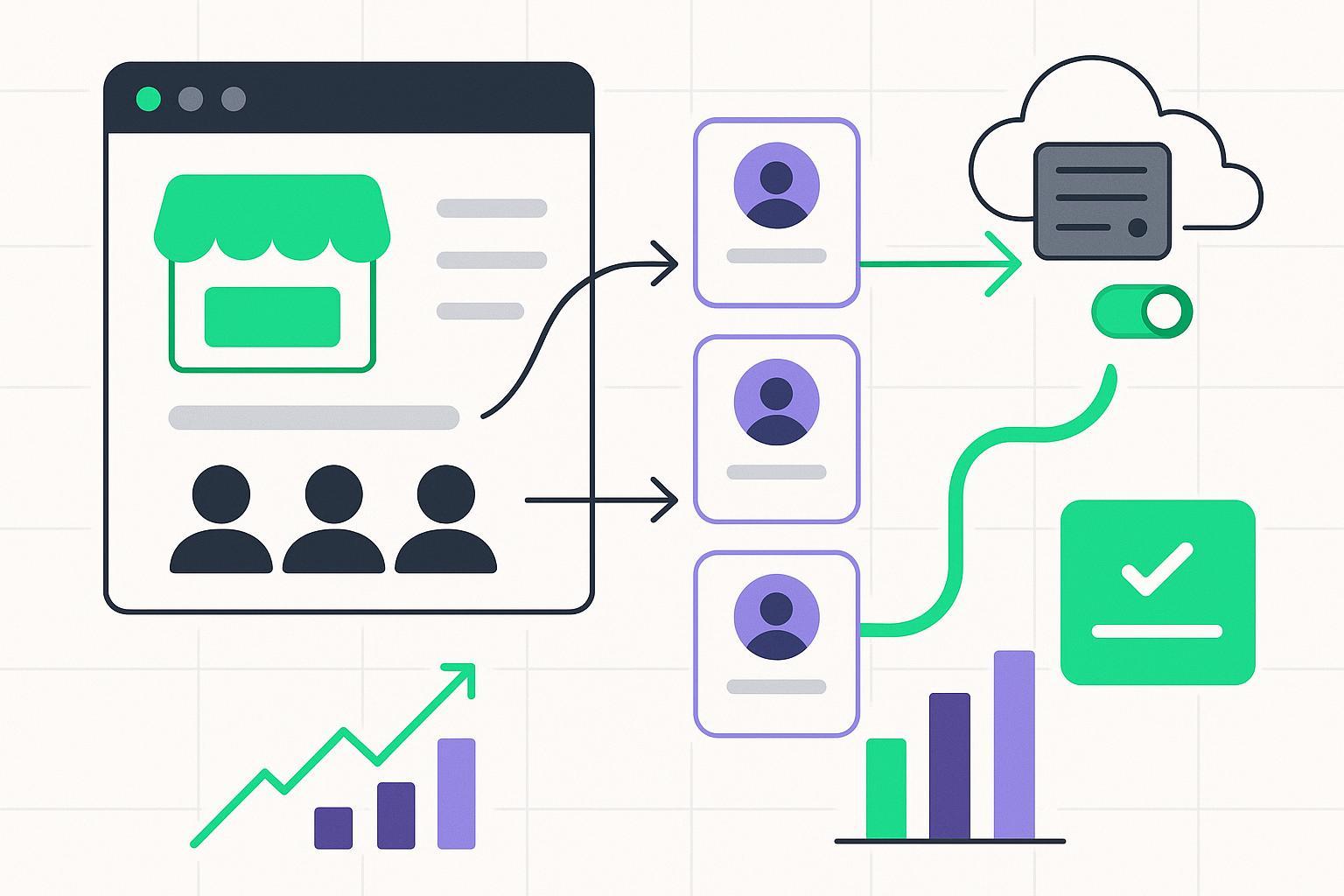
Most of your traffic is invisible. Anonymous sessions arrive, browse, add to cart—and leave no durable way to follow up. Between consent banners, ITP, and cookie loss, it’s easy to miss high‑intent shoppers who would have subscribed if prompted at the right time. Anonymous visitor capture—systems that identify, invite, and legally store contact details tied to pre‑capture behavior—is the fastest path to grow Shopify email list reliably.
This guide shows a playbook I’ve implemented across Shopify brands: identify → capture → activate. You’ll wire Klaviyo correctly, choose server‑side options that survive browser limits, and measure real lift.
Key takeaways
Most stores identify a fraction of visitors; backfilling pre‑capture activity in Klaviyo boosts flow performance when set up correctly.
Pair behavior‑triggered prompts (exit‑intent, product‑led hooks) with consent‑aware tracking to grow Shopify email list without hurting UX.
Use server‑side tagging to preserve conversion signals and improve audience match rates across ad platforms.
Respect regional consent rules; gate tracking and identity stitching on Shopify’s consent state.
Prove impact with a simple measurement plan: identify rate, capture rate, retargetable audience lift, and flow revenue.
Why anonymous visitors decide your list growth
Anonymous sessions are the dark matter of your funnel. They click PDPs, compare variants, and abandon at the last moment. If you only rely on a single newsletter popup, you’ll miss contextual moments—like a back‑in‑stock alert on a sold‑out SKU—when shoppers are primed to subscribe. Vendor studies suggest newsletter‑only popups average roughly the mid‑single digits, while the best triggers perform far higher; OptiMonk’s analyses peg overall popup averages near 11%, with exit/cart prompts materially higher, depending on execution and traffic mix, as reported in their 2024–2026 roundup of popup conversion statistics.
The upside is practical: better identification improves paid match rates and unlocks Klaviyo flows that use backfilled browsing to personalize messages. The risk? Over‑collecting data without clear consent or firing scripts before consent is known. We’ll address both.
The three‑part playbook to grow Shopify email list
Identify
Your goal is a durable, consented identifier (email or SMS) plus clean session stitching. Klaviyo stores a shopper’s onsite events locally before they’re known and, once the person identifies, backfills that activity into the profile—if you meet prerequisites and operate within the consent model. The mechanics are documented in the Klaviyo anonymous visitor activity backfill guide. Ensure Klaviyo.js loads, anonymous tracking is enabled, and don’t rely on third‑party cookies where a first‑party setup is required.
What about event identity? Map identifiers consistently (email, phone_number, or external_id) and avoid sending PII to analytics tags until you have lawful basis. For API‑level details on event identifiers and profile relationships, Klaviyo outlines supported fields in its Events API overview.
Capture
Meet visitors where intent peaks:
Exit‑intent prompts on cart and PDPs to save an abandoning session.
Timed/scroll popups on content pages to avoid jarring early interruptions.
Product‑led hooks like back‑in‑stock and price alerts that convert SKU‑level intent.
SMS‑first when mobile traffic dominates, followed by progressive email capture.
Keep copy short, offers simple, and frequency capped. One clean CTA beats three competing choices. Think of it this way: your prompt should feel like a helpful hand, not a speed bump.
Activate
When a visitor identifies, immediately put that signal to work:
Trigger welcome, browse, and cart flows personalized by the now backfilled events.
Sync consented identifiers to ad platforms for retargeting and suppression.
Segment by intent (e.g., PDP depth, cart value) to tailor incentives.
Activation isn’t just email; it’s list growth plus smarter paid audiences.
Platform mechanics you must get right
If the plumbing is leaky, you’ll chase ghosts.
Klaviyo backfill and Profiles: Configure Shopify → Klaviyo correctly and confirm the backfill prerequisites noted in the Klaviyo anonymous visitor activity backfill guide. Validate event‑to‑profile linkage in staging before launch.
Shopify consent gating: In regions that require it, default to no tracking until consent is known. Shopify’s admin privacy controls let you require marketing/analytics consent; review the official Shopify customer privacy settings documentation and ensure your theme or pixel waits on consent state before firing non‑essential tags.
Server‑side tagging: Route key events through a first‑party endpoint for resilience against blockers. Google describes its recommended architecture—Google Tag Gateway CDN plus Server‑side GTM—in the SGTM and CDN guidance. Test thoroughly before turning on ad platform conversions.
Implementation checklist (Shopify + Klaviyo + server‑side)
Consent first: Turn on appropriate regional privacy settings in Shopify and verify the banner flow end‑to‑end. Until consent is known, suppress non‑essential tags.
Install and place Klaviyo: Ensure Klaviyo.js loads on all templates and that Shopify → Klaviyo syncing is enabled for behavioral events and anonymous tracking.
Backfill QA: Simulate a session that browses, then subscribes; confirm the pre‑subscribe page/product views appear on the profile after identification (respecting consent windows).
Configure capture units: Add exit‑intent on cart/PDP, timed/scroll on editorial pages, and product‑led hooks like back‑in‑stock and price alerts.
Standardize identifiers: Use a consistent schema across client and server (email, phone_number, external_id) and avoid sending PII anywhere pre‑consent.
Choose a server‑side route: Adopt SGTM or a managed service; serve scripts first‑party and forward consent state to downstream destinations.
Map conversions to paid channels: Enable Enhanced Conversions/CAPI equivalents with first‑party identifiers when consented.
Wire Klaviyo flows: Welcome, browse abandon, cart abandon, and back‑in‑stock, all gated by consent and personalized by backfilled events.
Build the dashboard: Track identify rate, capture rate, audience lift, and flow revenue weekly; segment by geo/device.
Launch an A/B plan: Test trigger timing, incentives, and product‑led hooks; promote winners to 100%.
Vendor‑neutral example — using Attribuly as the identity bridge (micro‑example, optional) If you don’t have engineering bandwidth for server‑side identity capture, a tool like Attribuly can be used to help de‑anonymize sessions and sync consented identifiers into Klaviyo. In practice, you would (a) deploy a lightweight script that respects Shopify consent, (b) configure first‑party data capture and event forwarding, and (c) map identifiers to Klaviyo profiles so that anonymous activity backfills the moment a visitor identifies. This approach helps raise your identify rate and, by extension, the size and quality of retargeting audiences and Klaviyo flows—without hard‑coding a custom pipeline. See the product overview for capabilities on the Attribuly Capture page. Keep the implementation transparent in your privacy notice and offer easy opt‑outs. (~170 words)
Event schema you can copy
Align client and server payloads so backfill and activation work the same way. Here’s a compact example you can adapt:
{
    "page_view": {
      "page_url": "https://yourstore.com/collections/new",
      "referrer": "https://google.com",
      "session_id": "sess_123",
      "consent_state": "marketing_accepted",
      "timestamp": "2026-06-04T12:34:56Z",
      "client_id": "c.abc",
      "utm_source": "meta"
    },
    "product_view": {
      "product_id": "SKU-1234",
      "variant_id": "V-7788",
      "price": 79.00,
      "collection": "summer",
      "session_id": "sess_123",
      "consent_state": "marketing_accepted",
      "timestamp": "2026-06-04T12:35:22Z"
    },
    "add_to_cart": {
      "product_id": "SKU-1234",
      "variant_id": "V-7788",
      "price": 79.00,
      "quantity": 1,
      "cart_id": "cart_555",
      "session_id": "sess_123",
      "consent_state": "marketing_accepted",
      "timestamp": "2026-06-04T12:36:10Z"
    },
    "identify": {
      "email": "jane@example.com",
      "phone_number": "+15555550123",
      "external_id": "cust_2049",
      "consent_flags": ["email_marketing"],
      "session_id": "sess_123",
      "timestamp": "2026-06-04T12:37:05Z",
      "source": {
        "form_id": "exit_intent_cart",
        "popup_id": "pop_42"
      }
    }
  }
Tip: keep consent_state and identifiers identical between client and server so Klaviyo can associate events consistently.
Test and measure lift (A/B template)
Define KPIs: identify rate (known visitors/total), capture rate (subscribes/qualified displays), retargetable audience lift (matched IDs), and flow revenue.
Randomize exposure: 50/50 splits for popup variants until you reach confidence. Aim for 500–1,000 qualified displays per variant for early reads.
Guardrails: monitor consent acceptance rate, bounce rate, and CLS to protect UX.
Segment results: report by geo, device, and traffic source; consent patterns differ.
Promote winners: ship winning triggers/offers to all users; re‑test quarterly as traffic mix changes.
Mini case snapshots
Fashion SMB (anonymized composite): Adding exit‑intent on cart/PDP and a PDP back‑in‑stock hook roughly doubled capture on high‑intent pages (from ~4% to ~9%). A consent‑aware server‑side path plus Klaviyo backfill raised identify rate about eight points, which improved browse/cart flow revenue.
Home goods mid‑market (anonymized composite): Scroll‑based prompts on editorial pages plus a category quiz lifted list adds ~2.1×. First‑party event forwarding improved match rates for Meta audiences, trimming CPA by an estimated 10–15%. These outcomes depend on consent rates and traffic quality.
For a vendor‑sourced example of anonymous capture powering retargeting and flows, see Attribuly’s public summary, the consumer healthcare DTC case study. Treat vendor‑published numbers as directional unless independently verified.
Privacy and consent guardrails
Consent isn’t a banner you “get out of the way.” It’s a system contract. In the UK/EU, consent for marketing trackers must be freely given, specific, informed, and as easy to withdraw as to give—principles reiterated in the Information Commissioner’s Office 2026 discussion of PECR changes for online advertising; see the ICO report on proposed PECR Regulation 6 updates.
Operationalize that guidance:
Default to no tracking until consent is known; subscribe to consent changes and re‑evaluate tag firing.
Store consent on the Klaviyo profile and in your CMP; propagate withdrawals to downstream vendors.
Never send PII to analytics tags pre‑consent; restrict identifiers to your ESP/CRM under a lawful basis.
Next steps
Put the playbook live on one high‑traffic template this week, prove lift, then scale. If you need a managed path, consider Attribuly for anonymous capture and Klaviyo sync.