
Attribuly vs Triple Whale (2026): Shopify Attribution & Activation — Which Is Best for Your Store?
Compare Attribuly vs Triple Whale for Shopify—features, tracking, integrations, data accuracy, and pricing (as of 2026-05-14). Scenario-based guidance to help you choose.
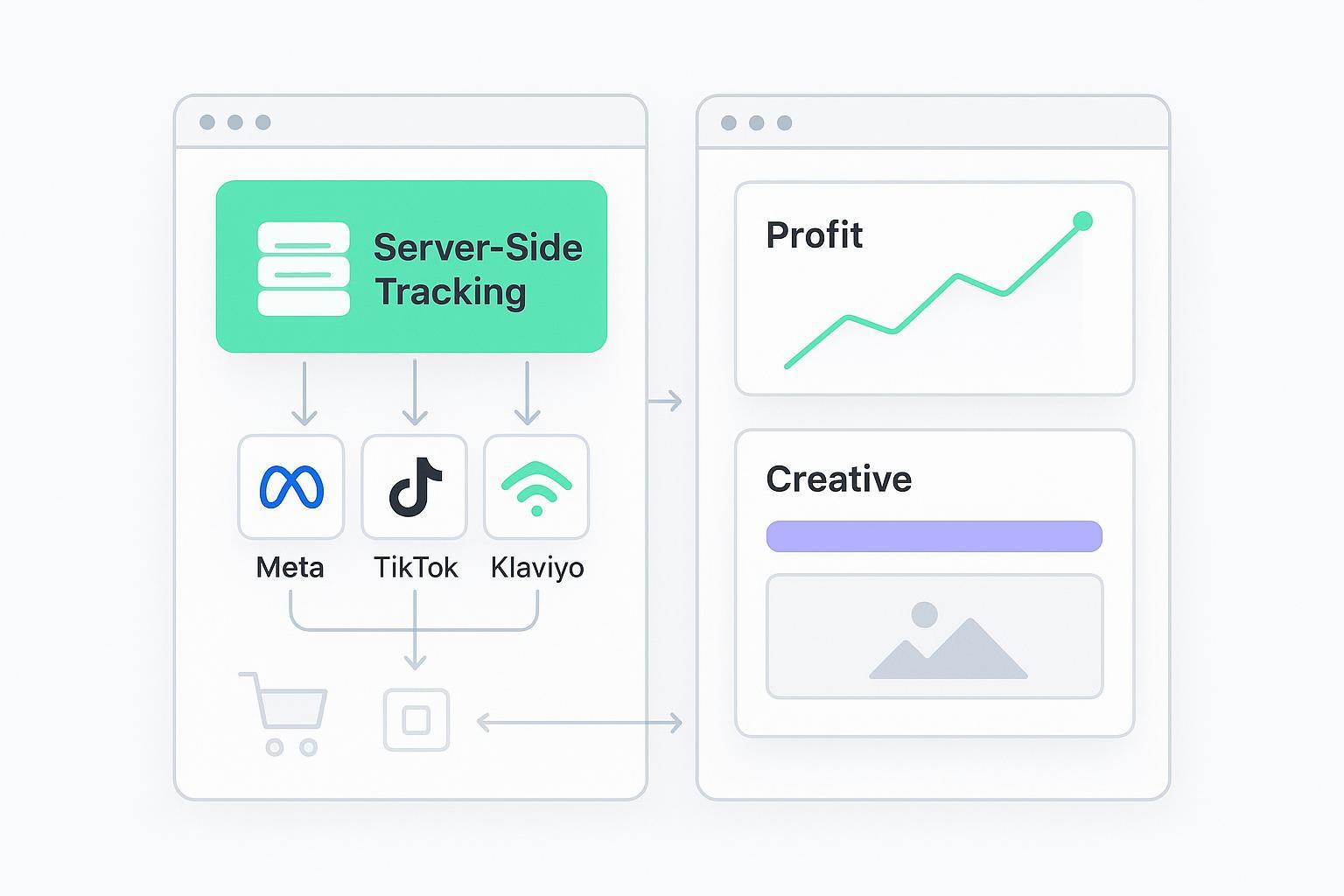
Choosing between two strong Shopify analytics platforms isn’t just a feature check. It’s a decision about how you’ll attribute revenue, optimize ad spend, and activate audiences across Meta, TikTok, Google, and email. Here’s a practitioner’s, scenario-first comparison to help you pick with confidence.
Key takeaways
There’s no universal winner. Pick by scenario: activation-first vs profit/creative-first vs headless flexibility.
Attribuly is particularly strong in server-side activation (Meta CAPI, Google EC) and Klaviyo sync, with broader MTA options and accessible entry pricing.
Triple Whale stands out for profit-aware dashboards, creative analysis, and flexible Triple Pixel deployment for headless/third‑party checkouts.
Verify pricing on official pages. This guide uses snapshots as of 2026-05-14 and may change.
TL;DR verdict (scenario-based)
Need server-side activation and Klaviyo-driven recovery → Choose Attribuly.
Want profit-first dashboards and deep creative insights → Choose Triple Whale.
Running headless or third‑party checkouts → Choose Triple Whale.
Budget-constrained SMB that still wants MTA + activation → Choose Attribuly.
Need incrementality testing inside the same platform → Choose Triple Whale.
Attribuly vs Triple Whale: side-by-side comparison (2026)
Dimension | Attribuly | Triple Whale |
|---|---|---|
Quick verdict | Best for activation-first brands (server-side pushes + Klaviyo sync) | Best for profit/creative-first teams and headless setups |
Tracking architecture & coverage | Shopify Web Pixels, server-side pipelines (Meta CAPI, Google Enhanced Conversions), Shopify storefront + checkout coverage (Shopify/Plus via Web Pixels) | Triple Pixel with flexible deployment; documented headless and 3rd‑party checkout installs; Pixel Events Manager for validation |
Attribution models & windows | First, Last, Linear, Position-Based, Time-decay, Custom; proprietary Full Impact AI; configurable 1–90 day windows | First, Last, MTA/Total Impact Attribution noted in product materials; incrementality suite (GeoLift) complements attribution |
Integrations (ads/ESP/analytics) | Meta CAPI, TikTok Events API (supported), Google Enhanced Conversions, Klaviyo sync; GA4/Looker/BigQuery noted | Broad read-side platform coverage; Klaviyo integration; strong in unified dashboards and data ingestion |
Data accuracy & diagnostics | Consent-aware tracking; guidance on EMQ/dedup and reconciliation; diagnostics UI not publicly documented in depth | Pixel Events Manager to monitor event coverage and data quality |
Retargeting & audience activation | Strong emphasis on server-side event pushes to ad platforms and ESPs; Klaviyo audiences/flows and suppression | Activation less emphasized; has data enrichment (e.g., Sonar Optimize for TikTok), stronger in analysis than ESP sync |
Creative & product analytics | Campaign/product performance and journeys; no dedicated creative cockpit comparable to TW | Robust Creative Analysis/Cockpit for cross-channel creative performance and iteration |
Profitability & finance metrics | Focus on attribution/activation; finance metrics not the core thrust | Deep profit dashboards (Net Profit, nCPA, LTV, refunds/COGS/shipping) |
Setup & ease of use | Shopify-native install; minutes to first events; server-side pipelines included | Shopify auto-install for standard; clear manuals for headless/3rd‑party checkout; Events Manager aids setup |
Pricing & scalability (as of 2026-05-14) | Free; Pro from ~$8.25/mo billed annually; Enterprise custom | Public App Store tiers list Free, Starter (~$149/mo), Advanced (~$219/mo); verify latest tiers/features |
Data export & BI | Mentions GA4/Looker/BigQuery; explicit connector docs limited publicly | Agents for exports (e.g., Sheets/Webhook); CSV exports; named DW connectors not fully enumerated publicly |
Support & SLAs | Pro includes 24/7 chat per pricing page | Onboarding guides and KB; support varies by tier |
Known constraints | Public docs for TikTok API setup/diagnostics are sparse; BI/export specifics limited | ESP/audience activation less emphasized vs analysis; pricing/features may vary by tier over time |
Pricing and features are snapshots as of 2026-05-14 and subject to change. Always confirm on official pages before purchasing.
Attribuly at a glance
Strengths
Particularly strong in server-side activation: Meta Conversions API and Google Enhanced Conversions help improve match quality for ad optimization. See Meta’s dataset quality and parameters guidance for what matters in practice via the official docs from 2026: the Conversions API parameters and dataset quality API.
Broader multi-touch attribution options, including a proprietary Full Impact AI model for estimating impact beyond simple click rules. Attribuly’s feature pages outline these models and settings.
Klaviyo integration for event and audience sync supports email flow triggers and suppression—useful for abandoned checkout recovery and LTV workflows.
Constraints
Public, developer-style docs for TikTok Events API setup and detailed diagnostics are limited; functionality is referenced across product pages rather than an exhaustive KB.
BI/export connector specifics (e.g., named warehouse connectors and limits) are not deeply documented publicly.
Pricing (as of 2026-05-14; subject to change)
Free; Pro from about $8.25/month billed annually; Enterprise custom. Verify latest on the pricing page.
Best for
Activation-first teams that want to push high-quality, consent-aware events to Meta/TikTok/Google and sync audiences to Klaviyo, while using MTA to guide scaling.
Official pages to review
Attribution and models: https://attribuly.com/product/attribution/
Full Impact AI: https://attribuly.com/features/full-impact/
Pricing: https://attribuly.com/pricing/
Klaviyo integration: https://attribuly.com/integrations/klaviyo/
Google Ads integration (Enhanced Conversions context): https://attribuly.com/integrations/google-ads/
For deeper background on consent and dedup tradeoffs, see this practical explainer on Meta CAPI vs Google Enhanced Conversions from Attribuly’s blog: Meta CAPI vs Google Enhanced Conversions for Shopify (2026).
Triple Whale at a glance
Strengths
Profit-aware measurement with detailed dashboards that include COGS, refunds, custom expenses, and more. Triple Whale’s metrics library documents what you can track and how it rolls up in dashboards.
Creative Analysis/Cockpit for granular creative performance—handy for rapid iteration on Meta, TikTok, Google, and more.
Flexible Triple Pixel deployment for headless stores and third‑party checkouts, plus a Pixel Events Manager to validate event coverage and quality.
Incrementality/GeoLift modules to test lift beyond deterministic click/view attribution.
Constraints
Activation to ESPs/ad destinations is less of a focus publicly than analysis/dashboards.
BI/export specifics (named data warehouses, quotas/rate limits) are not exhaustively documented in public KB.
Pricing (as of 2026-05-14; subject to change)
Shopify App Store currently lists tiers including Free, Starter (~$149/month), and Advanced (~$219/month). Check the listing for current inclusions and any annual discounts.
Best for
Teams that prioritize consolidated profit dashboards and creative decisioning, or that operate headless/third‑party checkout flows.
Official pages to review
Headless install: https://kb.triplewhale.com/en/articles/6266255-adding-the-triple-pixel-to-a-headless-store-or-custom-website
Third‑party checkout: https://kb.triplewhale.com/en/articles/6610178-adding-the-triple-pixel-to-third-party-checkouts
Pixel Events Manager: https://kb.triplewhale.com/en/articles/13755691-what-is-the-pixel-events-manager
Creative Analysis: https://kb.triplewhale.com/en/articles/6362638-analyze-creative-performance-with-the-creative-analysis-dashboard
Incrementality/GeoLift: https://kb.triplewhale.com/en/articles/12441418-incrementality
Metrics library: https://kb.triplewhale.com/en/articles/6127778-summary-dashboard-metrics-library
How we validated accuracy (what to check before you choose)
Shopify-side coverage: Confirm that your pixel/events run across storefront, cart, and checkout. Shopify’s Web Pixels API outlines supported events and checkout extensibility for Plus. Review Shopify’s current developer references to match your theme and checkout setup.
Event quality and deduplication: For Meta CAPI specifically, confirm identifiers and event parameters meet quality guidelines and that browser + server dedup is functioning as intended. TikTok’s Events API also recommends hybrid setups for resilience.
Reconciliation: Compare attributed revenue to Shopify net revenue over 7/30/90 days; inspect event match quality (EMQ), dedup rates, and order-level trails.
References for evaluation
Shopify Web Pixels: https://shopify.dev/docs/api/pixels
Shopify checkout extensibility: https://shopify.dev/docs/storefronts/checkout/extend
Meta Conversions API parameters and dataset quality: https://developers.facebook.com/documentation/ads-commerce/conversions-api/parameters and https://developers.facebook.com/documentation/ads-commerce/conversions-api/dataset-quality-api
TikTok Events API overview: https://ads.tiktok.com/help/article/events-api
How to choose: a simple decision tree
If you prioritize audience activation and Klaviyo-driven recovery → Attribuly.
If you need profit-first dashboards and creative iteration in one UI → Triple Whale.
If you run headless or use third‑party checkouts → Triple Whale (manual install guides + Events Manager).
If your budget is tight at lower GMV and you still want robust MTA + activation → Attribuly Pro.
If you require incrementality testing inside the tool → Triple Whale (GeoLift).
If you plan heavy BI and warehouse exports → Both can export; confirm the exact connectors, formats, and limits with each vendor.
Think of it this way: are you trying to push better signals out to ad and email platforms right now, or are you trying to squeeze more profit and creative signal from what you already have? Your answer usually makes the choice obvious.
Migration checklist (pixel swap + 30/60/90 validation)
Pre-migration
Snapshot current attribution and profit reports (7/30/90 days) for baseline.
Document event schemas (ids, parameters) and any custom events.
Install and map
Install the new pixel (Shopify Web Pixels or manual headless/3rd-party checkout script).
Configure server-side pipelines (Meta CAPI, TikTok Events API, Google EC) and consent.
Map event names/ids for dedup; validate with platform diagnostics.
30-day checks
Verify EMQ/match rates, dedup counts, and purchase totals vs Shopify.
Compare attribution models (first/last vs MTA) for decision differences.
60–90 day checks
Track retargeting audience growth (email + ads) and recovered revenue.
Review cohort/LTV and nCPA shifts; decide whether to fully deprecate the old stack.
For activation planning, this practical guide can help you weigh consent and dedup tradeoffs: Meta CAPI vs Google Enhanced Conversions (Shopify, 2026). For an attribution model primer, see the high-level comparison with GA4: Attribuly vs Google Analytics 4.
Pricing snapshots and TCO notes (as of 2026-05-14)
Attribuly: Free; Pro from around $8.25/month billed annually; Enterprise custom. Entry pricing is accessible, but usage/credits and order volumes can affect value at scale. Verify current tiers and inclusions on the pricing page.
Triple Whale: Shopify App Store currently lists Free, Starter (~$149/month), Advanced (~$219/month) with feature differences. Check for annual discounts and any add-ons.
TCO considerations: Include staff time (setup/validation), data export needs (BI/warehouse), and any add-on modules (e.g., incrementality) when modeling total cost. A quick spreadsheet tying GMV, AOV, and monthly orders to plan thresholds goes a long way.
FAQ
Which is better for Shopify stores: Attribuly or Triple Whale?
It depends. Activation-first brands that want strong server-side signals and Klaviyo sync often pick Attribuly. Teams that prioritize profit dashboards, creative analysis, or headless support often pick Triple Whale. Try a 30-day validation against your goals.
Does Attribuly sync audiences to Klaviyo for abandoned cart recovery?
Yes. Attribuly documents Klaviyo integration for event and audience sync to power flows and suppression. Review the current integration page for specifics and any tier gating.
How long does setup usually take?
On Shopify-standard storefronts, both tools can send first events within minutes of install. Headless/3rd-party checkouts take longer with manual scripts; Triple Whale provides step-by-step manuals and a Pixel Events Manager to validate coverage.
Can Triple Whale handle headless Shopify and third‑party checkouts?
Yes. Triple Whale publishes explicit guides for headless sites and third‑party checkouts and includes an Events Manager for quality checks.
What about data export and BI?
Both support exports. Attribuly references GA4/Looker/BigQuery; Triple Whale offers Agents (e.g., Google Sheets/Webhook) and CSV. Confirm exact connectors, formats, and any limits with each vendor before committing.
Are the prices here final?
No. All pricing and feature inclusions are snapshots as of 2026-05-14 and are subject to change. Always verify on official pages before purchasing.
Sources and verification
Shopify Web Pixels and checkout extensibility reference docs (2026): https://shopify.dev/docs/api/pixels and https://shopify.dev/docs/storefronts/checkout/extend
Meta Conversions API parameters and dataset quality (2026): https://developers.facebook.com/documentation/ads-commerce/conversions-api/parameters and https://developers.facebook.com/documentation/ads-commerce/conversions-api/dataset-quality-api
TikTok Events API overview and standard events (2026): https://ads.tiktok.com/help/article/events-api and https://ads.tiktok.com/help/article/standard-events-parameters?lang=en
Triple Whale official KB (2026) for headless/3rd‑party checkout installs, Events Manager, Creative Analysis, incrementality, and metrics library (links placed above in Triple Whale section)
Attribuly official product pages (2026) for attribution models, Full Impact AI, pricing, Klaviyo, and Google Ads integrations (links placed above in Attribuly section)
Disclosure: Pricing and features change frequently; confirm on official sites before purchase. For a deeper activation playbook, you can also review Attribuly’s abandoned cart timing benchmarks (templates and cohorts): https://attribuly.com/blogs/abandoned-cart-timing-cohort-benchmarks-templates/