
Attribuly vs Triple Whale: Best Shopify Attribution 2026
Compare Attribuly vs Triple Whale vs Elevar (and others) to pick the best Shopify attribution platform for 2026—focused on tracking reliability and minimal engineering lift.
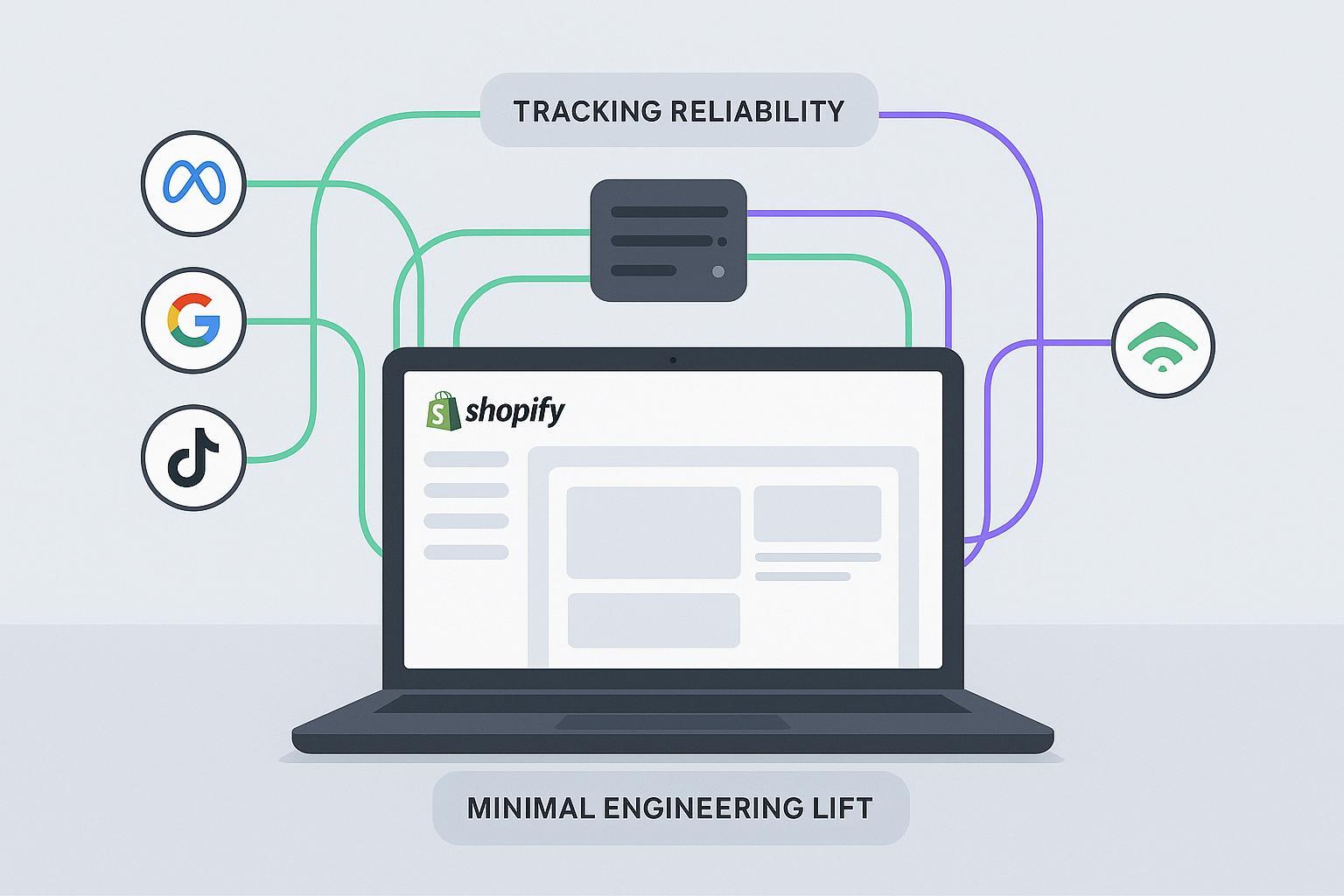
If you’re scaling a Shopify brand and your paid channels are outgrowing pixel‑only tracking, the hardest part isn’t choosing “more features.” It’s choosing the stack that captures purchases reliably with the least engineering lift. That’s the lens we use here. Disclosure: Attribuly is our product. We’ll reference it neutrally among Shopify‑native options and cite official sources for every vendor. Pricing and features are “as of 2026‑02‑10” and can change.
Key takeaways
Tracking reliability is the primary decision anchor: you want purchase events captured and deduped across browser and server (including Shop Pay) so ad platforms can optimize.
We restrict this head‑to‑head to Shopify‑native attribution/analytics apps and optimize for minimal engineering lift.
There’s no single winner. Scenario picks beat blanket rankings: fastest go‑live, best server‑side parity, best LTV/profit analytics, and best under $500/mo.
Validate before you commit: run 5–10 test orders, inspect event_id/external_id dedup, and check Meta/Google match quality.
Pricing is volatile. Treat listed tiers as directional and confirm with each vendor (taxes/overages/GMV tiers may apply).
TL;DR: scenario winners (Shopify‑native only)
Fastest Shopify‑native rollout with minimal engineering lift: Attribuly or Triple Whale (documented auto‑mapping and low‑code setup; evidence below)
Best tracking infrastructure depth (server‑side plumbing, monitoring): Elevar (strong sGTM/server‑side docs; more technical setup)
Best LTV/profit‑first analytics: Lifetimely (cohorts, payback, P&L focus; limited signal‑sending scope)
Best single‑pane analytics under ~$500/mo: Lifetimely or entry‑tier Triple Whale (confirm current pricing caps)
Enterprise MTA/forecasting: Consider Triple Whale add‑ons; note that some “non‑Shopify‑App” options like Northbeam run outside the app marketplace and may require more engineering
Head‑to‑head matrix — anchored on tracking reliability
Pricing and features “as of 2026‑02‑10”; confirm at purchase.
Vendor (Shopify‑native) | Quick verdict | Tracking reliability | Server‑side & CAPI/EC | Setup effort | Models transparency | Multi‑store/Shop Pay/headless | Reporting & LTV depth | Pricing band (as‑of) | Integrations | Evidence |
|---|---|---|---|---|---|---|---|---|---|---|
Attribuly | Plug‑and‑play signal recovery | Strong for Shopify stores; documented dedup and identity alignment | Meta CAPI and Google EC supported; first‑party IDs; Klaviyo sync | Low: Shopify app install; connect ad accounts; toggles | First/last and multi‑touch views | Web Pixels foundation; headless specifics to verify | ROAS, LTV, cohorts | Free + usage; higher tiers available (volatile) | Meta, Google, TikTok, Klaviyo | Internal docs and integrations pages on attribuly.com |
Elevar | Tracking infrastructure depth | Strong; robust server‑side pipelines and monitoring | Meta CAPI and Google EC with sGTM; extensive docs | Medium–High: GTM/sGTM and data layer work | Focus on accurate delivery; analytics via connected tools | Good coverage; headless/checkout extensibility guidance | Depends on connected destinations | $200–$950/mo tiers; overages by orders | Meta, Google, TikTok, GA4, more | Shopify App + Elevar docs |
Lifetimely | LTV/profit analytics | Moderate for attribution; not focused on server‑side signal sending | No public CAPI/EC sender docs found | Low: install and connect sources | Emphasis on cohorts/forecasting | Standard Shopify; headless specifics unclear | Strong LTV/cohorts/P&L | Free–$499/mo by order caps | Shopify, Amazon (add‑on), Klaviyo | Shopify App + Lifetimely site |
Polar Analytics | Blended analytics; incrementality | Unclear public dedup specifics | Marketing implies server‑side attribution; details sparse | Low–Medium: dashboards first; infra details sales‑led | Causal Lift; semantic layer | Enterprise Shopify support; details vary by plan | Broad reporting & warehouse | Sales‑led pricing | Meta, Google, TikTok, DW | Shopify App + Polar site |
Triple Whale | Fast go‑live with MTA options | Strong; Sonar Optimize enriches server‑side signals | Meta/Google/TikTok enrichment; dedup validation guidance | Low: app install + guided setup | First/last; multi‑touch; MMM add‑ons | Multi‑store supported on higher tiers | Solid dashboards; creative insights | Free–$219/mo (+ add‑ons) | Meta, Google, TikTok, Klaviyo, Amazon | Shopify App + TW docs |
Note on scope: Northbeam is often compared in this category but operates via its own pixel and Customer Events scripts rather than a conventional Shopify App Store listing. We exclude it from the “Shopify‑native” matrix for parity, and reference it briefly below.
How we evaluated the best Shopify attribution platform (our definition of “tracking reliability”)
Tracking reliability means your purchase and key pre‑purchase events are captured and deduplicated across browser and server with stable identifiers so Meta/Google can optimize. Practically, you’ll validate: server‑side parity with browser events; event_id or external_id dedup; hashed customer fields for Enhanced Conversions; and coverage through Shop Pay and any headless checkout. Because our ICP prioritizes minimal engineering lift, setup friction (need for GTM/sGTM, theme edits, custom scripts) is a close second factor.
For context on server‑side parity and dedup best practices, see vendor‑owned documentation such as Triple Whale’s Sonar Optimize guidance for Meta and Google and Elevar’s server‑side Meta CAPI setup notes (all linked below in vendor capsules).
Vendor capsules (alphabetical)
Attribuly
What stands out: Shopify‑native install, first‑party/server‑side signal support, and practical multi‑touch views; broad ad‑platform integrations.
Pros
Typically improves parity between browser and server events for Meta/Google via external_id/Client‑ID alignment and hashed fields.
Quick to implement for most Shopify stores: app install, connect ad accounts, enable toggles.
Integrates with Meta, Google, TikTok, and Klaviyo; supports enriched conversion feeds and audience syncs.
Constraints
Pricing can depend on event volume; confirm overages and included quotas.
Headless or unusual checkout flows may require verification and additional steps.
Best for
Teams that want the fastest path to recover undercounted purchases with minimal engineering lift.
Pricing (as of 2026‑02‑10)
Free + usage; higher tiers available. Confirm latest quotas/overages.
Evidence links
Meta Ads integration (Attribuly): https://attribuly.com/integrations/meta-ads/
Google Ads integration (Attribuly): https://attribuly.com/integrations/google-ads/
Case study example (Attribuly): https://attribuly.com/case-studies/sylvox/
Elevar
What stands out: Infrastructure‑first approach with robust server‑side pipelines, monitoring, and extensive documentation.
Pros
Detailed, reproducible guidance for Meta CAPI and Google Enhanced Conversions on server‑side stacks.
Strong fit for multi‑store/headless/Shopify Plus and teams that want deep control.
Constraints
Higher setup complexity (often GTM/sGTM and data layer work). Many merchants involve technical resources or an agency.
TCO depends on order volume and overage pricing.
Best for
Brands prioritizing tracking infrastructure depth, auditability, and long‑term resilience over the lowest setup effort.
Pricing (as of 2026‑02‑10)
App Store tiers around $200–$950/mo with order inclusions and overages; confirm current banding.
Evidence links
Elevar on Shopify App Store: https://apps.shopify.com/gtm-datalayer-by-elevar
Elevar server‑side Meta CAPI setup guide: https://docs.getelevar.com/docs/how-to-set-up-facebook-pixel-conversion-api-tracking-in-elevar-server-side-destination
Lifetimely
What stands out: Profit and LTV analytics, cohorts, and financial views rather than signal‑sending infrastructure.
Pros
Excellent cohorting, payback, and P&L dashboards for finance‑aligned decisions.
Low setup effort; quick time‑to‑value for reporting.
Constraints
No public documentation indicating server‑side CAPI/Google EC sending back to ad platforms.
Attribution suited for reporting, not necessarily for optimization signals.
Best for
Teams where finance/LTV insights are the priority, and attribution “accuracy” means cohort/profit tracking over ad‑platform signal enrichment.
Pricing (as of 2026‑02‑10)
Free to $499/mo tiers based on monthly orders; optional Amazon add‑on.
Evidence links
Lifetimely on Shopify App Store: https://apps.shopify.com/lifetimely-lifetime-value-and-profit-analytics
Polar Analytics
What stands out: Unified analytics with a semantic layer, incrementality testing (Causal Lift), and data‑warehouse options.
Pros
Broad data integrations and enterprise analytics; scenario testing with Causal Lift.
Centralized reporting with brand‑level metrics across channels.
Constraints
Public, explicit dedup/CAPI parameter documentation is sparse; confirm server‑side specifics and data‑sending scope.
Pricing is typically sales‑led; confirm total cost and plan dependencies.
Best for
Brands seeking blended analytics and incrementality frameworks more than hands‑on signal plumbing.
Pricing (as of 2026‑02‑10)
Contact sales; historical materials suggest GMV‑based elements.
Evidence links
Polar on Shopify App Store: https://apps.shopify.com/polar-analytics
Triple Whale
What stands out: Fast Shopify‑native rollout with practical MTA options and documented server‑side enrichment (Sonar Optimize).
Pros
Strong server‑side enrichment guidance for Meta/Google/TikTok, including validation steps in Meta Events Manager.
Clear tiering with multi‑store support on higher plans; easy connector setup.
Constraints
Advanced features (incrementality/MMM) are paid add‑ons; total cost can rise with stack breadth.
Verify attribution windows/model details by plan.
Best for
Teams that want quick time‑to‑value on Shopify with a clear path to MTA and optional forecasting add‑ons.
Pricing (as of 2026‑02‑10)
App Store shows Free, Starter (~$149/mo), Advanced (~$219/mo); confirm current modules and add‑on pricing.
Evidence links
Triple Whale on Shopify App Store: https://apps.shopify.com/triplewhale-1
Sonar Optimize (Meta) overview: https://kb.triplewhale.com/en/articles/9482981-sonar-optimize-data-enrichment-for-meta
About Northbeam (context only)
Northbeam is frequently compared in attribution roundups but isn’t presented via a conventional Shopify App Store listing. Installation relies on a site‑wide pixel and a Customer Events script, and pricing is sales‑quoted with usage considerations. If you’re open to more engineering lift and a sales‑led motion, you can evaluate it; we exclude it from the main “Shopify‑native” matrix to keep parity.
Evidence link
Northbeam Shopify installation docs: https://docs.northbeam.io/docs/shopify-installation
Minimal‑engineering rollout checklist (Shopify‑native, 60–120 minutes)
Install your chosen app and connect Meta/Google/TikTok ad accounts.
Enable server‑side destinations: Meta CAPI and Google Enhanced Conversions (toggle‑based where available).
Set an event_id/external_id policy. Ensure browser and server events share IDs for dedup.
Run 5–10 test orders (one with Shop Pay). Confirm purchase events appear once in Meta Events Manager and Google reports.
Inspect match quality: email/phone hashing for Google EC; FBC/FBP/external_id for Meta.
Validate pre‑purchase events (view_content, add_to_cart, begin_checkout) parity where supported.
For multi‑store setups, verify cross‑domain and currency handling; ensure separate pixels/conversions are correctly mapped.
If you operate headless/Shopify Plus, confirm checkout extensibility or Web Pixels coverage before scaling budgets.
Helpful references while you validate server‑side parity and enriched conversions:
Attribuly Meta Ads integration: https://attribuly.com/integrations/meta-ads/
Attribuly Google Ads integration: https://attribuly.com/integrations/google-ads/
Attribuly integrations index (for broader connectors): https://attribuly.com/integrations-list/
Common pitfalls and a simple decision tree
Pitfalls to avoid
Double counting from overlapping browser/server sources without dedup.
Missing hash fields for Google EC (email/phone) and weak external_id mapping for Meta.
Unverified Shop Pay coverage (test at least one Shop Pay purchase).
Multi‑store stitching issues (domains, currencies, accounts) that blur ROAS and CAC.
How to choose (text‑first decision tree)
If you need the fastest Shopify‑native go‑live to restore purchase signals with minimal engineering, shortlist Attribuly and Triple Whale.
If your priority is deep server‑side plumbing, monitoring, and headless resilience, choose Elevar.
If finance alignment and cohort/LTV views drive planning, choose Lifetimely. Use a separate signal‑sending tool if needed.
If you’re exploring blended analytics and incrementality frameworks and are comfortable with a sales‑led motion, consider Polar Analytics.
FAQ
What does “tracking reliability” actually include? It means purchase and key funnel events are captured across browser and server, deduplicated with shared IDs, and enriched with first‑party identifiers so Meta/Google can optimize. This is the core criterion for picking the best Shopify attribution platform.
How do I know if Meta CAPI and Google Enhanced Conversions are working? After enabling server‑side destinations, fire test orders, then inspect Meta Events Manager for deduped purchases and Event Match Quality, and check Google Ads/GA4 for Enhanced Conversions status. Vendors with clear server‑side docs make this process faster. Triple Whale’s Sonar Optimize guide and Elevar’s Meta CAPI setup notes (both linked above) outline what to look for.
Can I mix tools (e.g., Elevar for server‑side delivery and another app for dashboards)? Yes—just ensure you don’t double‑send events without dedup logic. If you pair tools, decide which system “owns” server‑side delivery and align event IDs across systems.
Do these tools support consent and privacy controls? Most provide some consent capabilities or integrate with consent tools; implementation quality varies. Confirm Consent Mode v2/TCF handling and PII hashing practices with your chosen vendor.
Choosing the best Shopify attribution platform comes down to two moves: prove your tracking reliability with a quick, low‑lift install and parity test, then layer on models and analytics that match how your team actually makes decisions. When in doubt, spin up a dev store, run 10 test orders, and let the evidence lead you.