
Abandoned Cart Timing: Cohort Benchmarks & Flow Templates
Cohort-based abandoned cart timing benchmarks, Klaviyo & Shopify flow templates, and safeguards to maximize revenue per recipient while staying compliant.
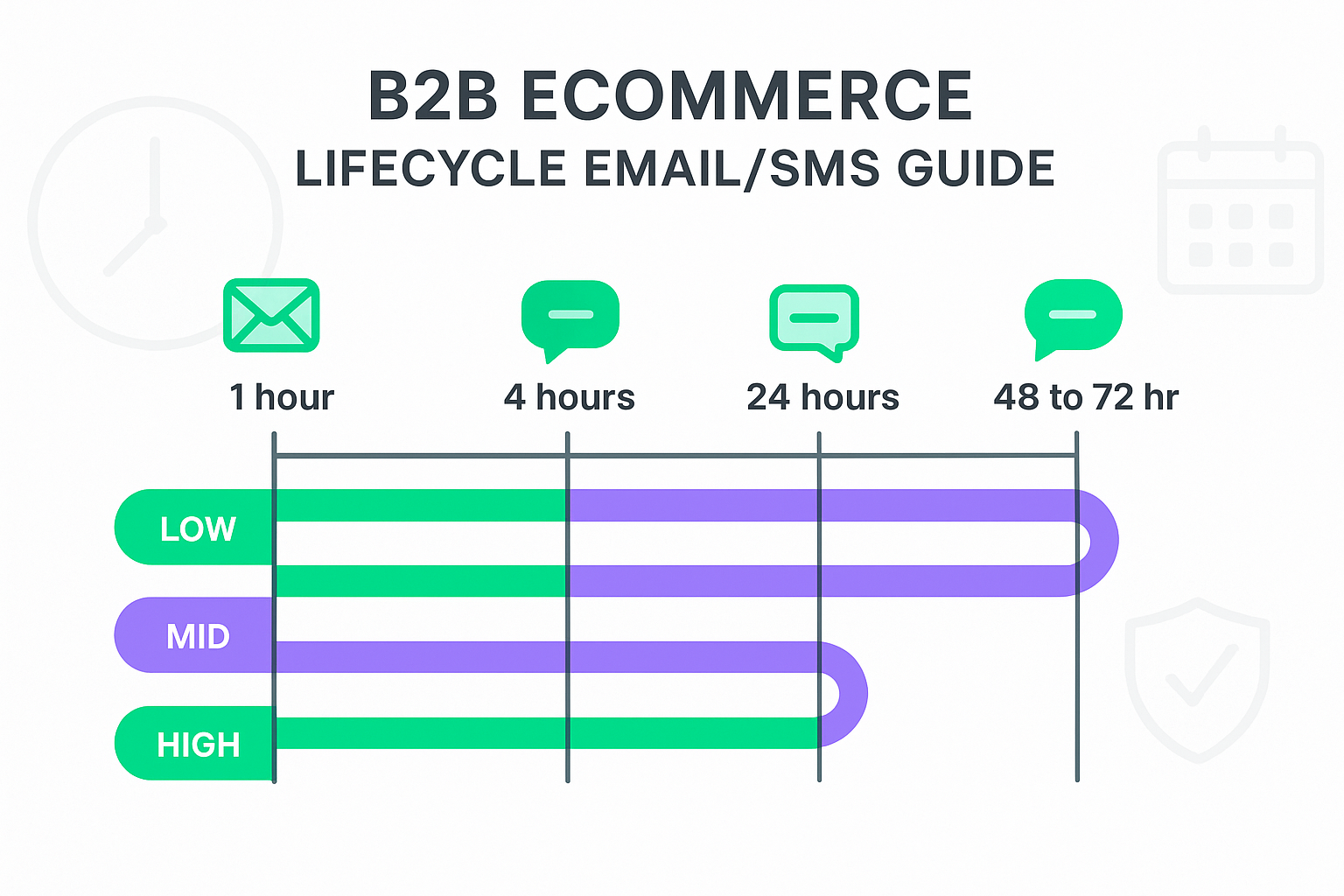
When a shopper walks away from checkout, your clock starts. Send too soon and you feel pushy; wait too long and intent decays. Industry studies still peg cart abandonment near 70% worldwide, according to the Baymard Institute’s long-running analysis of 50+ studies in 2025, which reports an average around 71–72%—a reminder of the upside in getting this right. See the evidence in the Baymard team’s current cart abandonment rate compilation in 2025: Baymard’s cart abandonment rate list.
This guide replaces generic “send at 4 hours” advice with a practical, cohort-based approach you can ship this week. We’ll anchor on Average Order Value (AOV) to size consideration time, optimize for a single north-star metric (Revenue per Recipient), and enforce guardrails so your brand stays compliant and customer-friendly.
Key takeaways
Use AOV-led cohorts to tune abandoned cart timing windows.
Optimize the entire flow for revenue per recipient (RPR) by touch.
Enforce frequency caps with immediate exit on purchase.
Respect quiet hours by locale and design for ≤5‑minute purchase suppression.
Choose your anchor: an AOV-led cohort framework
Not every cart is equal. A $28 impulse buy decays fast; a $420 considered purchase breathes longer. Anchor your abandoned cart timing to AOV, then use traffic intent and product category to fine-tune.
Low AOV: under $50. Expect short consideration; earlier first-send often wins.
Mid AOV: $50–$200. Balanced windows; the common 2–4 hour first email baseline applies.
High AOV: over $200. Give a little air; leads are comparing specs, reviews, and delivery terms.
Modifiers to consider after AOV:
Traffic intent: branded or retargeting traffic usually tolerates faster follow-ups than cold prospecting.
Product lead time: fast-fashion vs. furniture vs. supplements—delivery expectations shape urgency.
Geography and compliance regime: US SMS has strict quiet-hour norms; EU email/SMS centers on consent and fairness.
Abandoned cart timing benchmarks by cohort
The table below gives pragmatic starting points. Treat them as baselines—test into your exact windows.
Cohort (AOV) | First email delay | Second email delay | Optional third email | SMS timing (one send) | Daypart/quiet-hour notes |
|---|---|---|---|---|---|
Low (<$50) | 1–2 hours | ~24 hours | ~48 hours | 3–6 hours if no email engagement | Avoid overnight; target mid‑morning to early afternoon local time |
Mid ($50–$200) | 2–4 hours | 24–36 hours | ~72 hours | 20–30 hours if no email engagement | Respect local quiet hours; prefer business hours |
High (>$200) | 4–8 hours | 24–48 hours | 72–96 hours | 12–24 hours for high‑intent, opted‑in users | Keep tone advisory; avoid late‑night sends |
Why these windows? Klaviyo’s default abandoned cart flows commonly start at around 4 hours with follow-ups near 24 and 48–72 hours; these are solid baselines to test against, as described in the Klaviyo Help Center’s guidance on building abandoned cart flows: Klaviyo’s guide to creating an abandoned cart flow.
For SMS in the United States, align with both platform rules and legislation. Klaviyo’s US guidelines for cart abandonment specify the message must be sent within 48 hours of the event and recommend limiting the flow to one SMS per recipient; always honor quiet hours: Klaviyo’s US SMS cart abandonment guidelines. If you need a state-by-state view of quiet hours, Postscript maintains a public, frequently updated reference that many practitioners use to inform enforcement: Postscript’s Guide to Quiet Hours.
Optimize for one metric: revenue per recipient
Here’s the deal: when you debate “2 hours vs. 4 hours,” you need a single scoreboard. Use revenue per recipient (RPR) by touch. RPR is the total revenue attributable to a message divided by deliveries; it balances conversion lift against reach and keeps your timing decisions grounded in dollars. Klaviyo outlines the definition and use cases in its analytics documentation: What is Revenue Per Recipient. For additional framing from the email analytics community, see the retail-focused playbook by Litmus in 2025: Litmus’s retail and ecommerce email marketing playbook.
Quick example: If Touch 1 sends to 10,000 people and drives $5,800 in attributed revenue, RPR = $0.58. If moving the first send from 4 hours to 2 hours lifts conversions but also hits a slightly larger audience due to quiet-hour alignment, you’ll see it in RPR before you see it in any single rate.
Channel sequencing and safeguards
Email is typically your first touch; SMS is your scalpel. For most brands, start with email at 2–4 hours (adjust by cohort), then use one SMS within the 48‑hour compliance window for subscribers who are opted in and haven’t engaged. For high‑AOV or high-intent carts, testing an earlier SMS can work—but only with explicit opt‑in and strong quiet-hour enforcement.
Mandatory safeguards to bake into every template:
Frequency caps with exit on purchase: Use “smart sending” or channel‑level caps to avoid over‑contact, and always stop the flow immediately on purchase.
Quiet hours by locale: Honor local sending windows. Build in dayparting that avoids early mornings and late nights.
Real-time suppression: Design for purchase/opt‑out suppression within 5 minutes. That means your server‑side events must land well before the first delay and stay reliable when sales spike.
Channel priority and failover: If email is throttled or a recipient is recently messaged, prioritize the other channel sparingly and only if it adds incremental value.
Why be so strict? Automation works. Omnisend’s 2026 benchmark round‑up shows automated lifecycle messages far out-convert bulk campaigns, with abandoned cart consistently among the top performers across years: Omnisend’s 2026 email marketing statistics. Guardrails keep you on the right side of that performance without risking complaints.
Klaviyo and Shopify templates you can ship
Below is a compact template pattern for the first two touches. Adapt delays by cohort and add quiet‑hour/daypart conditions. Turn on Smart Sending per message (typical defaults: ~16 hours for email and ~24 hours for SMS), and ensure “exit flow on purchase” is enabled.
Flow trigger
Event: Started Checkout (Shopify) or Checkout Started (server‑side)
Filter: Has consent for SMS is true before any SMS step
Suppression: Exit if “Placed Order” within the last 5 minutes
Touch 1: Email (Low AOV start at 1–2h; Mid 2–4h; High 4–8h)
Delay: As per cohort baseline
Windowing: Send during local business hours only
Smart Sending: Enabled
Copy swipe: Subject: “You left this behind — still in stock.” Body: Reinforce benefit, shipping clarity, and a single, dominant CTA.
Touch 2: SMS (one message within 48 hours if opted in and unengaged)
Delay: 3–6h for Low AOV; 20–30h for Mid; 12–24h for High
Windowing: Enforce quiet hours; skip if recently messaged
Copy swipe: “Still thinking it over? Your items are ready when you are. Reply STOP to opt out.”
Sample pseudo‑JSON for Klaviyo flow logic
{
    "flow": {
      "trigger": "Checkout Started",
      "filters": [
        { "type": "profile_property", "property": "sms_consent", "operator": "equals", "value": true }
      ],
      "steps": [
        {
          "type": "delay",
          "duration": "PT2H",
          "cohort_overrides": {
            "AOV<50": "PT1H",
            "50<=AOV<=200": "PT3H",
            "AOV>200": "PT6H"
          }
        },
        {
          "type": "email",
          "smart_sending": true,
          "quiet_hours": ["08:00","20:00"],
          "exit_on_purchase": true
        },
        {
          "type": "branch",
          "condition": "not_engaged_email AND sms_consent",
          "true": [
            {
              "type": "delay",
              "duration": "PT20H",
              "cohort_overrides": {
                "AOV<50": "PT4H",
                "50<=AOV<=200": "PT24H",
                "AOV>200": "PT18H"
              }
            },
            {
              "type": "sms",
              "smart_sending": true,
              "quiet_hours": ["08:00","20:00"],
              "exit_on_purchase": true
            }
          ],
          "false": []
        }
      ]
    }
  }
Implementation tip: Ensure your purchase events arrive faster than your shortest delay. Klaviyo’s developer guidance emphasizes getting order data in quickly to reliably stop flows; don’t rely on best‑effort webhooks alone for suppression.
Practical example: real‑time suppression and cohort tagging with Attribuly
Disclosure: Attribuly is our product.
If you need to close the gap between checkout and suppression, a server‑side stream helps. One practical pattern is to send “Added to Cart” and “Checkout Completed” as server‑side events and use those to drive both your flow triggers and your exit conditions. That reduces false‑positive sends when a shopper purchases via another device, ad click, or a delayed redirect.
Here’s how teams pair it with AOV cohorts in practice:
Use a computed profile property (e.g., last_30d_aov_band) to classify a shopper into Low/Mid/High AOV and branch delays accordingly.
Feed “Checkout Completed” server‑side within 5 minutes so abandoned cart flows exit before the first email.
Track revenue per recipient by touch, using the same event stream for attribution and deduplication across email and SMS.
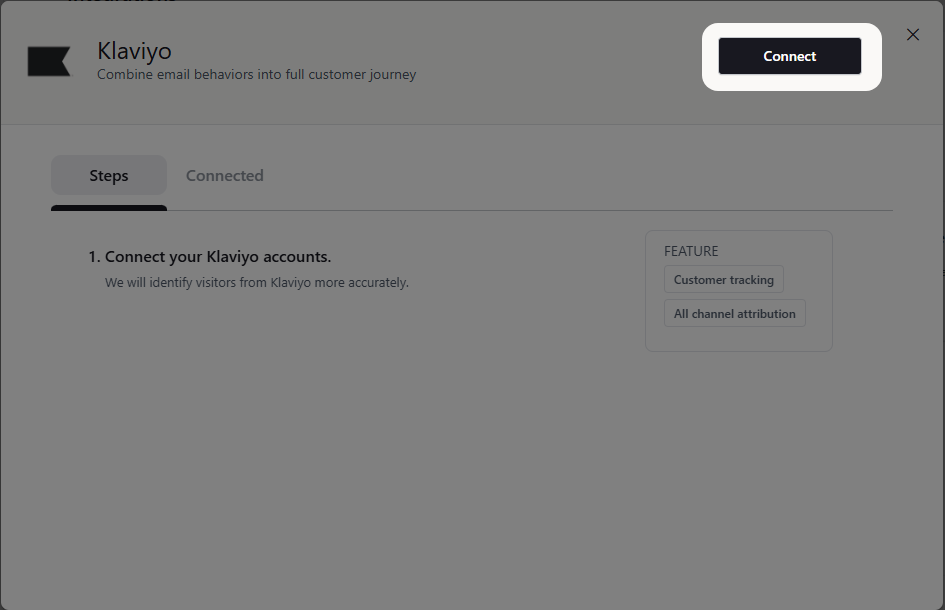
With Attribuly’s Klaviyo integration, teams commonly switch their flow trigger from a client‑side event to a server‑side equivalent and lean on the same stream for purchase suppression. You can review the integration overview here: Attribuly + Klaviyo integration. For deployment context, see the Shopify integration note: Attribuly + Shopify integration.
If you need an operational runway beyond timing, our step‑by‑step lifecycle checklist outlines what to ship at 30/60/90 days, including flow hardening, guardrails, and reporting: retargeting stack checklist for the first 30–90 days.
Testing and rollout playbook
To find your “just right” windows, run simple A/Bs inside each AOV cohort:
First‑email delay: Low AOV: 1h vs. 4h. Mid AOV: 2h vs. 6h. High AOV: 4h vs. 8h.
SMS follow‑up: For opted‑in profiles only, test an earlier vs. later single SMS within the 48‑hour window.
Primary metric: RPR by touch and by flow. Secondary metrics: recovered orders within 7 days, opt‑out and complaint rates as guardrails.
Minimum run: Hold a stable offer and creative for 2–4 weeks or until you hit a sensible sample size for detecting a 10–15% RPR change.
Rollback criteria: If opt‑outs spike above your threshold or RPR declines for two consecutive weeks, revert to the previous winner.
Compliance reminders: For US SMS, follow quiet hours and one‑message‑per‑flow norms for cart abandonment as outlined in Klaviyo’s guidance cited above. For the UK and EU, the key is consent and fairness under PECR/GDPR—ensure lawful opt‑in, easy opt‑out, and proportionate messaging. The UK Information Commissioner’s Office provides a plain‑English summary of email/SMS marketing rules: ICO’s guide to electronic mail marketing under PECR.
Next steps
Want a head start? Use the cohort table and pseudo‑JSON above as your timing template, then wire your triggers and suppression via the integration overviews: Attribuly + Klaviyo integration and Attribuly + Shopify integration. Optimize every change against revenue per recipient.