
iOS 26 Tracking Mitigation Playbook 2026
Practical 2026 playbook for e‑commerce engineers to preserve conversions under iOS 26 LTP — EC, server‑side CAPI, ghost‑GCLID mirroring and first‑party ID graphs.
Author: Jie Zhang, Product Engineer at Attribuly — implements server-side tracking and CAPI integrations for commerce brands.
Safari’s Link Tracking Protection (LTP) in iOS 26 has everyone asking the same question: what happens to conversion tracking when click IDs go missing? Here’s the deal: in normal browsing, most campaign tagging still works. The edge cases—Private Browsing, links from Messages/Mail, and some advanced protections—are where click IDs like gclid or fbclid can be stripped.
This playbook shows exactly how to keep measurement resilient: Enhanced Conversions, server-side Conversions APIs, ghost/mirrored click IDs, and a lightweight first-party ID graph with consent governance. Copy the snippets, follow the validation steps, and ship.
Key takeaways
Prioritize hashed first-party identifiers with Google Enhanced Conversions; enable consent gating before sending PII.
Send server-side events via Meta/TikTok/Microsoft CAPI using consistent event_id for deduplication across web and server.
Implement “ghost” parameter mirroring (e.g., att_gcid) as a tactical fallback when click IDs are stripped; persist server-side with short TTLs.
Maintain a simple first-party ID graph to stitch sessions when users log in or provide emails post-click.
Validate with platform diagnostics and automated tests; monitor match rates and dedup errors.
Treat ghost parameters as temporary and avoid bypassing user consent; prepare for browser behavior to evolve.
LTP at a glance
Apple’s Link Tracking Protection removes a subset of known tracking parameters in certain privacy contexts (notably Private Browsing and links shared via Messages/Mail). WebKit’s description of Private Browsing explains that it strips query parameters used for cross-site tracking and limits referrers. See the official overview in WebKit’s Private Browsing 2.0 post: WebKit explains stripping of tracking parameters. Apple’s support pages reiterate the LTP contexts without listing every parameter: Apple’s iOS update notes describe LTP contexts.
What typically gets hit: click IDs such as gclid, fbclid, msclkid, dclid, twclid/ttclid in those specific contexts. What typically remains: general UTM parameters (utm_source, utm_medium, utm_campaign) in standard browsing and most sessions. That’s why your channel-level attribution continues to function, while granular click matching can degrade in edge cases.
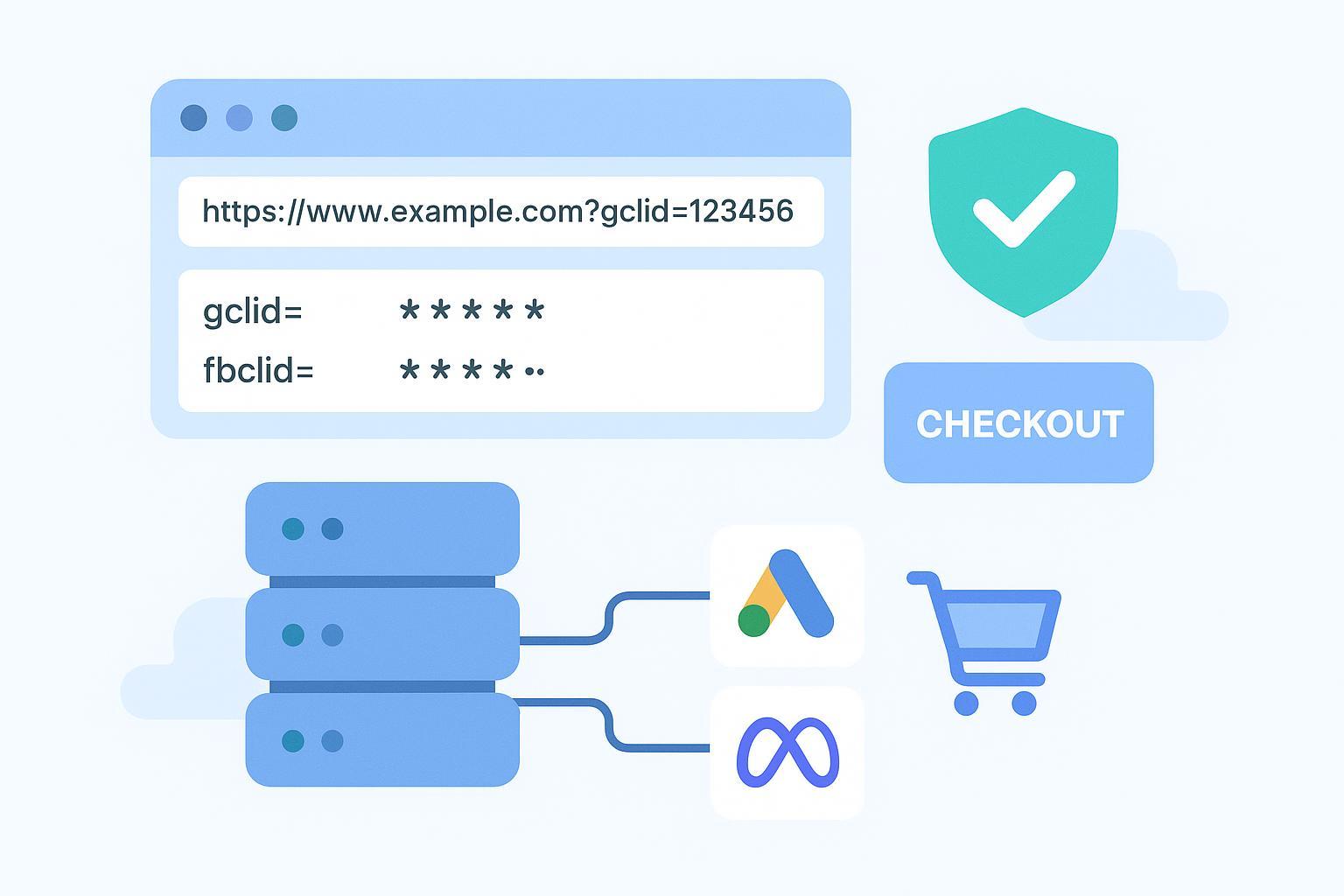
iOS 26 tracking mitigation map
Your strategy hinges on four pillars:
Enhanced Conversions to send hashed first‑party identifiers for better match rates when click IDs are missing.
Server-side Conversions APIs (Meta, TikTok, Microsoft) with event_id deduplication and timestamp alignment.
Ghost/mirrored click IDs as a pragmatic fallback when known parameters are stripped; store as first-party values and reattach server-side.
A minimal first‑party ID graph and consent governance so identity stitching remains privacy‑aware and auditable.
Implementation playbook
Google Enhanced Conversions setup
Enhanced Conversions (EC) allows you to supplement conversion events with normalized and SHA‑256 hashed first‑party identifiers (email, phone, address components). Google outlines the supported fields and process in its documentation: Google Ads conversions overview clarifies EC inputs.
Core steps:
Normalize identifiers client-side or server-side (lowercase emails, trim whitespace; phone to E.164). Only send after consent is granted. Google’s Consent Mode helps coordinate signals: Consent Mode v2 developer guide.
Accept Customer Data Terms in Google Ads. Enable EC on the conversion action and verify diagnostics in the Conversions UI.
Validation: In Google Ads, confirm EC is “Recording” and monitor the match rate for the conversion action. Spot-check with Google Tag Assistant to ensure the user_data object populates only post-consent.
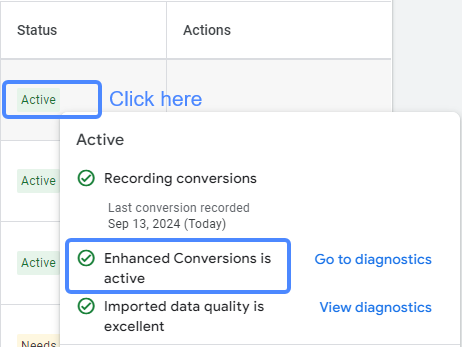
Setup Enhanced Conversion in Attribuly
Server-side CAPI with deduplication
Send server-side events to Meta, TikTok, and Microsoft with stable IDs and proper deduplication. Meta’s rules are explicit: server and Pixel events deduplicate when event_name and event_id match and the timestamps are close. See: Meta’s guidance on handling duplicate pixel and server events.
Attribuly method:
Generate a UUID event_id in the browser when a key event fires.
Include the same event_id on the Pixel call and pass it to our server endpoint.
On the server, forward to each network’s CAPI with aligned timestamps, IP, user agent, and hashed identifiers collected along the customer journey.
For TikTok’s Events API, include fields like event_name, event_id, timestamp, user data (hashed), and ttclid when present. Reference: TikTok’s Events API overview and getting started.
For Microsoft, UET’s Conversions API supports server-side and offline conversions; include msclkid when available. Reference: Microsoft UET Conversions API integration.
Ghost click IDs with mirroring
When known click IDs are stripped in edge contexts, mirror them into alternate, first‑party parameter names and persist server-side. Use short TTLs and explicit consent gating. This is a pragmatic fallback, not a long‑term dependency.
Client capture example:
(function () {
    const qp = new URLSearchParams(location.search);
    const gclid = qp.get('gclid');
    const msclkid = qp.get('msclkid');
    // Accept mirrored params if present from a redirector or prior capture
    const ghost = qp.get('att_gcid') || gclid || qp.get('att_mscid') || msclkid;

    if (ghost) {
      // Short-lived, first-party cookie; secure attributes recommended
      document.cookie = `ghost_click_id=${ghost}; Path=/; Max-Age=259200; SameSite=Lax`;
    }
  })();
We are updating our tracking template for Google ads and Bing ads. You don’t have to do anything, since the “Auto-tracking” feature will update the tracking template with ghost click IDs automatically.
First‑party ID graph basics
Keep a simple identity layer that stitches sessions when users authenticate or provide an email. Store minimal data with clear TTLs and consent flags. A practical model:
Keys: anonymous_id, customer_id, email_hash, login_timestamp, consent_state, last_click_source, mirrored_click_id.
Rules: when a user logs in or submits email post-click, merge the anonymous profile into the known profile; attach mirrored click ID if within TTL; gate enrichment by consent.
Uses: improve match rates for EC and server-side CAPI; support audience sync without relying on fragile browser storage.
Monitoring and QA
Watch the following signals and build simple alerts:
Click ID presence rate: sessions_with_click_id / total_sessions.
Enhanced Conversions match rate per conversion action in Google Ads.
CAPI match quality and dedup rate per network; investigate spikes in duplicate or dropped events.
Tooling: Use Attribuly reporting tool to see the server-side event log, and monitor at ads manager side.
Practical example — enriching CAPI with mirrored IDs
Disclosure: One pragmatic workflow is to use a capture layer to persist mirrored click IDs as first‑party data and enrich server‑side payloads after consent. The Capture feature can store identifiers alongside hashed emails for downstream CAPI feeds. Learn more in the product page: Attribuly Capture for first‑party enrichment.
Troubleshooting and risk notes
Private Browsing and in‑app browsers: expect lower click‑ID availability; lean on EC and server‑side signals.
Dedup bugs: if event_id differs between browser and server, Meta will double count or drop events. Standardize ID generation at source.
Consent gaps: if EC match rate is near zero, confirm CMP signals and ensure hashed identifiers are sent only post-consent.
Over‑reliance on ghost parameters: treat mirroring as a fallback; keep short TTLs and document usage for compliance reviews.
Payload hygiene: normalize and hash consistently; mismatched normalization reduces match rates across all networks.